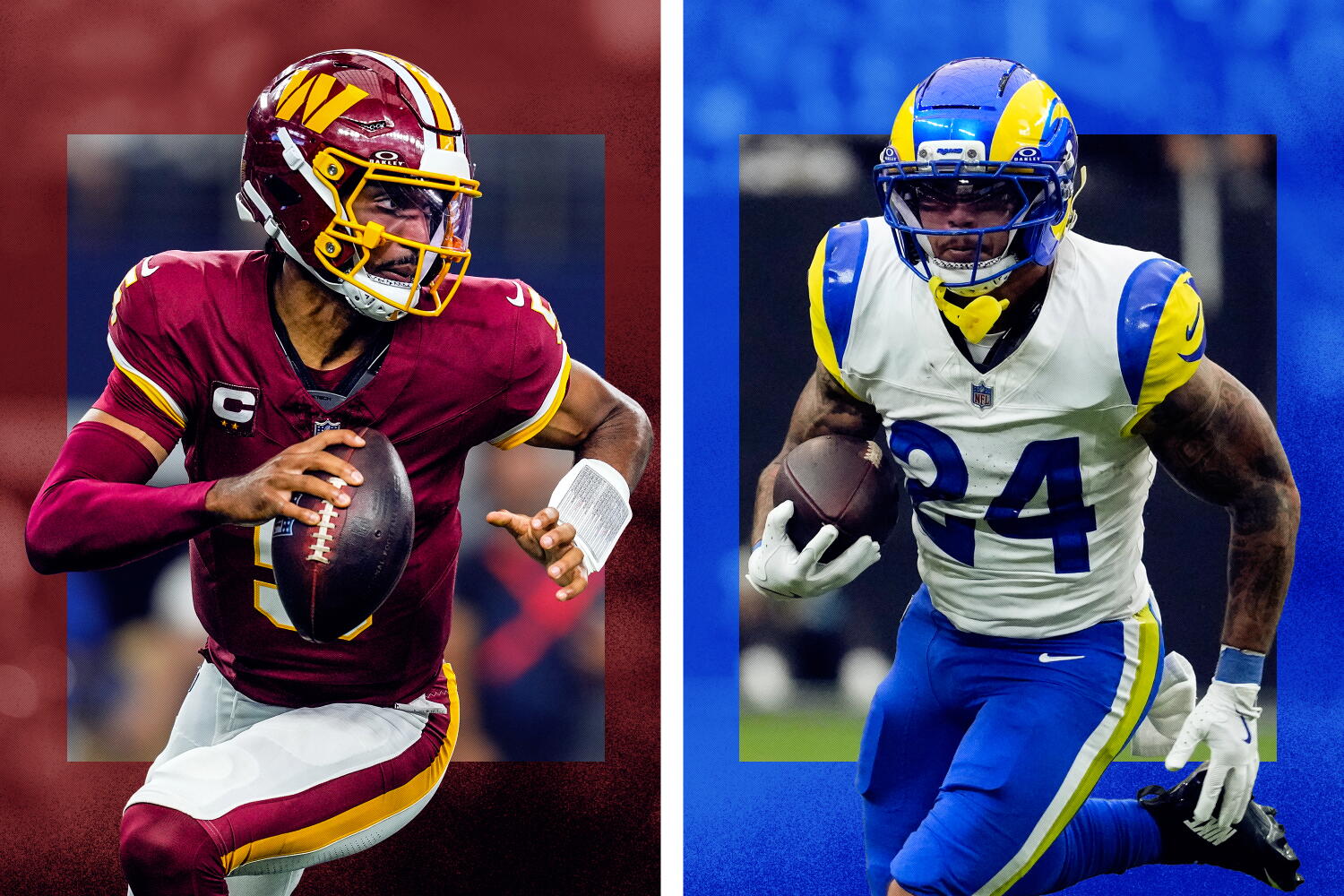
When the Los Angeles Rams and Washington Commanders collide, the surface-level broadcast details are easy enough to digest, yet the underlying tactical reality tells a wildly different story than the opening betting lines suggest. Most fans tuning in will watch the national television broadcast or stream the game through standard NFL Sunday Ticket and local market feeds, expecting a straightforward clash of NFC contenders. They will see a spread that favors Los Angeles by a narrow margin and an over-under total hovering in the mid-40s. Those numbers are a trap.
Sportsbooks price games to split public money, not to predict what happens when two fundamentally incompatible offensive philosophies smash into each other in the fourth quarter. If you only look at season-long yardage averages, you miss the trench warfare that actually decides this game.
Why the Opening Odds Miss the Mark
Vegas oddsmakers love efficiency metrics. They feed expected points added per play, red zone conversion rates, and third-down efficiency into proprietary models that spit out a clean, defensible number. For a Rams vs. Commanders matchup, those models heavily weight quarterback pedigree and explosive pass rates. That approach works great in September. By the time the schedule grinds into the late-season stretch, injuries and schematic adjustments render early-season data practically useless.
The public sees a Sean McVay offense and automatically assumes precision timing, pre-snap motion, and effortless yardage after the catch. They look at Washington and see a franchise built on physicality, young athletic talent, and a defensive front that wants to turn every possession into a street fight. Because bettors instinctively back the prettier offense, the line inflates toward Los Angeles.
Sharp money operates differently. Professional syndicates do not care about highlight reels from two months ago. They look at adjusted line yards and pressure-to-sack ratios over the last four weeks. When you isolate those specific trenches, the Commanders possess the exact defensive interior personnel required to wreck McVay's favorite play-action concepts. You cannot run a slow-developing bootleg when a 310-pound defensive tackle is already standing in your quarterback's lap before the fake is even completed.
The Broadcast Reality Versus the Tape
If you are watching the standard television angle, you are only seeing about forty percent of the football field. The broadcast camera follows the ball. It misses the safety rotations happening twenty yards downfield and completely obscures the leverage battles on the outside edges of the offensive line.
Watch the All-22 coaching film from recent weeks and a glaring vulnerability emerges for Los Angeles. Their offensive line has struggled against simulated pressures—defensive looks where four players rush, four drop, and the offense has no idea which second-level defender is actually coming until the ball is snapped. Washington's defensive coaching staff thrives on this exact brand of chaos. They disguise their coverages until the quarterback hits his back foot, forcing hurried throws into tight windows.
How to Watch and What to Look For
Finding the game is the easy part. Depending on your local market, the broadcast airs on either FOX or CBS during the standard Sunday afternoon window, with live streaming available via YouTube TV's NFL Sunday Ticket, NFL+, and the respective network apps. Kickoff times for these inter-division NFC matchups almost always fall into the 1:00 PM ET or 4:25 PM ET slots, depending on whether the game is played on the East Coast or under the canopy at SoFi Stadium.
Knowing what to watch once the kickoff sails through the air separates casual viewers from people who actually understand how NFL games are won. Ignore the announcer clichés about wanting it more or establishing the run. Focus entirely on three specific micro-battles that dictate the scoreboard.
The First-Down Stalemate
Every modern NFL offense wants to stay ahead of the chains. Second-and-four opens up the entire playbook. Second-and-nine turns your offensive coordinator into a predictable play-caller.
Los Angeles relies heavily on condensed formations—aligning their wide receivers tight to the offensive tackles—to create natural picks and rub routes while maintaining strong blocking angles for the outside zone run game. Washington's defensive front counters this by slanting their defensive ends into the B-gaps on first down. It is a calculated gamble. If the Rams hit the crease, it goes for fifteen yards. More often than not, it blows up the handoff in the backfield and forces the Rams into obvious passing downs where their pass protection cracks.
Red Zone Spacing
Between the twenty-yard lines, yards are cheap. Once the ball crosses inside the twenty, the field shrinks, the back line of the end zone acts as an extra defender, and spacing becomes everything.
- Los Angeles's approach: The Rams use heavy motion to force defenders to declare man or zone coverage before the snap, looking for quick isolation slants or back-shoulder fades.
- Washington's counter: The Commanders play a sticky match-zone coverage in the low red zone, passing off crossing routes seamlessly so defenders never get caught in traffic.
- The breaking point: Whoever wins the battle of patience here wins the game, because settling for three points instead of seven is a death sentence in a low-possession contest.
The Coaching Chess Match Nobody Discusses
Most media coverage reduces NFL coaching to fourth-down aggressiveness. Pundits scream about analytics whenever a coach goes for it on fourth-and-two from midfield, completely ignoring the sixty plays that led up to that moment. The real coaching battle in Rams vs. Commanders happens in the scripted opening drives and the adjustments made right after halftime.
Sean McVay is widely regarded as one of the sharpest offensive minds in football, and rightfully so. His ability to marry the run and the pass so every play looks identical for the first 1.5 seconds is unmatched. Yet that very strength can become a rigid flaw. When a defense successfully disrupts the timing of his primary reads, McVay occasionally falls into a rhythm of abandoning the ground game too early, putting the entire burden on his quarterback's shoulders against a pinned-back pass rush.
Washington's staff knows this tendency. They will willingly surrender five-yard underneath completions in the first quarter just to keep the clock moving and lure the Rams into believing the short passing game is always open. Then, in the third quarter, those defensive backs jump the exact same routes. It is a long con played at twenty miles per hour.
Clock Management and Possession Math
Look at the time-of-possession splits for both franchises. Washington plays a deliberate, grinding style designed to shorten the game. Fewer total possessions per team increases variance. When a game only features eight or nine drives per side instead of eleven or twelve, a single deflected pass or a blown coverage on third down swings the win probability by thirty percent.
Los Angeles thrives in high-possession track meets where their superior offensive depth can wear down a secondary over seventy snaps. Washington wants to drag them into the mud, limit the game to fifty-five snaps, and decide it with a two-minute drill in the fourth quarter.
Prediction and Betting Value
If you are looking at the board trying to find an edge, stop looking at the point spread and look directly at the game total and team totals. The market consistently overvalues name-brand offenses in late-season matchups while underestimating the physical toll of travel and defensive familiarity.
Consider a hypothetical scenario that plays out every single week in the NFL: a West Coast team travels east for an early kickoff, falls behind by ten points early due to a sluggish start, and spends the second half throwing the ball forty times to catch up. Even if they lose the game, the late garbage-time scoring pushes the total well over the Vegas number. That script does not apply here if Washington controls the line of scrimmage.
Washington's offensive game plan is built to protect their defense by keeping them on the sideline. They run the ball on early downs, utilize high-percentage bootlegs and screen passes, and rarely take reckless shots into double coverage. That methodical pace bleeds the play clock down to three seconds on almost every snap.
Where the Sharp Money Lands
- The Under: Unless multiple defensive turnovers gift both offenses short fields inside the thirty-yard line, points will be exceptionally hard to come by. Both coaching staffs respect the opposing front enough to play conservatively in neutral game scripts.
- The Underdog Spread: Taking the points with Washington—especially if the line crosses the key number of three—offers massive mathematical value. Games decided by physical trench play rarely turn into blowouts.
- Player Props: Look toward underneath targets—tight ends and running backs catching passes out of the backfield—rather than deep-threat wide receivers. Neither quarterback will have the luxury of holding the ball for three seconds waiting for deep posts to clear.
The Rams enter this matchup with the flashier pedigree and the more recognizable stars, which is precisely why the public will back them blindly right up until kickoff. Yet football games are not won on paper or in television studios. Washington has the exact defensive front to disrupt Los Angeles's offensive rhythm, the ground game to control the clock, and the discipline to turn a supposed shootout into a low-scoring grind that comes down to a final field goal. Take the points, bet the under, and watch the trenches dictate the outcome.