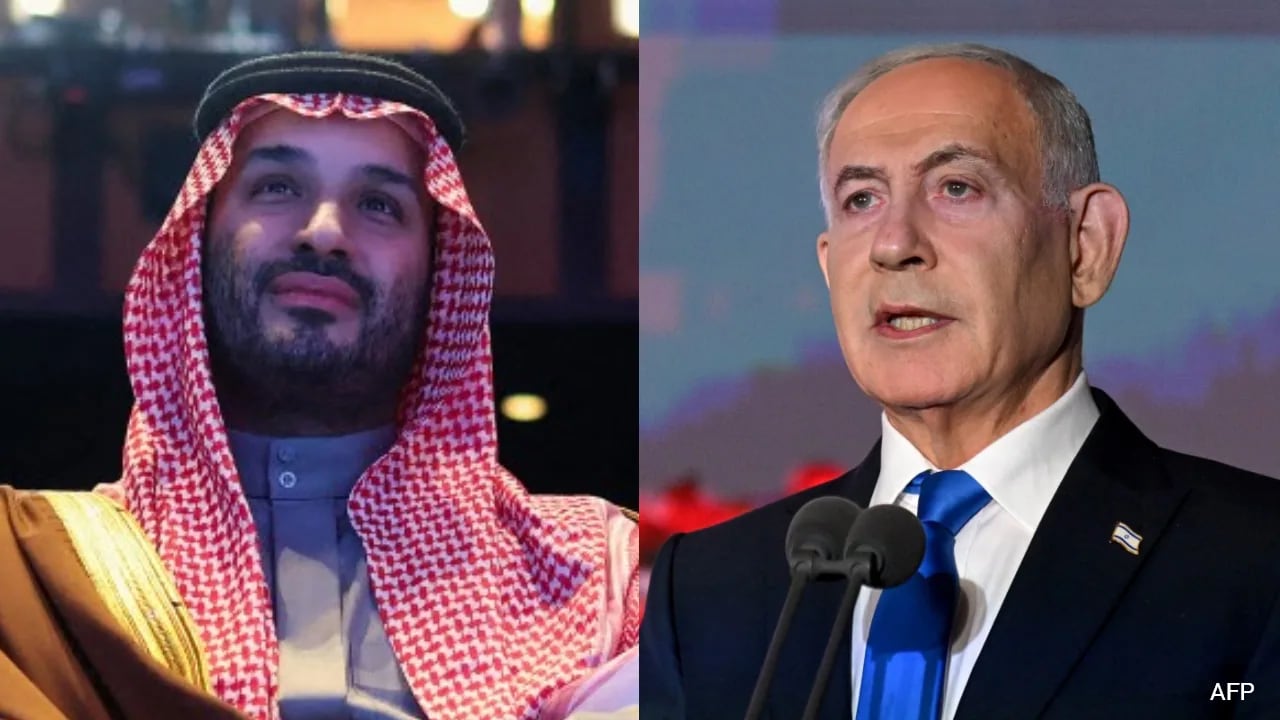
Saudi Arabia's leadership pushed back against overt Israeli military escalation in Yemen because an open alliance against the Houthis would destroy Riyadh's delicate regional balancing act, ignite domestic backlash, and endanger a fragile peace track along Saudi Arabia's southern border. For years, observers have assumed that a shared enemy in Tehran and its Houthi allies in Sanaa would naturally pull Riyadh and Jerusalem into joint military coordination. In reality, Saudi decision-makers treated an overt Israeli war role against the Houthis as a strategic liability rather than a lifeline.
That restraint does not come from affection for Ansar Allah. Riyadh spent nearly a decade locked in a grinding, expensive war in Yemen that battered Saudi border towns, strained international arms supply chains, and tarnished the kingdom's global image. Yet stopping Benjamin Netanyahu from turning Yemen into a visible front for joint or coordinated Israeli-Arab warfare was a calculated act of self-preservation. When a foreign military power with unresolved regional conflicts steps onto your doorstep under the banner of fighting a shared adversary, the bill rarely arrives in Jerusalem. It arrives in Riyadh.
Why Shared Enemies Rarely Make Open Allies
In textbook geopolitics, two actors facing the same hostile movement look for ways to combine pressure. Realpolitik in the Persian Gulf works differently. A shared threat creates quiet intelligence awareness and overlapping diplomatic interests, but public military alignment with Israel carries steep political costs across the Arab world.
Saudi leaders have spent years trying to reposition the kingdom as a central mediator and stabilizing power rather than a perpetual combatant. Bringing Israeli forces or overt Israeli war planning into the Houthi conflict would instantly reframe a border and shipping crisis into a broader Arab-Israeli confrontation. Once that narrative takes hold, the Houthis gain propaganda value far beyond northern Yemen. They can cast themselves not merely as local insurgents or Iranian partners, but as defenders of a wider cause that resonates across streets far outside Sanaa.
In Middle Eastern statecraft, visible alignment can be far more dangerous than quiet distance. What looks like tactical synergy from a war room in Tel Aviv often looks like political dynamite in a palace in Riyadh.
There is also a practical military calculation behind the pushback. Air defense batteries, radar networks, and naval patrols along the Red Sea operate under tight escalation control constraints. Saudi officials know that a high-profile Israeli campaign against Houthi targets risks retaliatory missile or drone salvos aimed at shipping lanes or energy infrastructure. Even when missiles are intercepted, every launch tests defensive stocks and rattles commercial insurers.
The Southern Border Calculus in Riyadh
Geography dictates much of Saudi foreign policy, and Yemen sits right against Saudi Arabia's soft underbelly. For years, cross-border attacks hit provinces like Jizan and Najran, forcing civilian precautions and keeping Saudi air defenses on high alert. Moving from a tense ceasefire management posture back into full-scale regional warfare is a gamble Riyadh has little appetite to take.
Consider a hypothetical example of how escalation spirals in practice. Suppose a major Israeli strike hits a Houthi port or missile site on the Red Sea coast, prompting Houthi commanders to retaliate against maritime traffic passing near Saudi waters or launch long-range drones that transit airspace closely watched by Saudi radar. Even if Riyadh fires not a single shot, neighboring states and global markets treat the entire corridor as an active war zone. Freight rates spike, diplomatic envoys scramble, and Saudi domestic security planners have to prepare for asymmetric responses.
Peace talks and confidence-building measures with the Houthis have always been fragile, transactional, and heavily contingent on keeping the fighting contained. Riyadh has sought a durable arrangement that protects its territory and allows the kingdom to focus inward on economic transformation and mega-projects. An Israeli war effort in Yemen pulls oxygen and attention away from domestic priorities while inviting unpredictable blowback along a border Saudi forces know intimately.
What Netanyahu Wanted Versus What Saudi Arabia Needed
To understand the friction, it helps to look at the mismatch in incentives between Jerusalem and Riyadh. Israeli leaders have faced multi-front pressure, long-range Houthi attacks, and disruptions to Red Sea trade, giving them strong reasons to seek broader coalitions and decisive blows against Houthi logistics and leadership. From an Israeli vantage point, coordinating pressure with Gulf states that also oppose Houthi power seems logical on paper.
For Saudi policymakers, however, timing and optics are everything. Normalizing ties or appearing to fight side-by-side with Israel during periods of intense regional turmoil would undercut Riyadh's standing with neighbors, complicate relations with Arab partners, and hand domestic critics an easy grievance. Saudi diplomacy has increasingly emphasized de-escalation with regional rivals, including rebuilding diplomatic channels with Iran, precisely to lower the temperature around the kingdom's borders.
| Strategic Dimension | Jerusalem's Pressure Points | Riyadh's Defensive Priorities |
|---|---|---|
| Primary Threat Focus | Long-range projectiles, maritime disruption, regional proxies | Border security, Red Sea shipping stability, regional blowback |
| Preferred Posture | Deterrence through direct strikes and coalition signaling | Contained escalation, quiet diplomacy, internal focus |
| Public Alignment Risk | Lower domestic cost for confronting Houthi targets | High regional and domestic cost from overt Israel ties |
| Economic Sensitivity | Trade route security and defense spending | Oil market calm, insurance costs, Vision 2030 investments |
This divergence does not mean Saudi Arabia and Israel share zero overlap in situational awareness. Intelligence communities across the region track missile launches, naval movements, and smuggling routes closely. Yet sharing awareness is worlds apart from endorsing a joint war footing or giving a green light to actions that drag Saudi territory into the crossfire.
The Red Sea Bottleneck and Shipping Economics
The Houthi campaign against commercial vessels in the Red Sea turned a regional insurgency into a global supply chain headache. Container ships rerouted around the Cape of Good Hope, adding transit days, fuel burn, and war risk premiums that rippled through European and Asian manufacturing. For a major maritime and energy hub like Saudi Arabia, prolonged instability near the Bab el-Mandeb strait cuts right into commercial ambitions.
Still, military intervention is a blunt instrument for a maritime choke point. Naval patrols and airstrikes can degrade launchers and vessels, but they rarely erase a determined movement overnight, especially in rugged terrain where mobile units hide and adapt. Worse, heavy external escalation can trigger tit-for-tat strikes that make commercial operators even more hesitant to sail through nearby waters.
Riyadh has watched how military campaigns in Yemen often produce diminishing returns when detached from a credible political settlement. Years of airpower and coalition operations demonstrated that tactical strikes alone do not settle deep-seated local grievances or permanently sever external supply lines. Pushing back against an expanded Israeli role in the war reflects a sober recognition that adding another combatant to a crowded theater complicates exit ramps rather than creating them.
Washington's Shadow and Gulf Autonomy
No serious look at Saudi restraint ignores the role of the United States. For decades, American security guarantees, intelligence sharing, and weapons systems anchored Gulf defense planning. Over the past several years, however, Gulf capitals—led in tone and pace by Saudi leadership—have insisted on greater strategic autonomy.
Riyadh no longer treats every Washington-backed initiative or regional alignment as automatic gospel. When American officials push for regional integration, maritime task forces, or coordinated pressure against Tehran's partners, Saudi decision-makers weigh those requests against their own risk ledger. If a move looks likely to provoke Iranian or Houthi retaliation against Gulf oil facilities or desalination plants, Riyadh pushes back hard.
That independence frustrates hawks in Washington and Jerusalem alike, yet it makes complete sense from the perspective of a ruling establishment focused on regime stability and long-term state-building. Outsourcing your security to outside powers is convenient until outside powers pull you into fights you did not start. Saudi leadership has become acutely allergic to becoming a secondary battlefield in someone else's war.
Counter-Arguments and Overlooked Blind Spots
Critics of Saudi caution argue that restraint carries its own danger. By holding back from tougher collective action against the Houthis, regional states risk allowing a militant group to entrench its military capabilities, normalize attacks on international shipping, and extract concessions without paying a decisive price. Some analysts contend that deterrence only holds when adversaries face unmistakable, coordinated punishment.
There is real weight to that argument. Appeasement or overly cautious containment can embolden armed groups that view restraint as weakness. Moreover, keeping diplomatic distance from Israel does not magically insulate Saudi Arabia from regional shocks; missiles and drones do not respect diplomatic niceties when tensions flare across the Middle East.
Another overlooked factor is domestic legitimacy inside Yemen itself. Foreign interventions—whether Saudi, American, or Israeli—frequently backfire if they unite fractured local populations against outside powers. For Riyadh, the hardest truth about Yemen has always been that sustainable border security depends on local political arrangements and economic incentives, not endless external firepower.
How to Read Future Headlines on Yemen and the Gulf
When new reports surface about secret meetings, shared air defenses, or diplomatic friction between Saudi officials and Israeli leaders, resist the temptation to read them as a simple march toward joint warfare. Look instead at three concrete indicators:
- Rule-of-engagement boundaries: Watch whether statements emphasize protecting shipping lanes and sovereign airspace rather than pursuing regime change or sweeping ground offensives.
- Diplomatic backchannels: Track whether quiet talks with regional neighbors and Yemeni factions continue alongside military alerts, a sign that Riyadh is trying to cap escalation rather than widen it.
- Market and insurance signals: Pay attention to shipping advisories and energy market reactions, which often price in real escalation risk faster than political speeches.
A quiet veto from Riyadh does not solve the Houthi problem or erase the security dilemmas facing Israel and its neighbors. It simply reminds everyone watching the region that Gulf leaders guard their own survival and stability above all else, refusing to step into a wider war just because another capital wants company.


