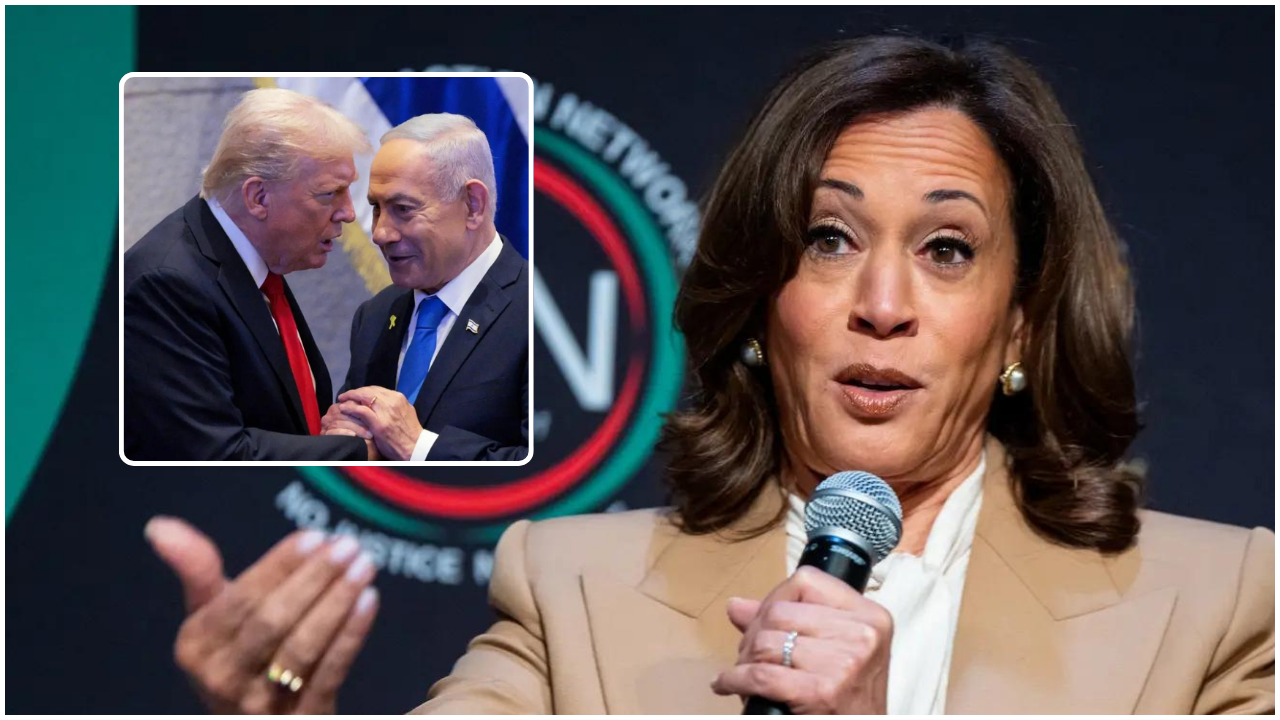
The current explosion of hostilities in the Middle East is no longer a localized skirmish but a full-scale American military engagement. Former Vice President Kamala Harris has broken her tactical silence to level a devastating charge: that President Donald Trump did not lead the United States into the "Iran War" by design, but was instead "pulled into" the fire by Israeli Prime Minister Benjamin Netanyahu.
Speaking in Detroit this weekend, Harris characterized the escalating conflict as a "feeble attempt" by the White House to bury domestic scandals, specifically the recent unsealing of the "Epstein files." Her argument suggests that American foreign policy is currently being dictated by the survival instincts of two embattled leaders rather than the strategic interests of the United States.
The Mechanism of Entanglement
To understand how the U.S. reached the brink of total war with Tehran, one must look at the timeline of Operation Epic Fury. Launched in late February 2026, the operation was presented to the public as a necessary preemptive strike to dismantle Iran’s nuclear infrastructure. However, veteran intelligence analysts point to a series of private communications between the West Wing and Jerusalem that preceded the first cruise missile launches.
For months, the Netanyahu government provided a steady stream of intelligence regarding "imminent" Iranian breakthroughs in enrichment. Critics now argue this intelligence was tailored to trigger a specific American response. By framing the Iranian threat as an immediate existential crisis for Israel, Netanyahu effectively boxed the Trump administration into a corner where inaction would be viewed as a betrayal of a primary ally.
The reality on the ground is stark. American forces are now engaged in daily sorties over Iranian airspace, while the Strait of Hormuz remains a graveyard of commercial shipping. Global oil prices have spiked, and the "two-week ceasefire" announced earlier this month has already disintegrated into a series of retaliatory missile barrages.
The Distraction Narrative
Harris’s most inflammatory claim is that the war serves as a smokescreen. The timing of the military escalation coincided almost perfectly with a new wave of legal pressure surrounding the "Epstein files"—a collection of documents that allegedly implicate high-ranking figures in various illicit activities.
In the world of high-stakes politics, the "wag the dog" scenario is a classic trope, but the current scale of the Iran conflict makes it a dangerously expensive distraction. The administration has shifted the national conversation from grand jury subpoenas to carrier strike groups. This shift doesn't just change the headlines; it fundamentally alters the legal and political scrutiny the executive branch faces during a "national emergency."
A Departure from Post-War Norms
Since 1945, the United States has largely operated within a framework of collective security and international norms. Harris argues that the current administration has demolished this precedent. By initiating strikes aimed at "regime change from the skies," the U.S. has bypassed the United Nations and alienated European allies who still favor a diplomatic resolution.
- Sovereignty: The strikes on Iranian soil have been conducted without a formal declaration of war from Congress.
- Alliances: Long-standing partners like France and Germany have publicly distanced themselves from the "Epic Fury" doctrine.
- Reliability: Allies now fear that American military power can be triggered by the domestic needs of its leaders rather than a shared security strategy.
The erosion of these norms has created a vacuum. As the U.S. focuses its resources on the Iranian plateau, other global actors are beginning to test the boundaries of their own regional influence, sensing that Washington is too distracted by its own self-made quagmire to intervene elsewhere.
The Cost of a War of Choice
The economic fallout is beginning to hit the American heartland. While the administration points to the "unconditional surrender" of the Iranian navy as a victory, the closure of the world’s most vital energy artery has led to a 40% increase in fuel costs.
For the average citizen, the "why" of the war matters less than the "what." What they see is a conflict with no clear exit strategy, a volatile economy, and a political class that appears to be using the military as a tool for personal reputation management. The transition from indirect talks in February to active bombing in April happened with a speed that left many in the Pentagon uncomfortable.
The "Epic Fury" campaign was supposed to be a limited, surgical strike. Instead, it has morphed into an open-ended commitment. Grounding the American response in the observable reality of the past two months shows a pattern: every time a domestic scandal peaks, the military intensity in the Gulf rises.
The Unfolding Midterm Calculus
As the November midterms approach, the war has become the central pillar of the campaign. Harris and the Democrats are betting that the public will tire of the "war of choice" narrative. Meanwhile, the White House is doubling down on a platform of "strength through force."
The tragedy of the current situation is that the genuine threat posed by a nuclear-armed Iran is being obscured by the political circus surrounding the response. If the intelligence was indeed "cooked" or exaggerated to facilitate a distraction, the long-term damage to American credibility will far outlast the current administration.
The path forward is increasingly narrow. With the Strait of Hormuz closed and Iranian counter-strikes reaching as far as Saudi petrochemical plants, the "Epic Fury" has become a self-fulfilling prophecy of regional chaos. The American public is being asked to support a war that may have started in a courtroom in New York rather than a bunker in Tehran.
The immediate action step for the American voter is to demand a transparent accounting of the intelligence that led to February 28. Without a clear, non-partisan verification of the "nuclear imminence" that triggered this war, the United States remains a nation led by the whims of a few, rather than the interests of the many. The "Epstein files" will eventually see the light of day, but the lives lost in the Gulf cannot be recovered. Stop looking at the explosions and start looking at the calendar.