Military bureaucracies rarely move with speed. When they do, panic usually drives the machinery.
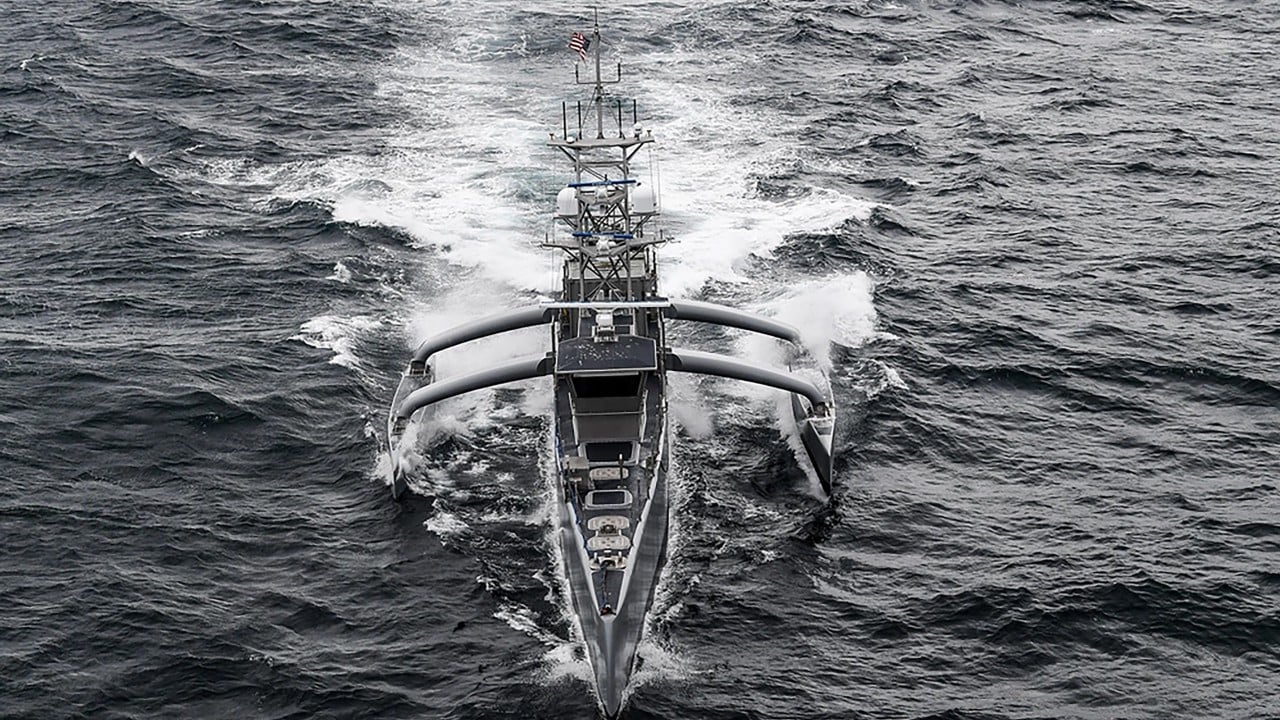
The United States Navy recently activated an experimental drone task force designed specifically to upend traditional war planning in the Indo-Pacific. Operating quietly out of the Pacific Fleet, this new unit consolidates unmanned surface vessels, underwater drones, and aerial reconnaissance into a single tactical command structure. For decades, naval strategy in the Western Pacific revolved around massive aircraft carriers, nuclear submarines, and multi-billion-dollar surface combatants. Those platforms remain vital, but the mathematical reality of modern anti-access/area-denial networks has forced a radical shift.
Beijing has spent twenty years building an arsenal of land-based anti-ship ballistic missiles, coastal defense batteries, and surveillance networks intended to keep
Inside the Pentagon Quiet Shift to Unmanned Warfare in the Pacific
technology, news
The United States Navy is quietly rewriting the playbook for a potential conflict in the Taiwan Strait, shifting away from massive surface combatants toward distributed autonomous systems. This operational pivot reflects a sobering assessment of modern anti-access area denial networks deployed by potential adversaries, where a multi-billion-dollar aircraft carrier can be held at risk by inexpensive coastal defense missiles. By establishing specialized commands focused on unmanned integration, naval planners are attempting to solve a brutal mathematical reality of modern geography. The Western Pacific is simply too close to mainland industrial powerbases for traditional force projection to operate without staggering attrition.
For decades, the standard projection of naval power relied on concentrated capital ships surrounded by layered air and missile defense escorts. That architecture worked well when opponents lacked precision guidance systems capable of tracking targets hundreds of miles offshore. Those conditions no longer exist. Hypersonic glide vehicles, long-range reconnaissance satellites, and swarming land-based anti-ship cruise missiles have compressed response times and expanded threat rings. The response from naval leadership has been an accelerated push toward unmanned surface vessels and underwater drones designed to operate in high-threat environments without risking human crews.
This transformation is not happening in a vacuum. It follows years of iterative experimentation with uncrewed prototypes like the Ghost Fleet Overlord program, which demonstrated that large autonomous vessels could transit thousands of miles autonomously while interfacing with traditional battle management systems. Yet, transitioning from technical demonstrations to operational doctrine remains a formidable hurdle. Navies are inherently conservative institutions built around the culture of ship command and traditional fleet hierarchies. Inserting autonomous nodes into a deeply entrenched bureaucratic culture creates friction that extends far beyond the software challenges.
Logistics present an even steeper climb than hardware procurement. Unmanned systems require robust maintenance footprints, secure satellite communication links resistant to advanced electronic warfare, and reliable power sources that can endure months at sea. When a propulsion system fails on a destroyer, a trained engineering crew can perform repairs at sea. When a long-endurance underwater drone experiences a mechanical fault thousands of miles from a friendly port, recovering or repairing it becomes a high-stakes intelligence operation in contested waters.
Furthermore, the legal and ethical dimensions of autonomous weapon deployment remain contentious. While current doctrine emphasizes a human-in-the-loop or human-on-the-loop requirement for the application of lethal force, the sheer speed of future combat scenarios threatens to outpace human decision-making cycles. If a swarm of uncrewed surface vessels must react to incoming missile fire in fractions of a second, automated response systems become a functional necessity, regardless of policy preferences. This introduces the constant hazard of algorithmic escalation, where machines reacting to ambiguous sensor inputs inadvertently trigger a kinetic response before human operators can intervene.
The geographic realities of the Taiwan Strait amplify these operational complexities. Narrow maritime corridors, heavy commercial shipping traffic, and dense electronic signal environments create a chaotic backdrop for autonomous navigation. Artificial intelligence algorithms trained in open-ocean simulations often struggle with the dense clutter of coastal fisheries, civilian container ships, and deliberate electronic spoofing. Preparing these systems for deployment means subjecting them to adversarial testing environments that mimic the worst-case conditions of a contested littoral zone.
Budgetary battles within the defense establishment further complicate the trajectory of unmanned integration. Traditional defense primes and legacy shipbuilders retain massive lobbying power, often favoring the continued production of multi-year, multi-billion-dollar crewed ship programs. Shifting funds toward modular, attritable autonomous systems disrupts established revenue streams and forces difficult choices about force structure. A fleet optimized for distributed lethality requires thousands of smaller, cheaper platforms rather than a handful of vulnerable flagships. Reconciling that industrial base shift with congressional priorities is an ongoing bureaucratic struggle.
Ultimately, the creation of dedicated drone commands signals an institutional recognition that the old ways of projecting power across the Western Pacific are reaching their operational limits. Whether this organizational pivot can outpace the development of adversary counter-measures will determine the maritime balance of power for the coming decades. The transition is messy, expensive, and fraught with technical risk, but the alternative is maintaining a fleet built for a style of warfare that may no longer exist.