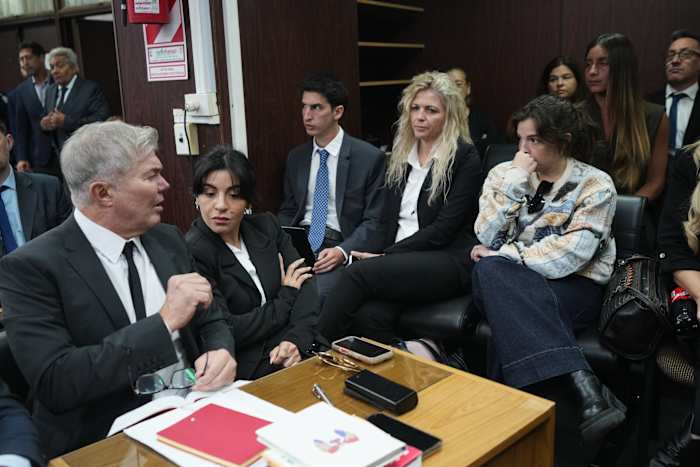
The trial of seven healthcare professionals accused of negligence in the death of Diego Maradona resumed this Tuesday in San Isidro, marking a desperate second attempt by the Argentine justice system to answer a question that has haunted the nation for five years. Was the world’s greatest footballer murdered by incompetence? To call the final days of Diego Armando Maradona a medical failure is a polite understatement. Prosecutors have characterized the environment as a "theater of horror," a makeshift home-hospital where the 1986 World Cup hero was allegedly abandoned to a slow, agonizing death.
This retrial comes after the initial 2025 proceedings collapsed in a mess of judicial misconduct. A presiding judge was forced to resign after appearing in a documentary about the very case she was adjudicating, a blunder that mirrored the chaotic mismanagement of Maradona’s own care. Now, under a new panel of three judges, the prosecution is doubling down on the claim that Maradona’s medical team acted with "possible intent"—a legal distinction suggesting they knew their treatment (or lack thereof) could kill him and simply didn't care.
The Myth of Home Care
In November 2020, following surgery for a subdural hematoma, Maradona was moved to a rented house in Tigre. It was supposed to be a recovery suite. In reality, it was a death trap.
Investigative reports and forensic testimony paint a grim picture of the setting. The "hospitalization" lacked a defibrillator, oxygen tanks, and basic monitoring equipment. According to forensic doctor Mauricio Casinelli, Maradona’s heart weighed nearly double that of a healthy adult—a ticking time bomb that his doctors allegedly ignored. For at least 12 hours before his heart finally stopped, Maradona was in a state of "prolonged agony," his lungs filling with fluid while those paid to protect him remained in the next room or argued over text message.
The Defendants and the Culture of Negligence
The core of the prosecution's case rests on the "reckless" behavior of seven key individuals. At the top of the pyramid is Leopoldo Luque, the neurosurgeon who became the face of Maradona’s recovery, and Agustina Cosachov, the psychiatrist.
The evidence against them is not just medical; it is digital. Thousands of leaked audio messages reveal a startling lack of professionalism. In one exchange, Luque reportedly referred to Maradona in derogatory terms while the legend was in the throes of a medical crisis. The defense maintains that Maradona was a "difficult patient" who refused treatment, but the law suggests that when a patient is as vulnerable as Diego was—suffering from liver cirrhosis, heart failure, and the aftereffects of brain surgery—the responsibility of the physician is absolute.
The other defendants include:
- Carlos Díaz: A psychologist accused of manipulating the medical narrative and hiding the severity of Maradona's condition from his family.
- Nancy Forlini: The medical coordinator who allegedly failed to ensure the Tigre residence met the minimum standards for a patient of Maradona's complexity.
- Mariano Perroni: The nursing coordinator.
- Ricardo Almirón and Pedro Pablo Di Spagna: Healthcare workers accused of falsifying reports and failing to perform basic check-ups.
The Autopsy of a Tragedy
Forensic evidence suggests Maradona did not die of a sudden, unpredictable event. It was a slow-motion collapse. The autopsy revealed no illegal drugs or alcohol in his system, debunking early rumors that his lifestyle had finally caught up to him. Instead, it found a cocktail of psychotropic medications—drugs for anxiety and depression that, while legal, are known to stress a failing heart.
The medical board’s 2021 report was scathing, stating that the medical team’s performance was "inadequate, deficient, and reckless." They argued that Maradona would have had a "better chance of survival" if he had been treated in a proper medical facility rather than a suburban house with a portable toilet.
A Trial of Cultural Significance
In Argentina, Maradona is more than a former athlete; he is a religious figure. The "Sanctuary of Diego" extends from the murals of La Boca to the courtrooms of San Isidro. This is why the stakes of the trial are so high. A conviction of "homicide with possible intent" carries a prison sentence of 8 to 25 years.
The defense strategy is clear: blame the patient. They argue that Maradona’s decades of substance abuse made his death inevitable. But the prosecution is focused on the final 48 hours. They are focused on the nurses who allegedly lied about checking his vitals and the doctors who supposedly signed off on his "lucidity" without seeing him for days.
This trial is not just about a celebrity death. It is an indictment of a healthcare hierarchy where "fame" often results in worse care, not better. Doctors often become "fans" or "enablers," afraid to tell the icon "no," or worse, they become exploiters seeking to stay in the inner circle at the cost of clinical rigor.
The proceedings are expected to last through June, with nearly 100 witnesses scheduled to testify. Among them are Dalma and Giannina Maradona, the daughters who have led the charge for justice, claiming their father was "killed" by those entrusted to save him. As the court examines over 120,000 audio files and messages, the world will finally see the digital trail of a tragedy that could have been prevented.
The reality of the situation is that no verdict will bring him back, but the legal precedent set here will define medical accountability in Argentina for a generation. If you take charge of a life, especially one as fragile and legendary as Maradona’s, you do not get to walk away when the heart finally gives out under the weight of your own silence. Justice for Diego is a demand for a higher standard of care, one that treats the human, not the myth.
Hold the medical establishment accountable or the "horror theater" will simply find a new stage.