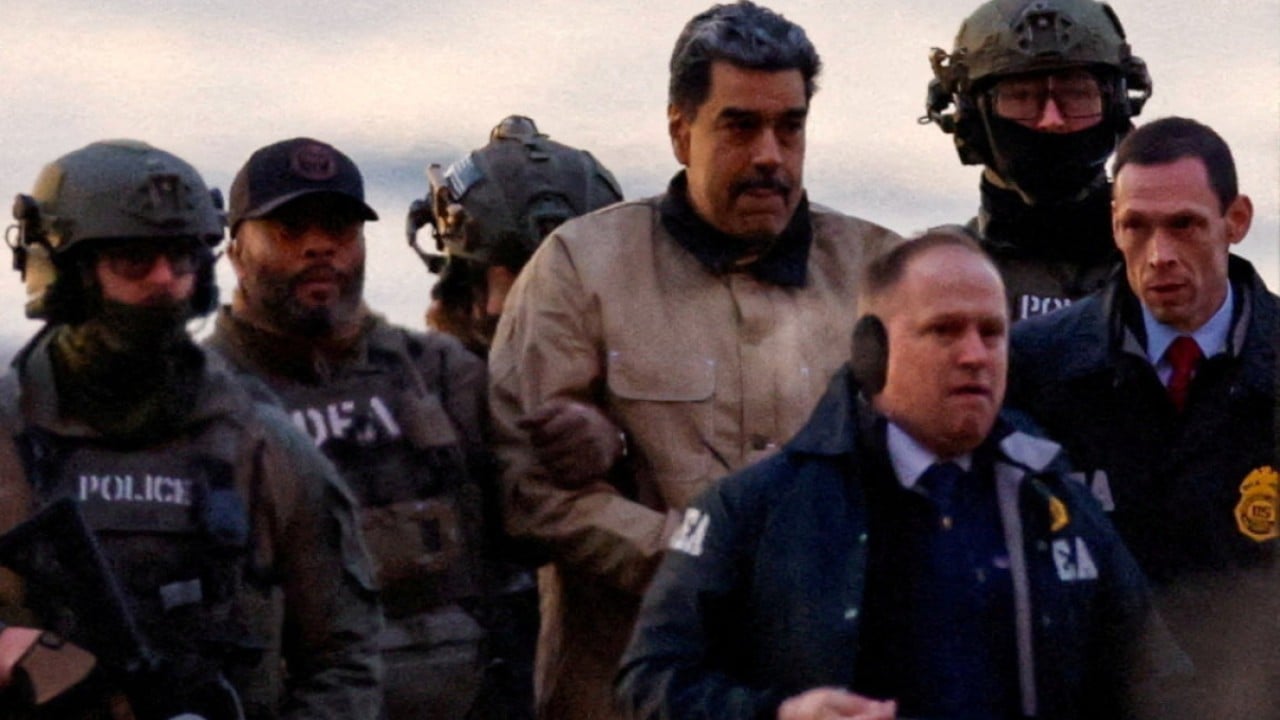
When Nicolás Maduro stood before a federal judge in Manhattan and dismissed fresh torture allegations as "false," the courtroom drama looked like a routine denial from a defendant fighting for his life. It is not. By folding systematic torture charges dating back to 2013 into a rewritten federal indictment against Maduro and his wife, Cilia Flores, U.S. prosecutors have transformed a narcotics and weapons prosecution into a sweeping test of extraterritorial justice—while Maduro’s defense team prepares to challenge both the factual record and the legal mechanics of a case born out of a January 2026 military raid in Caracas.
A standard wire story stops at the soundbite: prosecutors allege torture, Maduro calls it false, a trial date sits on the calendar for June 2027. Anyone who has covered international criminal prosecutions or Latin American security states for long enough knows that the real fight happens long before opening statements. It happens in jurisdictional motions, chain-of-command documentation, evidentiary admissibility, and the uncomfortable friction between domestic U.S. criminal law and international human rights norms.
Why Torture Entered a Drug Indictment
Federal prosecutions in the Southern District of New York have historically leaned on conspiracy statutes, financial trails, and narcotics networks because those cases fit neatly into familiar prosecutorial toolkits. Adding torture charges to the case against Maduro and Flores changes the architecture of the prosecution entirely. Under international law and U.S. statute, torture carries a distinct legal weight that does not depend on proving a drug shipment crossed a maritime border.
Prosecutors are trying to link alleged abuses stretching back to Maduro’s rise to power in 2013 directly to senior leadership rather than treating them as rogue acts by low-level guards. That is a high bar in any courtroom. Establishing command responsibility or direct participation requires more than general reports of harsh prison conditions or street-level clashes. It demands proof connecting specific orders, institutional design, or knowing tolerance to the individuals sitting at the defense table.
For years, international investigators have built a dense paper trail around abuses inside Venezuela’s security apparatus. The United Nations Independent International Fact-Finding Mission on the Bolivarian Republic of Venezuela has documented patterns of arbitrary detention, beatings, electric shocks, asphyxiation, solitary confinement, and ill-treatment across state security forces and pro-government armed groups known as colectivos. Human Rights Watch and Amnesty International have echoed those findings across multiple cycles of political unrest, including the crackdown following the disputed July 2024 presidential election.
Yet a human rights finding is not a criminal conviction beyond a reasonable doubt. UN investigators operate under mandate standards designed to assess patterns and international law violations; federal juries operate under strict rules of evidence, hearsay limits, and constitutional confrontation rights. Bridging that gap is the central tactical challenge for the Justice Department.
- Evidentiary chain: Witness testimony from exiles or former detainees must withstand cross-examination on memory, translation, and potential bias.
- Attribution: Prosecutors must separate generalized state repression from provable directives or complicity tied to Maduro and Flores.
- Jurisdictional scope: Extending U.S. federal reach to conduct occurring inside Venezuela invites aggressive pretrial motions over sovereign immunity, venue, and statutory authority.
The Anatomy of a Denial in Manhattan
Denials from indicted leaders are predictable. The strategy behind the denial is what matters.
When Maduro’s defense team—led by attorney Barry Pollack—pushed back against the rewritten indictment and signaled he looks forward to his day in court, while Cilia Flores entered a plea of not guilty through an interpreter, they were staking out two overlapping lines of defense. One is factual: disputing the accuracy and credibility of the torture allegations. The other is structural: framing the entire proceeding as an extraordinary, politicized prosecution brought after their capture by U.S. forces in Caracas in January 2026.
In high-stakes political prosecutions, defendants rarely rely on a single exit door. They attack the facts inside the courtroom while contesting the legitimacy of how they arrived there.
Consider a hypothetical example to see how defense counsel approaches a multi-year abuse record. Suppose a prosecution witness testifies that a detainee suffered abuse in a state facility in Caracas during a protest wave, and mentions a senior official’s name overheard during interrogation. Defense lawyers will probe whether the witness actually saw who gave the order, whether the official’s name was used by interrogators to intimidate detainees, or whether records from that facility even exist. Even if a jury believes abuse occurred, reasonable doubt on knowledge and control can fracture a conspiracy or torture count.
That is why the timeline stretching back to 2013 is a double-edged sword. A thirteen-year window gives prosecutors room to argue a long-running system rather than an isolated spike in repression. At the same time, older events bring faded memories, missing logs, and witnesses scattered across multiple countries who may face safety risks or visa complications when testifying in New York.
What Overlooked Factors Will Shape the Trial
Most coverage treats this case as a binary clash between Washington and Caracas. That framing misses several forces already shaping the road to the scheduled June 2027 trial.
First is the tension between universal jurisdiction principles and domestic U.S. prosecutorial strategy. Torture is widely condemned under international law, and states sometimes invoke universal jurisdiction to pursue grave abuses committed abroad. In a U.S. federal court, however, every count must rest on specific domestic statutes and jurisdictional hooks—such as U.S. victim ties or specific statutory triggers—rather than abstract international norms alone. Pretrial briefing will test exactly how far those domestic hooks stretch.
Second is the political volatility surrounding the broader U.S.–Venezuela standoff. The January 2026 capture of Maduro and Flores, followed by contentious debates in Washington over military actions, international law, and Latin American policy, guarantees that every courtroom ruling will be scrutinized through a partisan and geopolitical lens. Pretrial hearings—including the December 2026 appearance—will be less about dramatic revelations and more about scheduling, classified or sensitive material, and motions to dismiss or sever counts.
Third is the human reality inside Venezuela that federal indictments cannot resolve on their own. Rights monitors have repeatedly pointed to structural impunity within Venezuela’s own courts, where security forces have historically faced little domestic accountability and political prisoners have cycled in and out of custody. A federal trial in New York can adjudicate specific criminal charges against named defendants. It cannot automatically reform domestic policing, open closed detention centers, or deliver closure to every family affected over the past decade.
| Dimension | Human Rights Investigations | U.S. Federal Criminal Trial |
|---|---|---|
| Primary Goal | Document patterns, abuses, and international law violations | Determine individual criminal guilt under U.S. law |
| Standard of Proof | Credible information / reasonable grounds to believe | Beyond a reasonable doubt |
| Key Evidence | Victim interviews, NGO reports, open-source and documentary records | Admissible testimony, authenticated records, physical/digital proof |
| Main Vulnerability | Lack of enforcement power or binding arrest authority | Strict evidentiary rules, jurisdictional and attribution hurdles |
Gray Areas Nobody Wants to Admit
Honest analysis requires acknowledging where the ground shifts beneath everyone’s feet. Prosecutors have strong institutional resources and extensive investigative backing, yet proving individual criminal liability for systemic state abuse over more than a decade is notoriously difficult. Defendants, meanwhile, face steep uphill odds in federal court once indicted, even when they mount vigorous challenges to jurisdiction and witness credibility.
Observers watching the case unfold should track the pretrial motion docket closely rather than waiting for headline-grabbing courtroom exchanges. Watch how the judge rules on evidentiary scope, whether the defense succeeds in narrowing the time period or specific counts, and how prosecutors connect institutional structures to individual acts. Those technical rulings—not the rhetoric outside the courthouse—will decide what actually reaches a jury in June 2027.