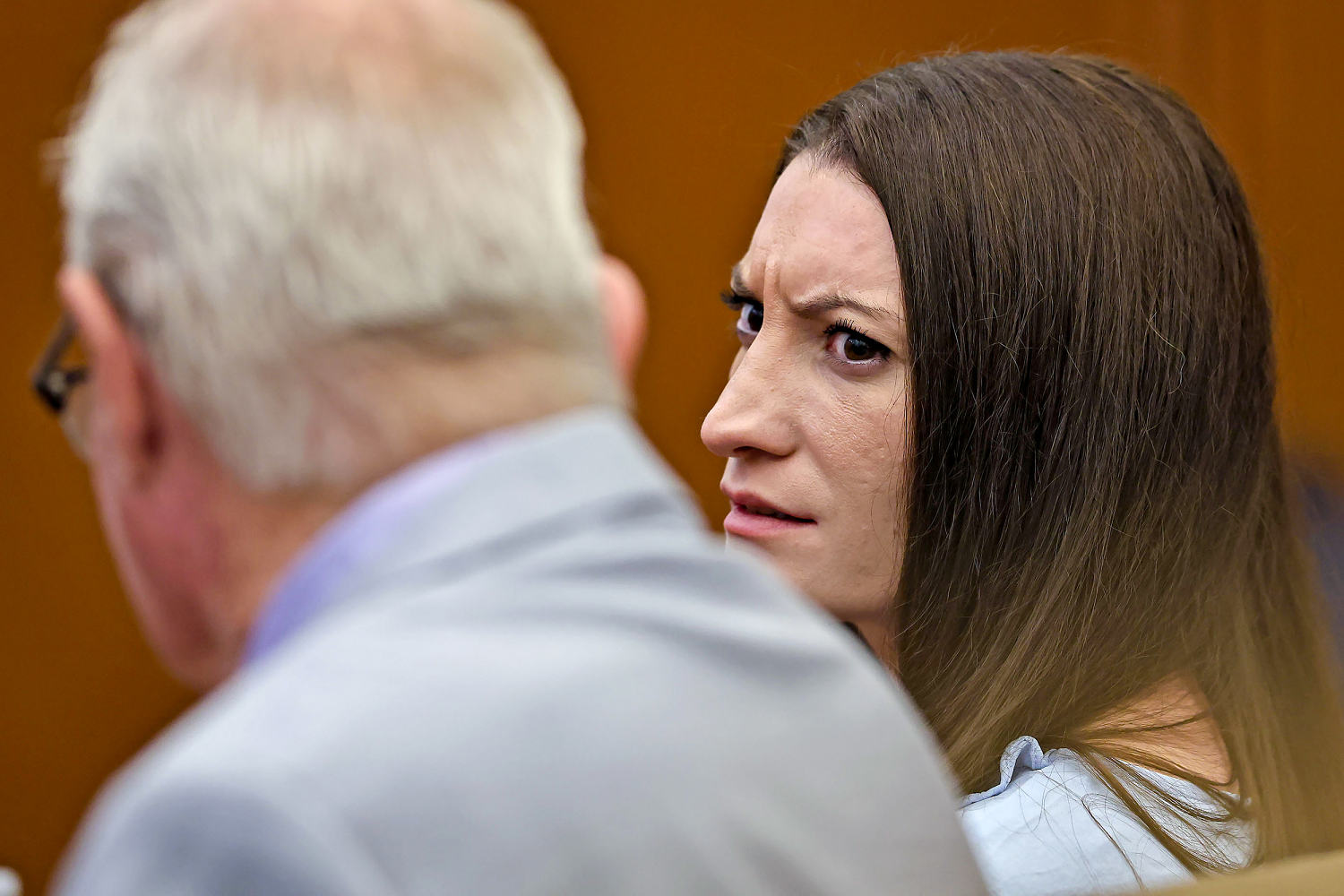
The jury is deadlocked. Five days of intense behind-the-scenes friction have laid bare the profound difficulties courts face when trying to apply rigid legal frameworks to catastrophic psychological collapses. The case of Lindsay Clancy, the Massachusetts mother accused of strangling her three young children while suffering from severe postpartum psychosis, has pushed the criminal justice system to its absolute limits. As deliberations stretched into their fifth day at the Plymouth County Superior Court, a sudden courtroom arrest added a chaotic physical manifestation to an already volatile atmosphere.
Yet the real story is not the temporary disruption in the gallery. The real story is the profound struggle twelve ordinary citizens face when forced to weigh medical reality against traditional definitions of criminal intent.
For decades, the insanity defense has served as a lightning rod in American jurisprudence. Prosecutors and defense teams routinely clash over the precise definition of mental disease or defect at the exact moment an alleged crime occurs. In high-profile trials involving severe psychiatric deterioration, the margin for error narrows to a razor edge. Jurors are handed complex psychiatric testimonies, competing timelines of medication management, and conflicting expert witness assertions. They are asked to reconstruct a shattered mind from months prior, determining whether a defendant understood the wrongfulness of their actions or possessed the capacity to conform their conduct to the requirements of the law.
When a jury cannot reach a consensus after multiple days of deliberation, it signals more than mere stubbornness among panel members. It reveals a fundamental tension in how society evaluates extreme mental illness.
The defense has maintained that Lindsay Clancy was experiencing an acute episode of homicidal ideation driven by severe postpartum psychosis, a condition exacerbated by a rapid succession of powerful psychiatric medications and over-medication, a phenomenon frequently referred to in medical literature as pharmaceutical-induced akathisia or severe medication overload. According to this perspective, the brain was so chemically altered and overwhelmed by psychosis that the cognitive bridge between action and moral consequence had completely collapsed.
Conversely, the prosecution has continually pressed on evidence of purposeful behavior leading up to the tragedy. They point to actions taken, communication methods used, and brief windows of apparent clarity as indicators of premeditation and awareness. To a jury relying on standard legal instructions, these contrasting interpretations create an evidentiary labyrinth. One side presents a narrative of a mother hijacked by a broken brain system, while the other presents a narrative of deliberate acts carried out by an individual who knew right from wrong.
Compounding this courtroom friction is the broader public failure to comprehend the sheer devastation of postpartum psychiatric disorders. While public awareness campaigns have grown louder, the legal system still struggles to distinguish between standard postpartum depression and the rare, terrifying reality of postpartum psychosis. Psychosis involves a complete break with reality. It features paranoid delusions, command hallucinations, and terrifying imperatives that can convince a loving parent that they are somehow saving their children from a doomed world.
When jurors stare at evidence from a night of unimaginable horror, they are forced to reconcile the person who existed before the breakdown with the actions committed during the height of the psychiatric crisis. It is an excruciating analytical burden.
The courtroom arrest that briefly disrupted the proceedings added a surreal layer of tension to an environment already stretched taut by emotional fatigue. Court officers moved quickly to detain an individual in the gallery, sending a ripple of anxiety through a room filled with journalists, legal observers, and family members. While court officials later downplayed the incident as an isolated security breach, it underscored the high-stakes emotional gravity hanging over the trial. Every whisper, every movement, and every procedural delay is magnified under the unrelenting glare of national media attention.
As deliberations continue, the deadlocked status points toward a difficult road ahead for the trial judge, who may soon be forced to issue a modified charge to encourage further discussion among the jurors. If that fails, a mistrial looms as a distinct and disruptive possibility. A mistrial would reset the entire legal machinery, forcing the victims families, the witnesses, and the legal teams to endure the harrowing process all over again.
The larger indictment here is not directed at the jury box. It is directed at a legal apparatus that forces profound medical tragedies through the narrow, antiquated keyhole of criminal culpability. Until the courts develop more coherent frameworks for handling pharmaceutical toxicity and severe psychiatric collapse, trials like this will continue to expose the deep fractures running beneath the surface of American justice.
The jury remains sequestered. The deliberation room door remains shut. Outside, the questions keep mounting, with few clean answers in sight.