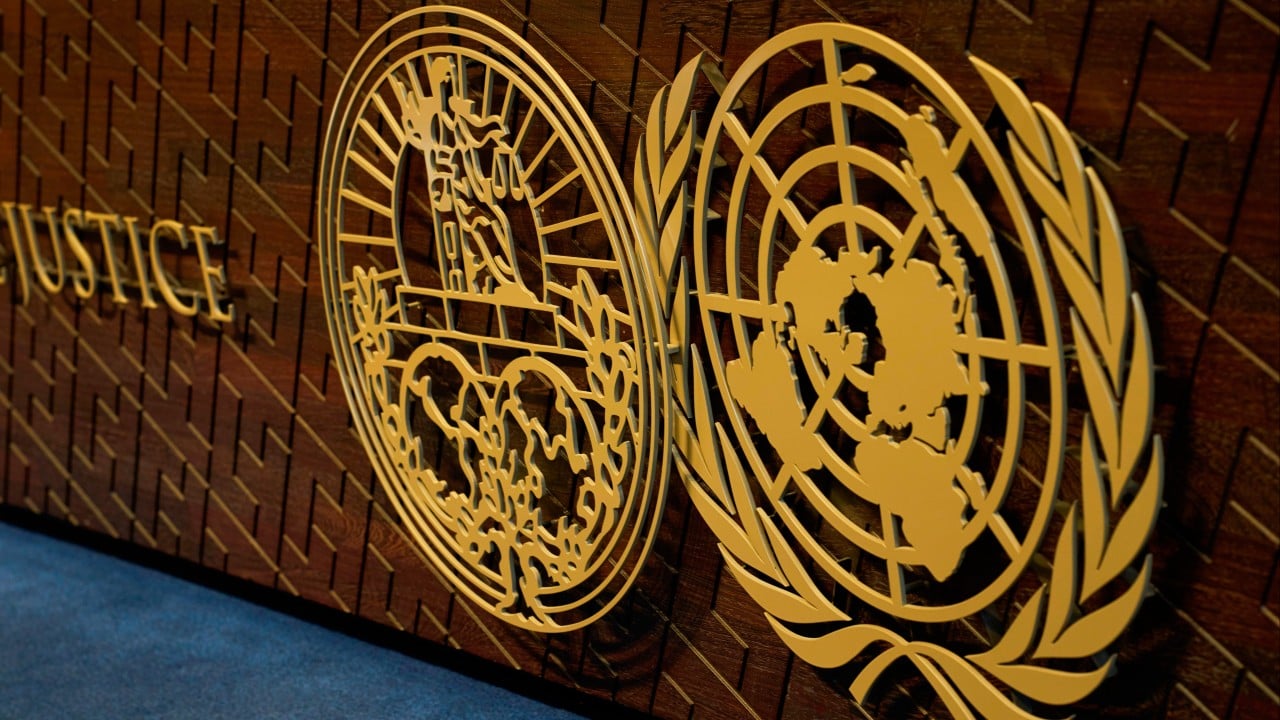
Berlin arrived at the Peace Palace in The Hague with a singular, unyielding objective: to dismantle a lawsuit before it could reach the merits of history. Germany has formally urged the International Court of Justice to throw out the high-stakes case brought by Nicaragua, which accuses the European industrial powerhouse of facilitating genocide in the Gaza Strip through military exports and the withdrawal of aid.
The legal maneuvering unfolding inside the UN's top court is far more than a dry procedural debate over jurisdiction. It represents a desperate structural defense by a state bound by historical atonement, caught in the crosshairs of modern humanitarian law, and determined to protect its defense manufacturing pipeline from international liability.
The Mechanics of the Dismissal Request
Legal teams representing the Federal Republic of Germany centered their arguments on strict procedural thresholds, asserting that Nicaragua failed to fulfill the foundational requirement of properly notifying Berlin before launching legal action. By pressing the court on these technical omissions, the German delegation aims to short-circuit an evidentiary process that would otherwise scrutinize the exact export licenses granted to Israel since late 2023.
For months, Berlin has walked a diplomatic tightrope. As Israel's second-largest arms supplier, German officials face immense domestic and international pressure. The state's legal representatives argued before the bench that Nicaragua’s claims lack a grounded basis in both fact and law. They emphasized that every military export license undergoes a rigorous, individualized bureaucratic screening process designed to comply with international obligations—even as critics point out that shipments resumed following brief, tactical suspensions.
This defense strategy relies heavily on technical containment. By arguing that the court lacks jurisdiction and that Nicaragua is an improper proxy for indirect complaints against a third party—namely Israel—Berlin hopes to avoid a deep judicial inquiry into whether supplying weapons to an active combat zone breaches the 1948 Genocide Convention.
The Weight of Historic Guilt and Modern Complicity
To understand why Berlin is fighting this case with such intensity, one must examine the psychological and political architecture of modern German foreign policy. The doctrine of staatsräson—the foundational principle that Israel's security is a core national interest of the German state—stems directly from the historical culpability of the Holocaust. For decades, this doctrine provided moral clarity.
That clarity has fractured under the weight of contemporary geopolitical realities. When a state makes the security of another foreign nation a pillar of its own constitutional identity, executing that policy during a high-casualty urban campaign creates profound legal vulnerabilities. Nicaragua’s lawsuit exploits this exact tension, arguing that the positive duty to prevent genocide under international treaties supersedes bilateral alliances.
By cutting off and later restoring funding to the United Nations Relief and Works Agency (UNRWA) alongside continuous military hardware transfers, Berlin exposed itself to charges of contributing to a man-made humanitarian collapse. The legal challenge forces German diplomats to defend administrative decisions that critics argue directly exacerbated civilian suffering inside the besieged enclave.
Beyond the Courtroom
The proceedings in The Hague carry heavy implications for how middle powers conduct foreign policy in the shadow of asymmetric conflicts. If the International Court of Justice decides to bypass Germany's preliminary objections and proceed to a full evaluation of the merits, it will establish a dangerous precedent for any nation supplying arms to an ally engaged in controversial military operations.
Other Western governments watching from the sidelines recognize the stakes. A ruling that holds an arms exporter legally accountable for the downstream actions of the recipient state would revolutionize international arms control law. It would transform commercial defense contracts into direct legal liabilities under human rights frameworks.
Germany’s push for dismissal is therefore an effort to preserve a status quo where sovereign states can maintain strategic military partnerships without facing international judicial exposure for the end-use of those weapons. Whether the bench of international judges accepts this procedural firewall or decides to tear it down will determine the legal limits of modern military alliances for decades to come.
The judges at The Hague are deliberating behind closed doors, weighing procedural technicalities against the sprawling humanitarian crisis that triggered the lawsuit in the first place.