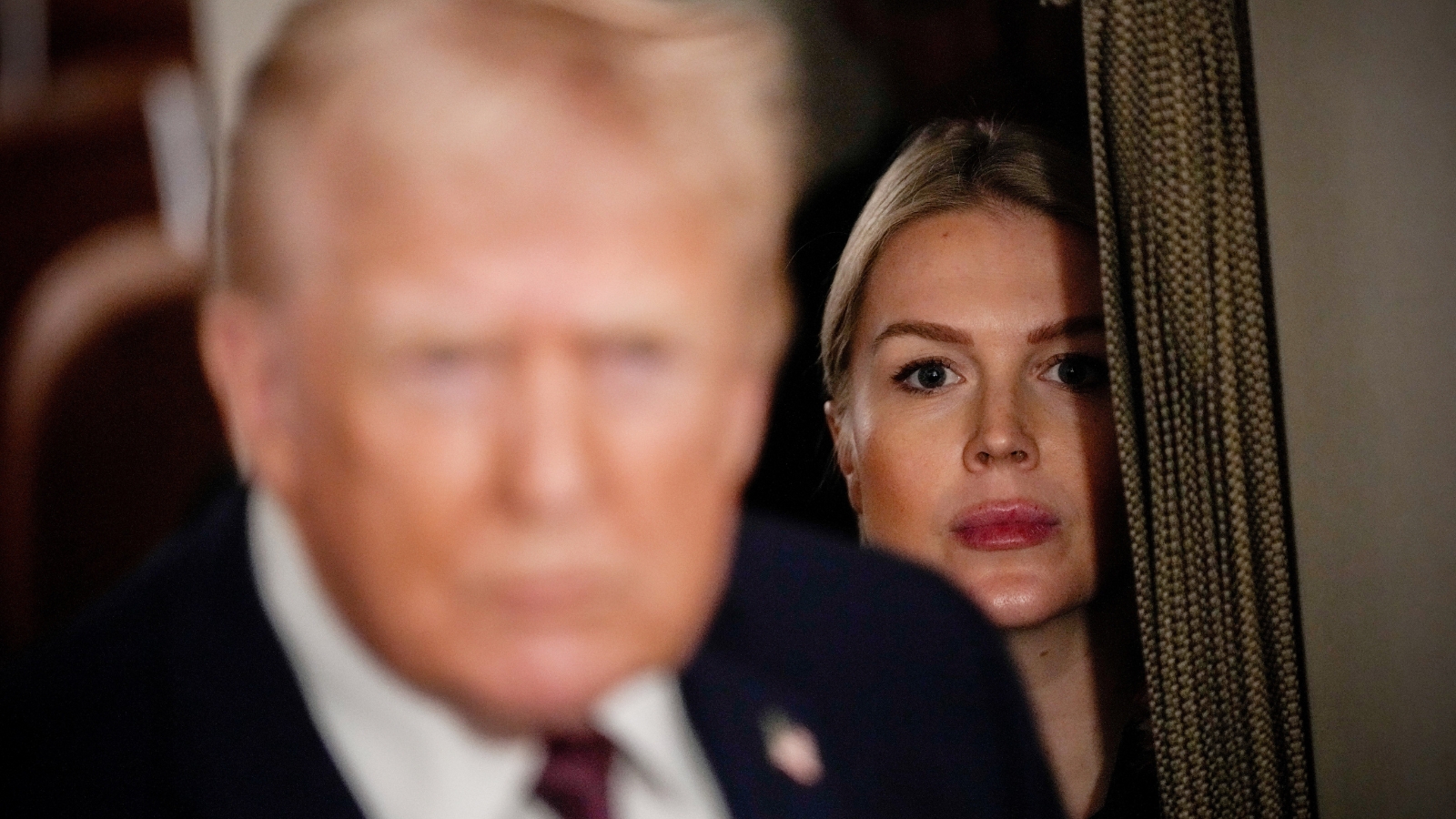
The abrupt announcement that Karoline Leavitt is stepping down as White House press secretary marks the end of a tenure defined less by traditional bureaucratic diplomacy and more by absolute ideological combat. Taking the podium at age twenty-seven as the youngest spokesperson in American history, Leavitt understood the modern media ecosystem better than most of her predecessors. She treated every briefing not as an information-sharing session, but as a cable news battleground. Yet her exit highlights a deeper friction within contemporary political communications, where the demand for viral confrontation frequently collides with the structural requirements of institutional trust.
Her tenure began with a flashpoint that set the tone for the months that followed. During her debut press briefing in January 2025, Leavitt announced that the newly formed Department of Government Efficiency and the Office of Management and Budget had uncovered a preposterous waste of taxpayer funds: fifty million dollars designated to send condoms to Gaza. Independent fact-checkers immediately dismantled the claim, pointing out that the broader funding package involved humanitarian aid through organizations like the International Medical Corps, with zero evidence of millions earmarked strictly for contraceptives.
For traditionalists, the episode was an indictment of post-truth messaging. For the administration's base, however, it functioned precisely as intended. The assertion merged fiscal outrage with foreign aid skepticism, creating an immediate media cycle that dominated the news ecosystem. This strategy relied on a calculated trade-off. By the time mainstream newsrooms published detailed refutations, the narrative had already circulated across social media platforms millions of times.
The friction between viral messaging and verifiable reality characterized her handling of economic and social policy as well. When defending sweeping tariff packages, Leavitt routinely framed them as direct financial relief for domestic workers, dismissing standard macroeconomic consensus regarding import taxes. Similarly, her responses to questions regarding federal records and legal challenges were designed to preemptively delegitimize inquiries rather than provide clarity. The podium became an instrument of disruption, weaponizing linguistic speed to outrun analytical scrutiny.
Beyond policy briefings, Leavitt frequently drew fire for cultural sparring that targeted her own generational demographic. During a media appearance addressing modern workforce attitudes, she criticized younger Americans for having silver spoons in their mouths, conceding that a sense of entitlement was prevalent among Gen Z. When pressed by interviewers about systemic economic hurdles, she pivoted to cultural grievances, suggesting that younger critics should experience life abroad to appreciate American stability. These remarks exposed a tactical contradiction. As a digital-native millennial speaking for a populist movement, she often utilized the exact cultural idioms of online combat to disparage her contemporaries.
The structural changes implemented under her watch further institutionalized this combative posture. The press office systematically altered long-standing relationships with the independent press corps, moving away from traditional seat allocations and challenging the authority of the White House Correspondents Association. By asserting direct control over press access and favoring digital content creators over legacy media outlets, Leavitt accelerated a structural shift in how executive power communicates with the public. The objective was never to court the approval of mainstream journalism, but to bypass it entirely in favor of direct-to-consumer digital channels.
Now, as she departs to spend time with her family and transition into an external advisory role, the apparatus she helped shape remains fully operational. Her successor will inherit a press room fundamentally altered by her tenure. The podium is no longer expected to serve as a neutral arbiter of facts. It has transformed permanently into an ideological spearhead, proving that in contemporary politics, the velocity of the message matters far more than its alignment with empirical reality.