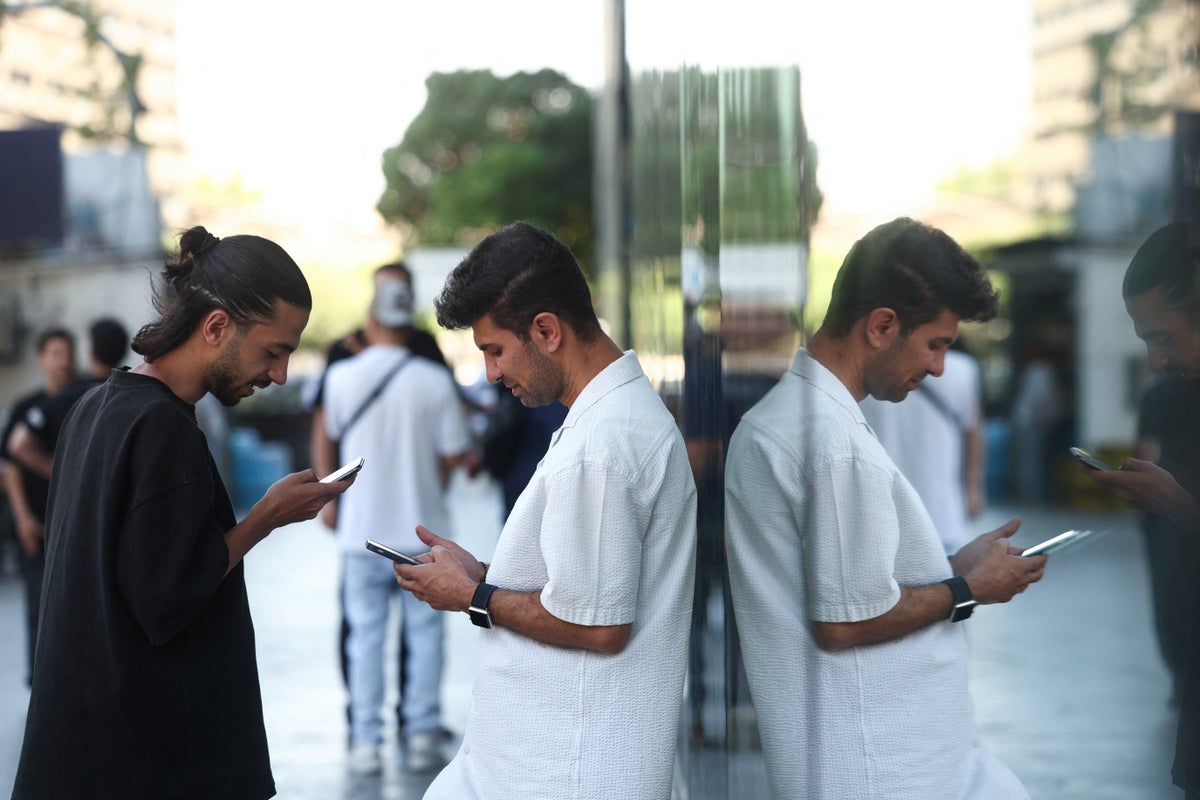
The Iranian government has fundamentally reshaped its strategy for digital suppression. Moving away from the clumsy, brute-force network blackouts of the past, Tehran has quietly completed an internal network infrastructure designed to isolate citizens without triggering global alarm. This architecture leaves roughly 60 percent of the population completely cut off from the global internet, trapped instead inside a highly monitored, government-controlled national intranet. For the average citizen in Tehran or Mashhad, typing a web address no longer connects to the world network. It routes to a localized proxy.
The Myth of the Sudden Kill Switch
Western headlines frequently report on sudden internet blackouts as if a lone official simply pulls a physical plug in Tehran during civil unrest. This view is dangerously obsolete. Network telemetry data from independent monitoring groups reveals a far more insidious mechanism at play. For another look, read: this related article.
The state-owned Telecommunication Infrastructure Company handles all international internet gateways entering Iran. Instead of dropping Border Gateway Protocol routing announcements, which would instantly alert global network analysts, Iranian authorities now keep the routing paths intact while aggressively filtering and throttling data packets at the network edge. The connection looks alive on macro-level dashboards, but data cannot flow.
The implementation relies heavily on Deep Packet Inspection equipment deployed at regional Internet Service Provider Points of Presence. During recent street demonstrations, authorities systematically targeted specific cell towers, mobile data networks, and localized fixed-line connections. They did not shut down the entire country simultaneously. They strangled the flow of information in specific, restive neighborhoods while maintaining regular business traffic in government quarters. This tactical, asymmetric control minimizes the visible drop in international traffic metrics while successfully neutralizing the public's ability to share video evidence of human rights violations. Further reporting on this trend has been published by The Next Web.
The National Information Network Trap
At the center of this containment strategy sits the National Information Network, an alternative domestic infrastructure developed over more than a decade. The domestic network is not an internet block. It is a mirror world.
Tehran has used a combination of financial coercion and artificial technical degradation to force the population onto this national loop. Domestic internet traffic is heavily subsidized, costing a fraction of international data access. Simultaneously, the Ministry of Information and Communications Technology ordered standard international connection prices to rise significantly, effectively pricing global connectivity out of reach for lower-income families.
| Metric | Domestic Network Traffic | Global Internet Traffic |
|---|---|---|
| Relative Cost | Subsidized, up to 70% cheaper | Artificially inflated via state mandates |
| Avenue of Access | Unrestricted for domestic apps | Blocked by default; requires complex VPNs |
| State Surveillance | Total, via localized server hosting | Indirect, via gateway packet filtering |
| Data Throttling | High-speed fiber optimization | Deliberately throttled and destabilized |
When a user attempts to access an external messaging app or news site, the request encounters multiple layers of state interference. Security services routinely throttle international bandwidth to a crawl, rendering external web pages unusable even if they bypass the initial filter. This creates an environment of manufactured frustration, pushing users toward domestic clones of popular applications where all communication is logged and linked directly to a national identity number.
Whitelists and Tiered Citizenship
The digital divide in Iran is no longer just between those who can afford internet and those who cannot. It is defined by state-vetted privileges. The regime has introduced a formalized whitelist system that divides the population into distinct tiers of digital access.
Hardline lawmakers, state media operations, select university professors, and high-ranking bureaucratic entities utilize specialized SIM cards. These accounts bypass standard domestic filters entirely, granting users unrestricted access to the global web to spread state propaganda or conduct official business. Meanwhile, the general public is forced to navigate a heavily restricted tier, where major global platforms remain permanently blocked.
[Global Gateways] ---> [State Infrastructure (TIC)] ---> [Deep Packet Inspection Filter]
                                                                  |
                         +----------------------------------------+----------------------------------------+
                         |                                                                                 |
                         v                                                                                 v
             [Privileged Whitelist Tier]                                                       [Public Mass User Tier]
        (Unrestricted Global Access SIMs)                                                (National Information Network Intranet)
The domestic technology industry has been forced to adapt to these restrictions through state-sanctioned client-side modifications. Major applications are replaced by cloned versions where encryption keys are held by security services. For the small business owner operating in Tehran, this creates a profound dilemma. Using the domestic network allows their business to process payments and communicate with local suppliers, but it also exposes their entire data trail to the judiciary.
The Collapse of Digital Circumvention
For years, Virtual Private Networks served as the primary tool for bypassing the state censor. That cat-and-mouse game has reached a breaking point. The government has banned alternative payment methods like cryptocurrencies and gold transfers, making it exceedingly difficult for citizens to purchase reliable, foreign-hosted VPN services.
Standard protocols like OpenVPN and WireGuard are routinely detected and blocked within minutes of initiation. Security agencies now target the digital signatures of the encryption protocols themselves. When a user connects to a foreign proxy server, the automated filtering system identifies the handshake pattern and immediately drops the connection. This has transformed digital circumvention from a simple software solution into a highly technical, unstable chore that requires constant configuration changes.
Even satellite-based alternatives face massive logistical roadblocks. While commercial satellite terminals exist within the country via illicit smuggling routes, the regime has enacted strict legislation categorizing the unauthorized possession of these devices as a severe state offense. The threat of heavy fines and long-term imprisonment limits satellite usage to a tiny fraction of the population, leaving the vast majority dependent on the compromised terrestrial grid. The digital wall enclosing the country is no longer a temporary hurdle erected during political crises. It is a permanent infrastructure.