The internal compact keeping Russia's economic elite aligned with the state is fraying under a rain of carbon fiber and cheap explosives. Frustrated by the state’s inability to protect their infrastructure from deep-penetrating Ukrainian drone strikes, Russia’s top billionaires have broken a long-standing political taboo. They are publicly demanding heavy weaponry, anti-aircraft lasers, and control over military personnel to build their own corporate armies.
Alexander Shokhin, the head of the powerful Russian Union of Industrialists and Entrepreneurs, took this unprecedented grievance directly to Vladimir Putin. The message was unmistakable. The state's air defense umbrella has failed the industrial heartland, and the billionaires want the tools to defend themselves.
The development exposes a structural crisis. Russia cannot build air defense systems fast enough to protect both the frontline and the factories financing the war. By forcing corporate giants to source, fund, and manage their own military-grade defenses, the war is decentralizing the state's monopoly on violence.
The Trillion Ruble Blind Spot
For decades, Russian oligarchs operated under a simple rule. They stayed out of politics, and the Kremlin protected their assets. Ukrainian long-range strike drones have shattered that arrangement. The economic toll has reached a level that corporate balance sheets can no longer absorb.
Russian oil and gas companies suffered losses estimated at 1 trillion rubles ($11 billion) in a single calendar year due to infrastructure damage and lost production. These are not superficial hits. Striking deep into the Ural Mountains and target rich environments like Chelyabinsk, Perm, and Yekaterinburg, Ukrainian drones now threaten roughly a quarter of all Russian territory.
Faced with these losses, corporate executives realized that the Russian Aerospace Forces prioritize high-value military assets and the skies over Moscow. Private infrastructure is far down the list. This realization led to quiet lobbying that eventually broke out into open demands for heavy arms.
The Kremlin tried to defuse the anger with half-measures. A law passed earlier allowed private security firms to use basic firearms to counter drone threats. Lawmakers noted that over 80 percent of Russia’s fuel and energy complex relies on these private guards. Giving them 7.62mm rifles, however, is like throwing pebbles at a moving vehicle when dealing with modern, autonomous strike platforms.
The Technical Mismatch
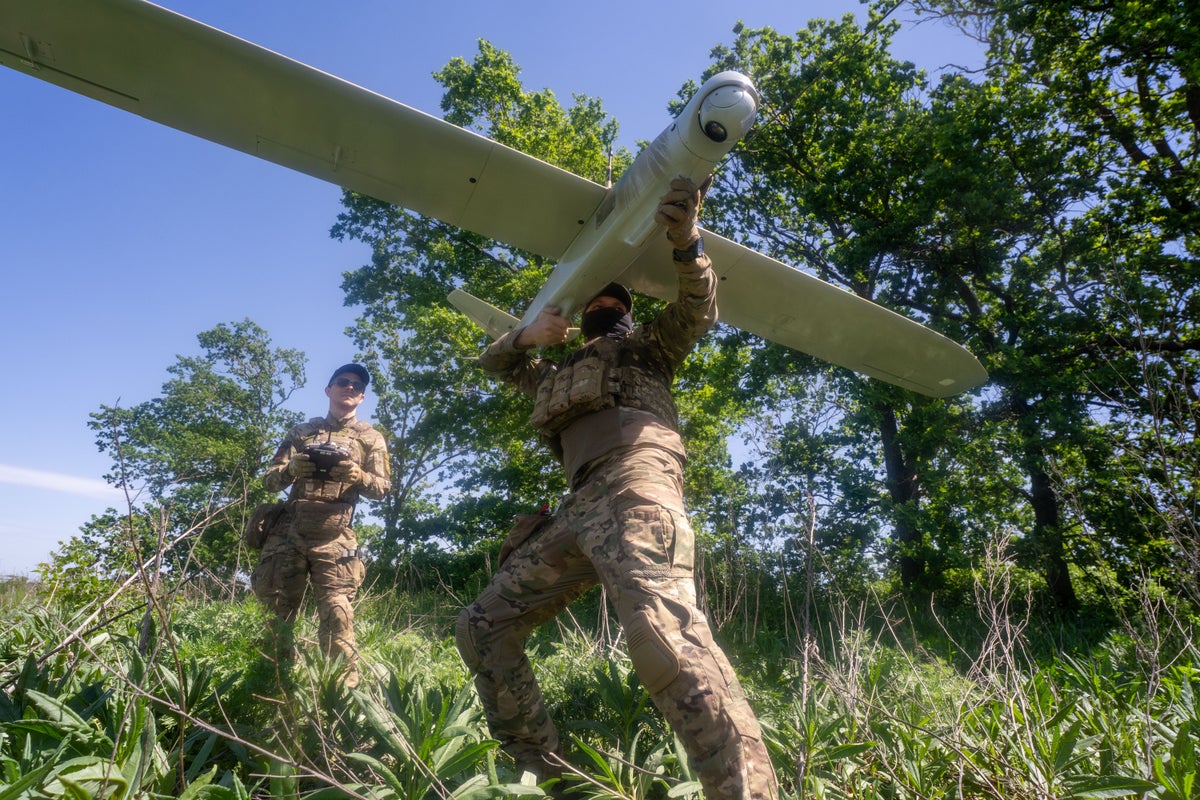
Industrialists know that light weapons are useless against the latest generation of unmanned aerial vehicles (UAVs). Companies like Fire Point have re-engineered long-range drones to carry warheads weighing up to 200 kilograms while completely bypassing traditional electronic jamming networks. A security guard with an automatic rifle cannot stop a low-flying, composite-material wing moving at 150 kilometers per hour through heavy fog.
This capability gap explains why Shokhin explicitly asked Putin for heavy calibers, electronic warfare complexes, and advanced laser installations. Corporate leadership wants military-grade equipment. They are asking for systems comparable to the Pantsir-S1 or specialized electronic jamming suites to build a corporate iron dome over refineries and steel mills.
+------------------------------------------------------------+
|             THE CORPORATE AIR DEFENSE DILEMMA              |
+------------------------------------------------------------+
| STATE PRIORITIES            | CORPORATE REALITY            |
| * Protect frontline troops  | * Vulnerable energy hubs     |
| * Guard Moscow airspace     | * Inadequate 7.62mm rifles   |
| * Secure military bases     | * Billions in asset losses   |
+------------------------------------------------------------+
| RESULT: Oligarchs demand private heavy weapons and lasers. |
+------------------------------------------------------------+
Even if the Kremlin grants permission to buy this hardware, a massive supply bottleneck remains. State defense conglomerate Rostec is working at maximum capacity. While factories have turned out upgraded variants like the Pantsir-SMD, which holds 48 smaller anti-drone missiles to counter swarms, every single unit rolling off the assembly line is immediately claimed by the Ministry of Defense for the front.
Private enterprises cannot simply buy a Pantsir on the open market. They are competing for the same limited manufacturing capacity, components, and microchips required by the regular army.
The Battle for Human Capital
The crisis extends beyond hardware to a acute shortage of trained personnel. Operating complex electronic warfare systems or tracking radars requires specialized military expertise. Private security guards cannot learn these skills during a two-week certification course.
To solve this, Russian businesses began utilizing a legal loophole allowing them to deploy military reservists for site security. The strategy failed almost immediately. Shokhin complained bitterly to Putin that constant military reassignments make consistent site defense impossible. A corporate security team might secure a trained crew on Monday, only to watch the Ministry of Defense reassign those same men to a frontline breakthrough unit by Wednesday.
This tug-of-war over manpower highlights a deeper truth. The Russian state is cannibalizing its domestic defense infrastructure to sustain its offensive operations.
The Evolution of the Threat
The domestic panic comes as Ukraine refines its middle strike strategy, hitting targets between 20 and 200 kilometers behind the front lines, while simultaneous long-range campaigns strike deeper into the Russian interior. These operations do not just target oil tanks. They systematically isolate logistics corridors, like the crucial Novorossiya highway route linking mainland southern Ukraine to Crimea.
When logistics lines and production hubs face simultaneous disruption, the entire economic engine begins to stall. The state's response has been erratic. High-level military purges, including the abrupt dismissal of Aerospace Forces chief General Viktor Afzalov, show the Kremlin's deep frustration. Changing command personnel, however, does not alter the fundamental math of the conflict. The territory is too vast, the targets are too numerous, and the air defense systems are too few.
Decentralizing the Monopoly on Force
By asking to arm private security forces with heavy weapons, lasers, and dedicated military units, Russia’s billionaires are pushing the country into uncharted political territory. Historically, authoritarian regimes view private armies with extreme suspicion. The brief, chaotic mutiny led by Yevgeny Prigozhin and the Wagner Group stands as a stark warning to the Kremlin about what happens when non-state actors acquire heavy weaponry.
Yet, Putin faces a brutal choice. He can refuse the oligarchs, leaving the economic engines funding his state budget vulnerable to catastrophic disruption. Alternatively, he can greenlight the arming of corporate cartels, creating powerful, heavily armed private security structures answers to boardrooms rather than the General Staff.
The corporate elite are not acting out of political defiance. They are acting out of self-preservation. When a state can no longer fulfill its basic promise to protect the property of its most powerful citizens, those citizens will eventually take security into their own hands. The fragmentation of Russian security architecture is no longer a theoretical risk. It is a corporate line item.