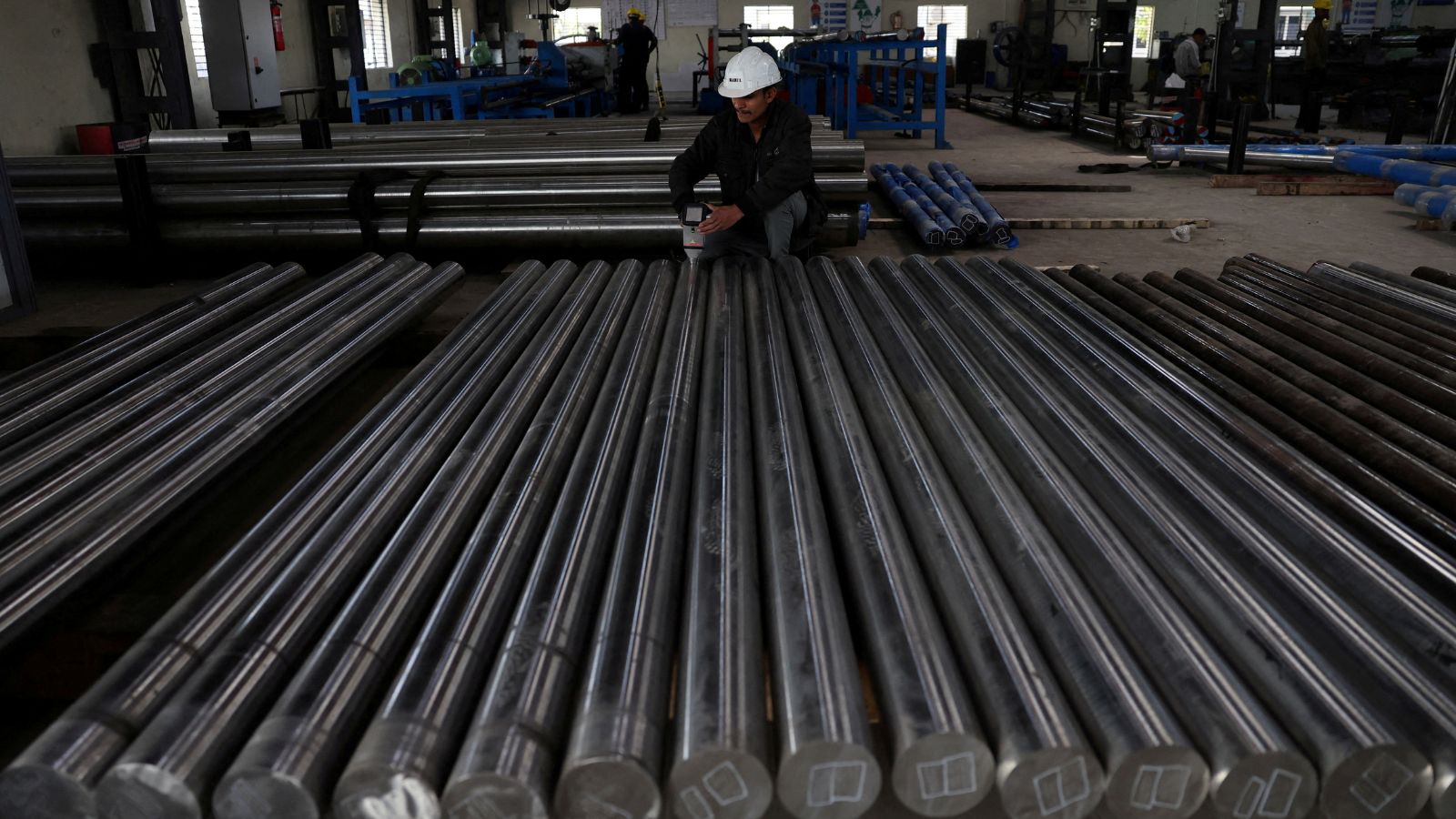
India secured entry for 2.8 million metric tonnes of steel exports under a bilateral European Union arrangement, shielding a substantial portion of its outbound shipments from punitive tariffs. Yet behind the headlines of diplomatic triumph lies an intricate administrative maze that threatens to choke margins for mills across Gujarat, Odisha, and beyond. Brussels did not open its doors out of generosity. Instead, European regulators constructed a framework of quotas, carbon border adjustments, and retroactive compliance checks designed to protect domestic producers while maintaining a veneer of open trade.
To understand what 2.8 million metric tonnes actually means for the domestic sector, one must look past the press releases issued in New Delhi and examine the physical reality of port dispatch schedules. Indian steel mills are operating in an environment of tightening global margins, surging energy costs, and relentless competition from Chinese excess capacity diverted away from slowing domestic construction. When the European Union imposed strict safeguard quotas alongside the looming shadow of the Carbon Border Adjustment Mechanism, Indian exporters faced a cliff edge. Securing an allocation for 2.8 million metric tonnes prevents total market exclusion, but the terms of engagement carry heavy operational friction.
The Anatomy of the Quota Squeeze
Quarterly caps dictate the rhythm of modern maritime commerce. European importers cannot simply buy Indian hot-rolled coil whenever prices dip or demand spikes. Shipments must fit within narrow temporal windows, and any unused quota from a prior quarter does not automatically roll over in a predictable fashion.
Exporters face tiered tariff rate quotas where exceeding the threshold triggers prohibitive duties. For an industry accustomed to moving high volumes based on spot market liquidity, this administrative micromanagement introduces severe cash flow friction. Mills must now balance production planning against unpredictable customs bottlenecks at Rotterdam and Antwerp, where European customs officials scrutinize origin certificates with unprecedented skepticism.
Consider a hypothetical mid-tier steel producer in Hazira attempting to fulfill a long-term supply contract for European automotive components. Under the new arrangement, the mill must verify not only the chemical composition and mechanical properties of the steel but also the precise carbon intensity of every single gigajoule of energy consumed during the blast furnace stage. If a secondary supplier in the domestic logistics chain fails to provide audited emissions data, the entire consignment risks detention at the border. The 2.8 million metric tonnes exemption is less of an open highway and more of a single-lane bridge governed by traffic lights that change without warning.
The Carbon Border Adjustment Reality Check
Brussels has weaponized environmental compliance as a trade barrier. The Carbon Border Adjustment Mechanism operates as an invisible tariff, penalizing imports from jurisdictions where energy grids rely heavily on coal-fired power. Indian steel producers, despite significant strides in energy efficiency and waste heat recovery, still draw a substantial share of their electricity from a national grid anchored by thermal generation.
This structural reality creates a distinct disadvantage when competing against European mills subsidized by green transition funds or operating near hydroelectric and nuclear power sources. When the financial levies of the carbon adjustment fully phase in, the cost advantage that once made Indian steel attractive to European buyers will erode significantly.
Industry executives often speak publicly about diversification, pointing toward alternative markets in the Middle East, Southeast Asia, and Latin America. Privately, however, the financial gravity of the European Union market remains impossible to ignore. Europe demands high-value specialty grades, automotive sheets, and construction-grade alloy products that command superior margins compared to standard commercial commodities demanded elsewhere. Losing this market would have forced domestic mills into a painful cycle of overproduction and local price wars. Securing the 2.8 million metric tonnes quota bought time, but it did not solve the structural emissions deficit.
Navigating the Geopolitical Tightrope
New Delhi’s trade negotiators found themselves boxed into a difficult corner during these bilateral discussions. India has historically resisted foreign linkage of trade agreements to domestic environmental standards, viewing such measures as disguised protectionism. Yet the reality of modern industrial policy is stark: major economic blocs possess the regulatory muscle to dictate terms at the border.
The European strategy relies on setting global compliance norms by default. If Indian mills wish to maintain their footprint in Western markets, they must accelerate decarbonization timelines that were previously scheduled for completion decades down the road. Green hydrogen pilot projects and scrap-based electric arc furnace conversions are no longer experimental research initiatives; they are urgent balance-sheet requirements.
Companies failing to secure reliable access to low-emission energy sources will find themselves boxed into lower-margin domestic segments, ceding the most lucrative international contracts to competitors in regions with accelerated clean energy transitions.
The 2.8 million metric tonnes agreement is neither a historic victory nor a defeat. It is a temporary ceasefire in a protracted war of economic attrition where environmental standards serve as the ultimate tariff. As shipping manifests clear customs and cargo clears European docks, the underlying pressure on domestic producers mounts. The real test of India's industrial resilience will not be found in the negotiation room where quotas are carved out, but on the factory floors where the carbon footprint of every single ton is measured, taxed, and judged


