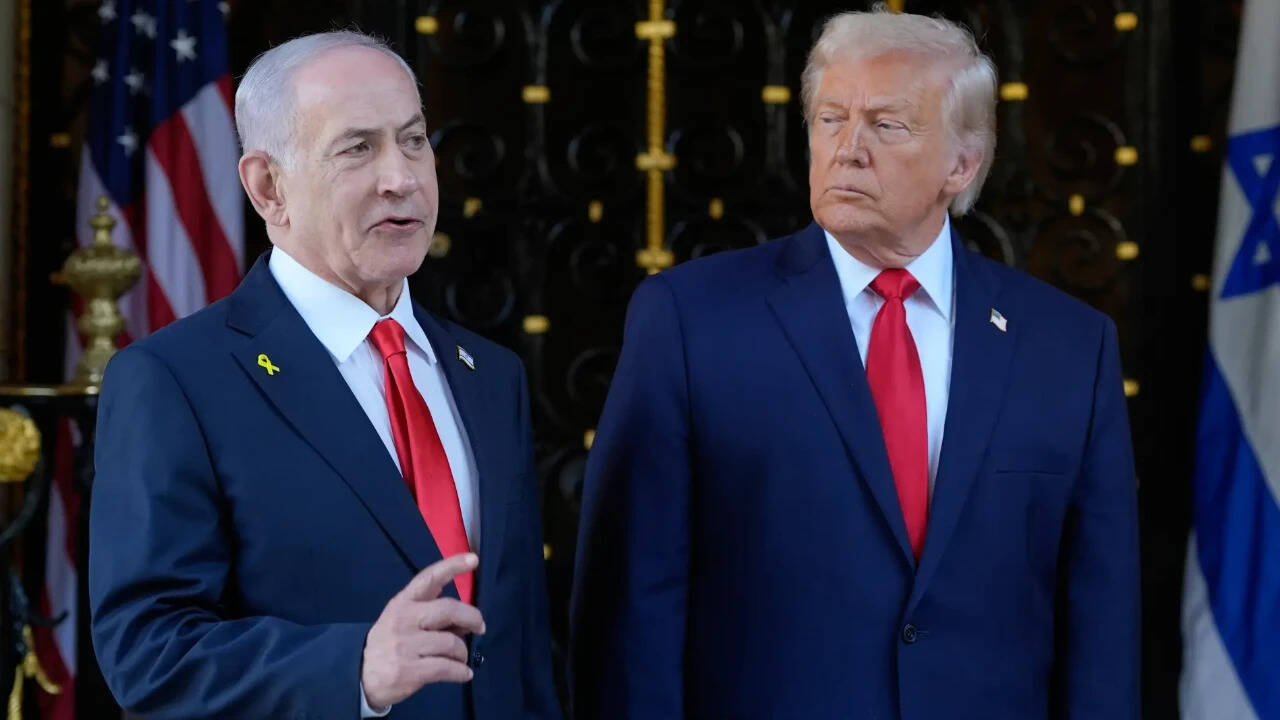
Donald Trump can still function as the religious right's imperfect vessel, yet the theological and political terms of that arrangement have shifted from a triumphant bargain into a strained, high-wire negotiation. A clear majority of white evangelical Protestants continue to back him in office, even as confidence in his personal ethics has fallen and midterm headwinds have exposed quiet cracks inside once-unified congregations.
For more than a decade covering American religion and power, I have watched political analysts treat conservative Christians as a monolithic voting machine that simply trades character for courts. That shorthand misses the real machinery. The "imperfect vessel" idea—a nod to biblical stories of flawed rulers whom God supposedly uses for broader purposes—was never just a clever talking point for pastors defending a three-time married billionaire. It was a transactional bridge built out of cultural fear, institutional leverage, and an urgent desire to win back ground lost over half a century.
How the Imperfect Vessel Bargain Took Hold
In 2015 and 2016, plenty of prominent Christian commentators and candidates doubted Trump could survive a Republican primary, let alone win the allegiance of devout churchgoers. Many leaders initially favored other contenders, only to watch rank-and-file voters gravitate toward Trump's combative style and cultural grievance.
Vessels need a clear purpose. For years, conservative evangelicals defined that purpose in stark, concrete terms: conservative judicial appointments, religious liberty protections, and the overturning of Roe v. Wade. Once those long-sought milestones arrived, the original justification for tolerating Trump's rough edges changed shape.
A vessel is judged by what it carries into the room—and once the heavy lifting is done, people start looking closer at the cracks in the clay.
Critics inside and outside the movement have long argued that the "imperfect vessel" defense masked deeper motives. Sociologist and Public Religion Research Institute leader Robert P. Jones has contended that the abortion rationale functioned in part as a respectable cover for broader anxieties about racial and cultural change and the preservation of a white Christian national identity. Whether one views that critique as harsh or spot-on, the data from Trump's second term shows that loyalty has not been unconditional.
Pew Research Center polling from January 2026 found that while 69% of white evangelical Protestants approved of Trump's job performance and 58% supported all or most of his plans and policies, those numbers had slipped from early 2025. More strikingly, the share of white evangelicals expressing high confidence that Trump acts ethically in office dropped 15 points over that one-year span, from 55% to 40%.
What the Numbers Reveal Behind the Pews
Polling averages hide friction that only surfaces when voters talk at length outside a rally crowd. By autumn 2026, reporting ahead of the midterm elections pointed to softening enthusiasm across parts of Trump's broader coalition, including noticeable slippage among voters who had backed him previously.
Support still holds highest among frequent churchgoers compared with nominal Christians or non-religious voters, yet the internal strain is visible. Consider a hypothetical scenario at a suburban church in a battleground district: a longtime member supports the president's stance on judges and border security, yet feels uneasy about abrasive rhetoric, controversial online posts, or economic pressures on family budgets. That voter may not defect to Democrats, but enthusiasm cools—and cooled enthusiasm changes turnout.
- Ethics versus outcomes: Many conservative believers separate personal conduct from policy execution, treating the presidency as an instrument rather than a moral example.
- Generational and racial divides: Younger evangelicals and Christians of color do not experience Trump's brand of Christian nationalism or immigration enforcement the same way older white churchgoers do.
- Pulpit pressure: Pastors face a delicate calculation over whether to rally congregants around cultural flashpoints or steer clear of partisan friction that divides pews.
Different traditions inside the coalition also read Trump through different lenses. Charismatic and prosperity-oriented voices have often embraced him as a bold champion and fighter, whereas more traditional or confessional Protestants sometimes view the alliance with grim pragmatism or quiet regret.
| Group or Metric | Key Observation | Practical Meaning |
|---|---|---|
| White evangelical job approval | Clear majority still approves, though down from early second-term highs | Core base remains intact, not immune to erosion |
| Confidence in Trump's ethics | Dropped 15 points among white evangelicals between early 2025 and early 2026 | Tolerance for character flaws has measurable limits |
| Christians of color and younger voters | Much lower overall favorability and sharper political cross-currents | Limits any claim that "the religious right" speaks with one voice |
| Midterm mobilization | Uneven energy around cultural and economic issues | Turnout gaps can swing close contests even without mass defections |
The Overlooked Fault Lines Inside Conservative Christianity
Most pundits frame the story as a tug-of-war between Trump and liberal critics. That misses the fiercer argument happening inside conservative Christianity itself.
One fault line runs straight through Christian nationalism. For some believers, blending national identity with Christian heritage is a vital defense against secularization. For others—including traditionalists who worry about subordinating the gospel to any political movement or leader—that fusion cheapens the faith.
Another fault line involves immigration and economic strain. Latino Christians and church leaders confronting enforcement anxieties, alongside working-class families squeezed by living costs, test the assumption that cultural grievances automatically override pocketbook and community realities.
When a Movement Outgrows Its Symbol
Political movements rarely collapse overnight; they hollow out slowly when the original mission shifts or matures. An "imperfect vessel" works best when voters feel under siege and see a single brawler as their only shield. Once the fight becomes routine governance, everyday trade-offs, and succession questions, a brawler's habits can start feeling like a liability rather than a weapon.
What Comes After the Vessel Metaphor
Even if Trump remains the dominant figure on the religious right for the rest of his time in office, the myth of effortless alignment is already worn thin. Leaders who built their influence around him now have to answer a harder question than how to defend a flawed ally: what holds conservative Christians together when the loudest voice in the room is no longer on the ballot, or when voters start asking what kind of moral witness they left behind?
Watch the local church halls and midterm turnout margins rather than cable-news shouting matches, because that is where a movement's real durability is tested.