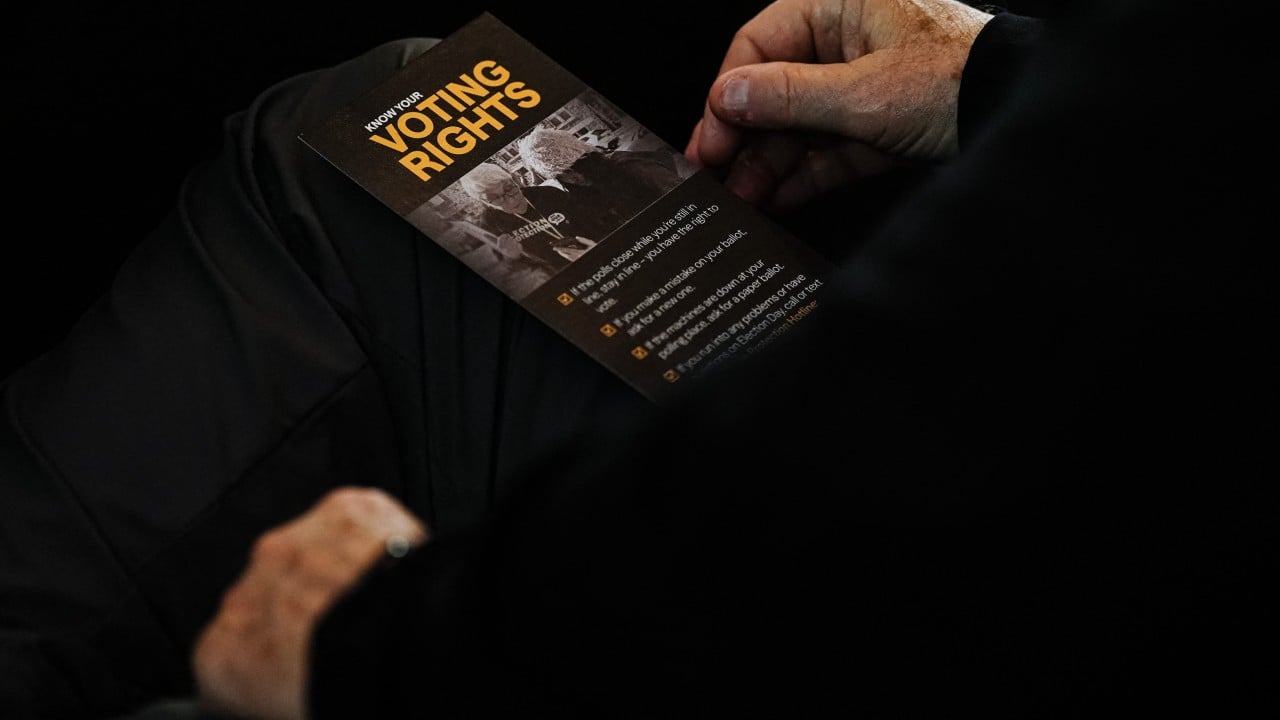
Thousands of poll observers deploy to voting locations across the United States on Election Day to watch the administration of the vote, document procedural compliance, and report irregularities to political parties, nonpartisan coalitions, or federal authorities. While state laws strictly define what these watchers can and cannot do, the surge in partisan and nonpartisan mobilization has transformed routine civic oversight into a high-tension operational front. Understanding who is standing behind the check-in tables—and the exact legal boundaries governing their presence—separates genuine election transparency from disruptive intimidation.
The Architecture of Election Observation
Election observation in the United States is not a monolithic federal operation. It is a decentralized patchwork governed by fifty different state legislatures, thousands of county election boards, and distinct statutory definitions.
To understand how polling places are monitored, you first have to separate the three distinct groups operating inside and outside voting precincts on Election Day.
Partisan Poll Watchers
Partisan poll watchers are credentialed representatives appointed directly by political parties, specific candidates, or ballot measure committees. According to guidelines compiled by the National Conference of State Legislatures (NCSL), nearly every state permits partisan observers, though the rules governing their appointment vary wildly.
In states like Texas and Florida, county party chairs or candidates submit formal lists of designated watchers ahead of Election Day. These individuals must wear visible identification badges and present signed certificates to the presiding election judge upon arrival. Their primary objective is adversarial transparency—ensuring that poll workers apply rules consistently to voters of all political persuasions and documenting any perceived deviations for potential post-election litigation.
Nonpartisan Citizen Observers
Nonpartisan observers operate under a different mandate. Organizations such as the Election Protection coalition, led by the Lawyers' Committee for Civil Rights Under Law, deploy thousands of trained volunteers—including attorneys and paralegals—to monitor polling places.
Unlike partisan watchers, nonpartisan observers are frequently restricted from standing inside the immediate voting enclosure in many jurisdictions. Instead, they position themselves outside the statutory buffer zone—typically 50 to 100 feet from the entrance—where they conduct exit surveys, troubleshoot voter registration issues, and connect disenfranchised voters with legal hotlines. In states that allow credentialed nonpartisan observation inside the room, such as California and Colorado, these monitors focus on ADA compliance, language access, and wait times rather than individual voter eligibility.
Federal and International Monitors
The U.S. Department of Justice (DOJ) Civil Rights Division routinely deploys federal personnel to jurisdictions across the country to monitor compliance with federal voting rights laws, including the Voting Rights Act of 1965, the Americans with Disabilities Act, and the Help America Vote Act.
Federal oversight comes in two forms. Federal observers are appointed by the Office of Personnel Management under court orders or specific statutory provisions, granting them explicit legal authority to enter polling places and watch ballot tabulation. DOJ staff monitors, by contrast, are attorneys and personnel from the Civil Rights Division who rely on the consent and cooperation of local election officials to gain access to voting sites. Alongside domestic agencies, international bodies like the Organization for Security and Co-operation in Europe (OSCE) also dispatch diplomatic missions to evaluate U.S. elections against international democratic standards, though their access is similarly dictated by individual state statutes.
What Poll Observers Can Actually Do
Hollywood dramas and viral social media clips frequently distort the reality of poll watching. A credentialed observer is not a law enforcement officer, an election judge, or a bouncer.
They are eyes and ears. Nothing more.
Across virtually all U.S. jurisdictions, state statutes establish bright lines between passive observation and active interference. According to state election manuals from the U.S. Election Assistance Commission (EAC), credentialed observers are generally permitted to perform a narrow set of functions:
- Monitor the opening and closing of polls: Watchers can observe poll workers verifying that ballot boxes are empty before voting begins and that electronic voting machines display zero-tape printouts showing no pre-loaded votes.
- Observe voter check-in procedures: Observers may stand close enough to hear voters state their names and addresses, allowing them to cross-reference against their own party-issued voter lists to track turnout.
- Watch ballot handling and tabulation: They can observe the transfer of provisional ballots, the scanning of paper ballots, and the sealing of memory cards at the end of the night.
- Document and report discrepancies: If a poll worker fails to follow statutory procedure—such as forgetting to sign a ballot or misdirecting a voter—the observer can note the time, detail the incident, and report it to the presiding precinct official or their party's legal war room.
The operational limits are equally strict. Watchers are universally prohibited from touching ballots, handling voting equipment, looking over a voter's shoulder inside a privacy booth, or wearing campaign apparel. Most critically, observers are barred from speaking directly to voters inside the polling place. If an observer has an issue with how a ballot is being processed, they must address the precinct supervisor, never the citizen casting the vote.
The Mechanics of Voter Challenges
The sharpest friction point inside any polling place revolves around voter eligibility challenges. This is where routine observation collides directly with a citizen's right to cast a ballot.
State laws diverge sharply on how—and whether—a poll watcher can challenge a voter's qualifications. In states like Michigan and Wisconsin, partisan challengers have statutory authority to formally question a voter's eligibility based on specific criteria, such as residency, citizenship, or age. However, election administrators enforce strict evidentiary standards. A challenger cannot simply point at a voter and demand their removal based on a hunch or demographic profiling.
When a formal challenge occurs, it triggers a specific administrative protocol rather than an automatic denial of the vote. In most jurisdictions, the election judge places the voter under oath and asks a series of standardized statutory questions to verify their eligibility. If the voter answers satisfactorily, they are permitted to cast a regular ballot, though the challenge is logged in the official poll book. If doubt remains, federal law under the Help America Vote Act guarantees the individual the right to cast a provisional ballot, which is segregated and adjudicated by county election officials after Election Day once registration records are thoroughly verified.
Other states, recognizing the potential for mass disruption, have severely curtailed or eliminated on-the-spot challenges by partisan watchers. In Pennsylvania, for instance, partisan watchers can challenge a voter's identity or residency, yet legal guidance from the Pennsylvania Department of State emphasizes that challenges must be made in good faith and cannot be used to delay lines or harass voters.
Why Observer Mobilization Has Surged
The deployment of thousands of observers is not a new phenomenon, yet the scale, coordination, and rhetoric surrounding these operations have shifted dramatically over the past decade. Several structural forces drive this expansion.
The Erosion of Institutional Trust
Following contested election cycles and widespread narratives questioning the integrity of mail-in voting and electronic tabulation, political operatives have treated observer recruitment as a primary campaign pillar. Both major political parties invest millions of dollars into recruiting, training, and deploying legal teams and volunteer watchers. For party strategists, a dense network of observers serves a dual purpose—it reassures skeptical voters that someone is guarding the process, while simultaneously building an evidentiary record for potential post-election court battles.
Razor-Thin Electoral Margins
Modern U.S. presidential and congressional elections are frequently decided by tens of thousands of votes spread across a handful of swing counties. When margins are that tight, minor administrative errors—such as an unsealed ballot transfer bag, a miscalibrated tabulator, or an improperly rejected provisional ballot—can become the centerpiece of high-stakes recounts and litigation. Campaigns deploy observers to battleground precincts specifically to catch procedural anomalies in real time, knowing that contemporaneous notes from an eyewitness carry far more weight in court than retrospective speculation.
Legal Shifts and Consent Decrees
For nearly four decades, the Republican National Committee operated under a 1982 federal consent decree that strictly limited its ability to conduct "ballot security" initiatives, following lawsuits alleging voter intimidation in New Jersey. When a federal judge allowed that consent decree to expire in 2018, it removed a major legal restraint on national party-coordinated poll-watching operations. Since then, national party committees have built permanent, year-round election integrity departments dedicated to recruiting thousands of volunteers and filing preemptive lawsuits over observer access rules.
The Thin Line Between Oversight and Intimidation
While transparency strengthens democratic legitimacy, poorly trained or overly aggressive observers can inadvertently—or deliberately—suppress turnout. Election administrators walk a razor's edge between accommodating statutory observation rights and protecting voters from coercion.
Federal law, specifically Section 11(b) of the Voting Rights Act and the Ku Klux Klan Act of 1871, strictly prohibits intimidating, threatening, or coercing any person for voting or attempting to vote. Importantly, legal precedent established by federal courts indicates that intimidation does not require explicit threats of physical violence. Aggressive questioning, photographing voters or their license plates, blocking entrances, or hovering dangerously close to check-in tables can all cross the legal threshold into unlawful interference.
To manage this risk, county clerks and secretaries of state rely on spatial management and strict chain-of-command protocols.
Consider a hypothetical scenario inside a busy suburban precinct during the evening rush. Two credentialed observers from opposing parties are stationed behind the check-in table. One observer notices a poll worker failing to check the signature on the poll book before handing out a ballot, and loudly interrupts the check-in process to demand the voter stop. In a properly managed precinct, the chief election judge immediately steps in, directs the observer back to their designated observation area, takes down their complaint in writing, and quietly reminds the poll worker of the signature requirement without ever subjecting the voter to an argument.
When training breaks down, however, small disputes escalate rapidly. Poll workers—who are often temporary civic volunteers working 14-hour shifts—can become overwhelmed when confronted by assertive observers reciting partisan talking points. If a presiding judge loses control of the room, lines stall, tempers flare, and frustrated voters leave without casting their ballots.
How Election Officials Prepare for the Surge
State and local election offices do not wait until Election Day to manage the influx of observers. Months ahead of the vote, administrators implement rigorous logistical and legal safeguards designed to keep polling places running smoothly.
- Standardized Credentialing: Counties enforce strict deadlines for submitting observer names, preventing unvetted individuals from showing up unannounced at 6:00 AM demanding access.
- De-escalation Training: According to training curricula published by the Cybersecurity and Infrastructure Security Agency (CISA) and state election boards, poll worker instruction now heavily emphasizes conflict resolution, physical boundary enforcement, and rapid communication with county legal counsel.
- Designated Observation Zones: Precinct managers use physical markers, tape, or seating arrangements to establish exact sightlines—close enough for observers to hear check-ins and see ballot boxes, yet far enough away to protect voter privacy and prevent physical bottlenecks.
- Law Enforcement Coordination: Local election directors establish direct communication channels with municipal police and county sheriffs ahead of Election Day. Officers are briefed on state election codes so they understand that they cannot enter a polling place unless explicitly summoned by the presiding election judge to address an active breach of the peace.
Navigating the Polling Place as a Voter
For the average citizen walking into a precinct, the presence of credentialed observers should be largely invisible. Observers are part of the background machinery of an election, subject to the exact same laws and decorum standards as everyone else in the building.
If you encounter disruptive behavior at a polling site—whether from an aggressive watcher, a campaigner violating the buffer zone, or a confused poll worker—the chain of command is straightforward. Report the issue immediately to the presiding election judge or precinct captain on site. They hold statutory authority over the room and can revoke an observer's credentials on the spot if they violate state conduct rules. If local officials fail to resolve the problem, voters can document the incident and report it directly to their county board of elections, the nonpartisan Election Protection hotline (866-OUR-VOTE), or the Department of Justice Voting Section.
Transparency works only when everyone in the room respects the rules that make the count possible. A credentialed badge grants the right to watch the process unfold, never the power to disrupt it.