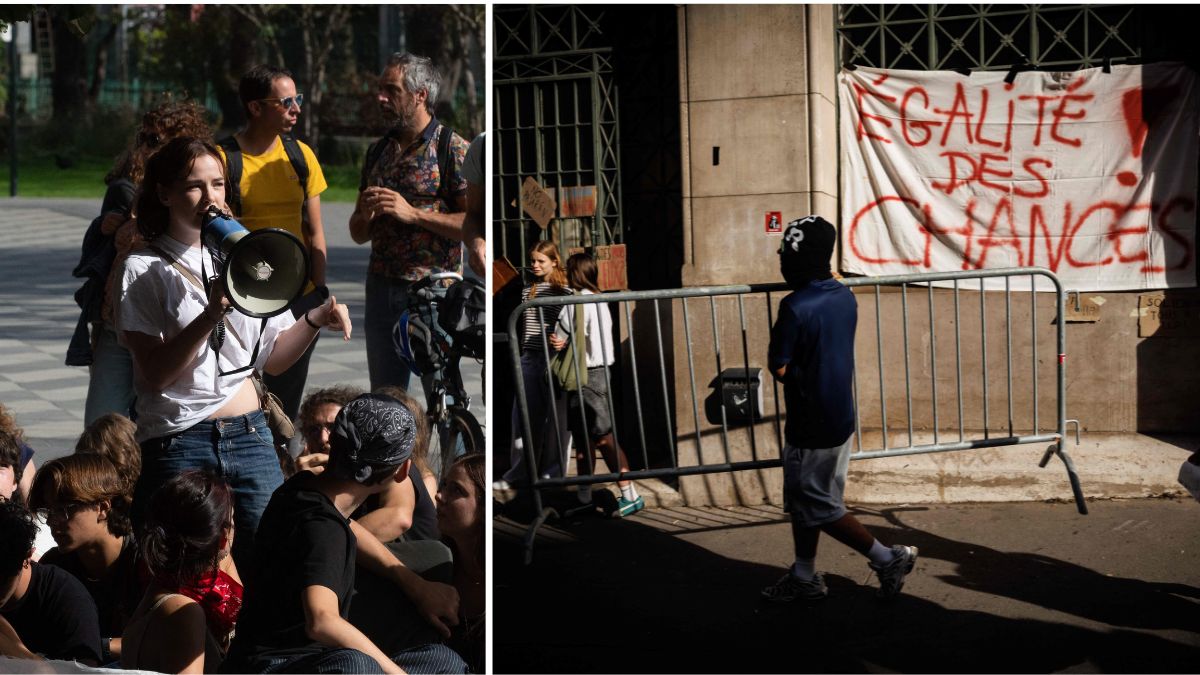
The smoke rising from wheelie bins barricading the entrances of France's lycées is not just a seasonal symptom of adolescent rebellion. It is the visible signature of a state apparatus failing its youngest citizens. When hundreds of secondary schools close their gates and thousands of teenagers clash with riot police, reducing the spectacle to mere street theater misses the structural rot beneath the asphalt. This uprising is the predictable result of decades of administrative neglect, an acute teacher shortage, and school buildings crumbling under the weight of historical underinvestment.
To understand why teenagers are trading classrooms for barricades, look no further than the physical reality of French public education. Fewer than fifteen percent of the nation's secondary school buildings have undergone meaningful renovation over the past decade. Students sit through lessons in rooms plagued by water leaks, broken heating systems, and thermal insulation so poor that summer heatwaves turn classrooms into ovens. These are not isolated incidents confined to fringe districts; they represent a systemic failure across a centralized republic that has prioritized fiscal austerity over basic human infrastructure.
Compounding the physical decay is a profound staffing vacuum. Class sizes routinely swell past thirty-five students, rendering individualized instruction impossible. More critically, when educators fall ill or take parental leave, the state frequently fails to provide replacement staff. Thousands of instructional hours evaporate into thin air each academic year, leaving students facing high-stakes national exams completely unprepared. The teaching profession itself has suffered an exodus, driven by stagnant wages, mounting administrative burdens, and a loss of institutional prestige. When educators cannot afford to live in the urban centers where they work, the talent pipeline dries up entirely.
The government's response has relied heavily on kinetic containment rather than structural remedy. Deploying heavy security forces and utilizing tear gas outside school gates treats political grievance as a public order offense. This heavy-handed approach hardens teenage resolve. When young people see their demands for basic dignity met with police batons and injuries, the classroom ceases to be viewed as an engine of social mobility and instead resembles an instrument of state control.
Resolving this crisis demands far more than temporary financial patches or rhetorical appeals to Republican order. Pouring billions into emergency loans addresses only the surface symptoms of a system that requires a complete architectural rethink. Until the French state guarantees that every child learns in a safe, weather-tight building with a qualified teacher at the front of the room, the smoke outside the school gates will continue to burn.