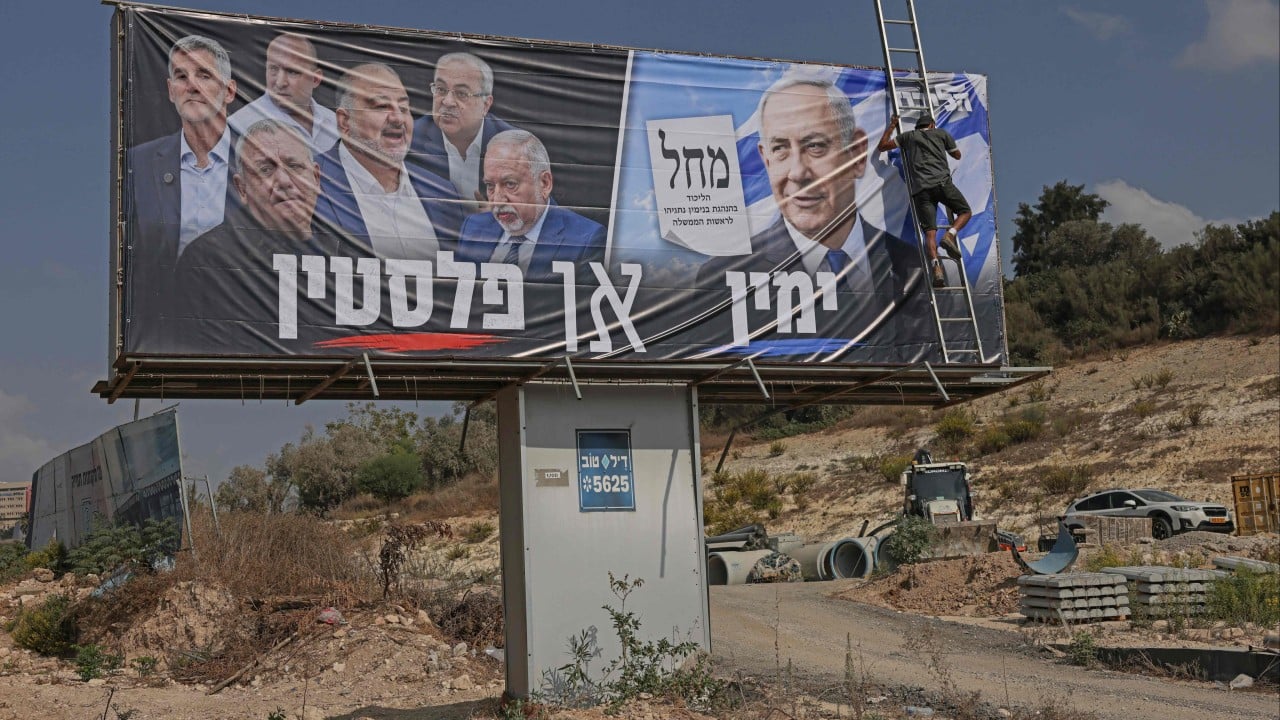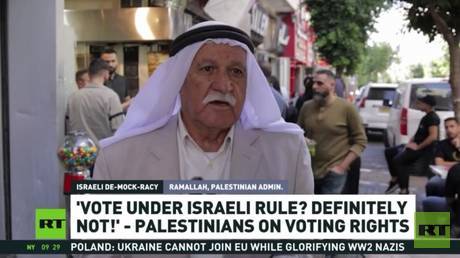
In any modern electoral system, the fundamental metric of legitimacy rests on a simple premise: those governed by the state should have a voice in selecting its leadership. Yet across the territories controlled by the State of Israel, millions of residents live under direct military or administrative rule without the right to vote in Israeli national elections. While Israeli citizens—including settlers living inside the West Bank—cast ballots for the Knesset, roughly 5 million Palestinians in the West Bank and Gaza Strip, alongside hundreds of thousands of non-citizen Palestinian residents of East Jerusalem, remain entirely disenfranchised from the legislature that commands their roads, airspace, tax revenues, and borders.
To understand how this dynamic functions, one must look beyond the simple mechanics of election day and examine the dual legal infrastructure engineered over six decades.
The Divided Franchise Across controlled Territories
The geography of voting rights between the Jordan River and the Mediterranean Sea is defined by rigid legal categories established after the 1967 war and refined during the 1990s Oslo Accords.
Under current arrangements, the population under Israeli authority is partitioned into distinct tiers of legal status:
- Israeli Citizens inside Israel and West Bank Settlements: Full voting rights in national elections. Israeli settlers living deep within West Bank territory vote in Knesset elections via civil law extended to them individually, despite residing outside Israel's sovereign borders.
- Palestinian Residents of East Jerusalem: Annexed by Israel in 1980, East Jerusalem's Palestinian inhabitants hold permanent residency status. They can vote in local municipal elections, but they cannot vote in Knesset national elections unless they undergo a lengthier, rarely granted nationalization process.
- Palestinians in Areas A, B, and C of the West Bank: Subject to varying degrees of administrative control divided between the Palestinian Authority (PA) and the Israeli military. They have no standing in Israeli elections, despite Israel exercising total control over Area C (60% of the West Bank), outer borders, trade policy, electromagnetic spectrum, and population registries.
- Palestinians in the Gaza Strip: Subject to an external land, sea, and air blockade maintained by Israel since 2007, alongside control over borders, movement, and population registries, without any electoral representation in the power enforcing these conditions.
The central friction point stems from the stark divergence in daily governance. An Israeli settler and a Palestinian neighbor in the West Bank live under two entirely different legal regimes. The settler answers to Israeli civilian courts and votes for the parliament that writes those laws. The Palestinian neighbor lives under military orders issued by the Central Command of the Israel Defense Forces, with no avenue to vote for or remove the commanders or politicians issuing those mandates.
The Security Rationale and Legal Defense
Defenders of the existing framework argue that Israel's electoral structure is fully compliant with international law governing military occupation. The official legal stance maintained by Israeli state prosecutors and international defenders hinges on three primary points.
First, Israeli legal experts emphasize that under the Hague Regulations of 1907 and the Fourth Geneva Convention, an occupying power is explicitly prohibited from annexing occupied territory or unilaterally altering the civil status of the occupied population. Extending full citizenship and voting rights to the Palestinian population in the West Bank and Gaza would constitute de facto full annexation, violating international prohibitions against territorial acquisition through war.
Second, the Oslo Accords created the Palestinian Authority in the mid-1990s as the designated elected body representing Palestinians in the West Bank and Gaza. The PA was intended to manage domestic affairs, education, healthcare, and internal policing in Areas A and B, operating its own electoral system via Palestinian Legislative Council and presidential votes. From this legal perspective, Palestinians possess self-governance mechanisms independent of the Knesset, making inclusion in Israeli elections unnecessary and legally contradictory.
Third, Israeli defense analysts cite existential national security requirements. Israel defines itself explicitly as a Jewish and democratic state. Incorporating millions of non-Jewish voters from the occupied territories into the electorate would fundamentally alter the demographic makeup of the country, dissolving its identity as a Jewish homeland. Proponents argue that national self-determination for Israelis and Palestinians must remain separated into distinct political paths rather than merged into a single electoral pool.
The Reality on the Ground
Critics, legal scholars, and international observers point out that the theoretical separation outlined during the Oslo era has collapsed under the weight of decades of expansion.
The Palestinian Authority has not held a national election since 2006, leaving its leadership without a fresh mandate and rendering Palestinian domestic politics effectively frozen. Meanwhile, the distinction between civilian Israel and its military administration in the West Bank has grown increasingly porous. Israeli infrastructure, water grids, electrical networks, and transportation corridors across the West Bank are built as permanent, integrated systems serving settlements alongside Israel proper.
When a legislature exercises permanent structural authority over a population's movement, economic resources, import-export access, land use, and security apparatus, the legal designation of "temporary military occupation" loses its force in practical terms. A population governed by a government it cannot elect or remove exists in a state of structural political exclusion.
The policy debate moving forward remains locked between two irreconcilable visions. One path insists on strict political separation through a two-state framework, requiring a sovereign Palestinian state where voting rights are exercised within independent borders. The other acknowledges the reality of a single, de facto governing authority stretching from the river to the sea—a reality where democratic rights are determined not by location or governance, but by legal status and ethnic identity. Until one of these paths yields a permanent resolution, millions will continue to live under the laws of a government they have no power to elect.