The internal architecture of global football administration is built on a fragile fiction of non-profit stewardship, where multi-billion-dollar tournaments are managed for the "good of the game" rather than the balance sheet. That illusion nearly shattered behind closed doors in Zurich. FIFA president Gianni Infantino attempted to ram through a secretive $20 billion commercial carve-out known as FIFA Forward Enterprise (FFE), designed to funnel a 20 percent equity stake to private investors, including Joshua Kushner’s Thrive Eternal.
The backlash was swift and violent. European football governing body UEFA, spearheaded by a coalition of enraged national associations, didn't just push back—they drew blood. By deploying New York legal powerhouse Dechert to fire off a formal litigation warning, UEFA transformed a standard political disagreement into a corporate warfare crisis. Infantino abandoned the scheme within days, but the structural scars left behind will define the governance of international soccer for the rest of the decade. You might also find this connected article insightful: Stop Worshiping High Altitude Superheroes The Nirmal Purja Media Circus is Killing Real Alpinism.
The Mechanics of a $20 Billion Power Grab
To understand why European leadership reacted with such hostility, one must look at the mechanics of the abandoned FFE proposal. The blueprint aimed to harvest $4.2 billion in upfront capital by strip-mining the commercial and tournament rights from FIFA's traditional Swiss non-profit structure. Private equity players, partnered with institutional heavyweights like JPMorgan, were positioned to grab a permanent financial foothold in the sport's most lucrative asset: the World Cup.
In exchange, member federations were dangled a one-time cash inducement of $20 million each. For developing federations in Africa and parts of Asia, that short-term liquidity injection looked like a windfall. For elite European clubs and leagues, who generate the vast majority of the sport's actual commercial value, it looked like an aggressive hostile takeover. As extensively documented in recent articles by FOX Sports, the results are worth noting.
Worse still, the operation was engineered in the shadows. Kevin Lamour, FIFA's chief operating officer, broke ranks in a blistering public statement to confirm that staff felt actively deceived by their own president. The project belonged to one man's inner circle, bypassing the rigorous transparent debate typically required for foundational structural shifts.
Litigation, Spoliation Letters, and the Weaponization of Discovery
When a governing body hires aggressive international litigators, the rules of engagement change permanently. UEFA’s legal notice sent a clear message to Zurich: retreating from the deal does not erase the paper trail.
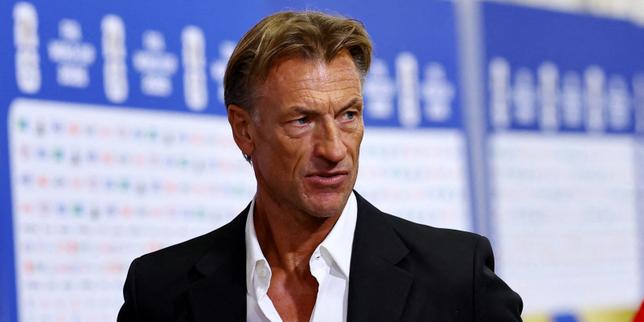
The warning letter explicitly targeted 18 top-tier FIFA executives—including Infantino, chief financial officer Thomas Peyer, and global football development head Arsène Wenger—placing them under formal legal obligation to preserve all communications, electronic data, and internal memos. By invoking the doctrine of spoliation of evidence, UEFA’s legal team effectively froze the administrative apparatus. Any sudden digital cleanups or shredded memos could trigger severe regulatory and civil penalties.
This level of aggressive posture is unprecedented between football's governing bodies. It demonstrates that UEFA views Infantino's administration not merely as a political opponent, but as an active threat to the structural integrity of the sport.
The Unraveling of an Invincible Presidency
For years, Infantino operated with near-absolute political impunity. By systematically courting developing member associations through expanded tournament formats and increased development grants, he built a seemingly unassailable electoral coalition. Ahead of next year's vote for his final term through 2031, Swiss briefing documents claimed roughly 200 of the 211 member federations had already pledged written support.
That wall of votes is now cracking. The Football Association of Wales became the first domestic body to formally strip its backing, while UEFA's executive committee declared that no option, including moves to unseat the president entirely, is off the table.
Concurrently, regional power dynamics are fracturing. South American confederation CONMEBOL remains tethered to Infantino due to ongoing negotiations over expanding the 2030 World Cup to an unwieldy 64 teams, while African federations have largely maintained a strategic silence. Yet, the moral authority required to steer global football has evaporated.
The private equity experiment exposed a fundamental vulnerability within the modern sports administration model. When multi-national capital intersects with single-entity sports governance without absolute transparency, the institutional friction can rupture decades of cooperative administration. Infantino survived the immediate parliamentary retreat, but he is now governing a deeply divided house under the constant watch of hostile litigators.