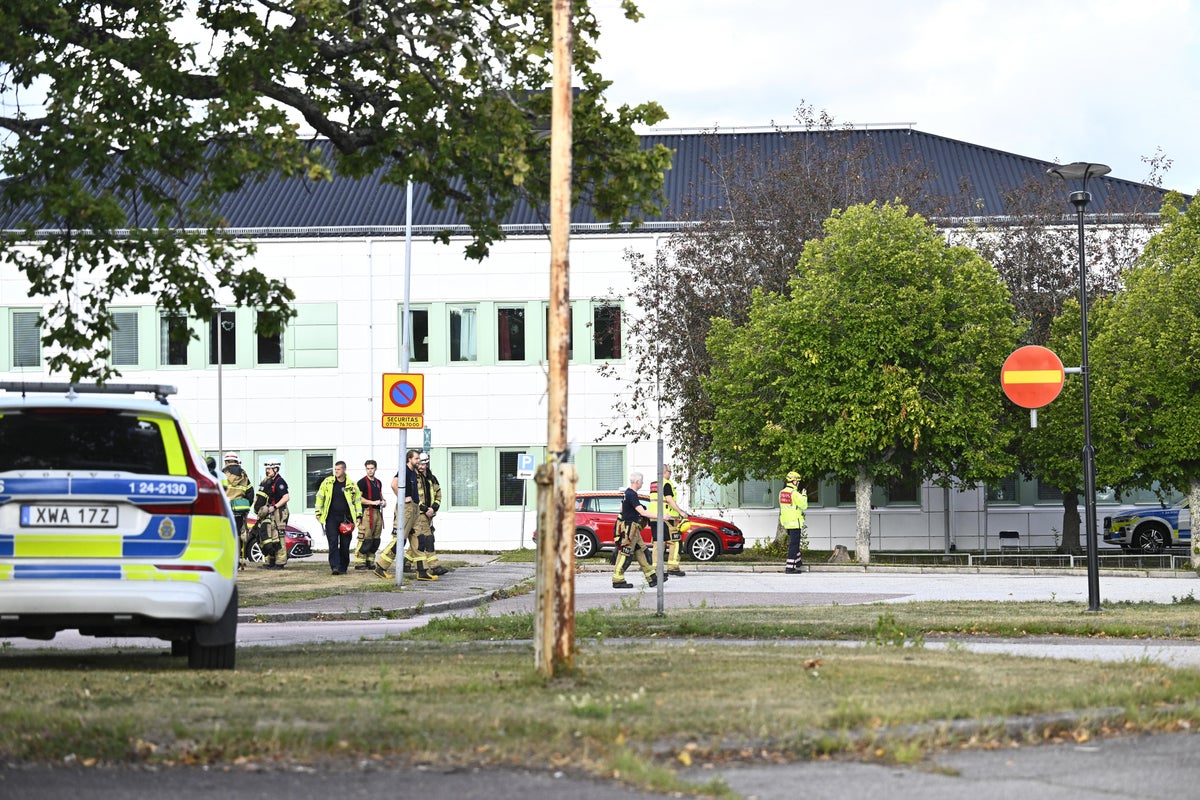
An 18-year-old man armed with a sword stormed the Brinell School in Fagersta, central Sweden, leaving one person dead and multiple others seriously injured just as classes resumed following the summer break. Police shot and detained the suspect after rushing to the scene, locking down surrounding educational facilities, and triggering an emergency response that rattled a nation unaccustomed to such violence inside its classrooms.
The Anatomy of a Friday Afternoon Siege
The alarm bells at Brinellskolan rang out early on a Friday afternoon. Inside, roughly 400 to 500 students were navigating their initial weeks back on campus. According to law enforcement briefings led by Police Chief Tommy Alriksson, the suspect moved through the corridors armed with a heavy blade, creating pockets of immediate panic.
Officers arrived swiftly, breaching the building and neutralizing the threat with gunfire before placing the 18-year-old under arrest. One victim was found dead as authorities swept the premises to secure classrooms, while two teenage boys between the ages of 12 and 17 sustained severe injuries requiring urgent medical intervention.
Sirens echoed across Fagersta, a quiet industrial municipality of roughly 13,000 residents northwest of Stockholm. Local government officials scrambled to set up crisis centers in nearby sports halls, while neighboring schools enacted strict lockdowns, erecting roadblocks to manage the sudden influx of anxious parents and emergency vehicles.
Digital Footprints and Radicals Online
Investigators quickly pivoted toward the digital ecosystem surrounding the suspect. Swedish outlets reported that authorities seized upon a short-lived TikTok account allegedly tied to the attacker. The profile, created barely a month prior, featured an image of a sword posted mere minutes before the bloodshed began.
Background details within the digital imagery hinted at a origin inside a school restroom. More troubling were the references embedded in the profile's history, which pointed toward past mass casualty episodes in Sweden alongside the manifesto of Norwegian far-right extremist Anders Behring Breivik.
While cyber units and investigators work to verify whether the account directly belonged to the assailant, the pattern mirrors a grim modern reality. Violent offenders frequently use online validation loops to broadcast intent minutes before launching physical assaults. The digital footprint provides a roadmap for prosecutors, yet it arrives too late for the community paying the price.
The Illusion of Scandinavian Sanctuary
For decades, the Nordic model of education relied on an architecture of openness. Swedish schools were built as community hubs, featuring accessible entryways, minimal physical security, and an institutional philosophy rooted in trust rather than surveillance.
That trust has faced mounting friction over recent years. High-profile incidents of structural violence and gang-associated criminality have forced a cultural reckoning across Sweden. When Prime Minister Ulf Kristersson addressed the nation on social media regarding the Fagersta tragedy, the language reflected a familiar sorrow. Leaders offer condolences, promise deep structural investigations, and grapple with the erosion of the physical safety net.
Yet, policy changes lag behind the shifting threat matrix. Converting open-concept Scandinavian schools into fortress-like environments runs counter to the pedagogical ethos of the country. Educators resist turning classrooms into security checkpoints.
Unresolved Questions and Community Trauma
The immediate aftermath leaves Fagersta grappling with a profound vacuum. Police have kept tight control over witness testimonies and specific victim details to protect the integrity of the ongoing probe. Rumors circulate through local messaging groups while families wait for official updates from Vastmanland County health authorities.
Security analysts note that attacks utilizing edged weapons instead of firearms present unique tactical challenges for emergency responders. They require close-quarters intervention and leave little margin for error. As the town of Fagersta attempts to heal, the conversation across Sweden shifts back to a bitter baseline. The illusion of absolute insulation from targeted violence has vanished, leaving institutions to figure out how to protect children without sacrificing the openness that defines their society.