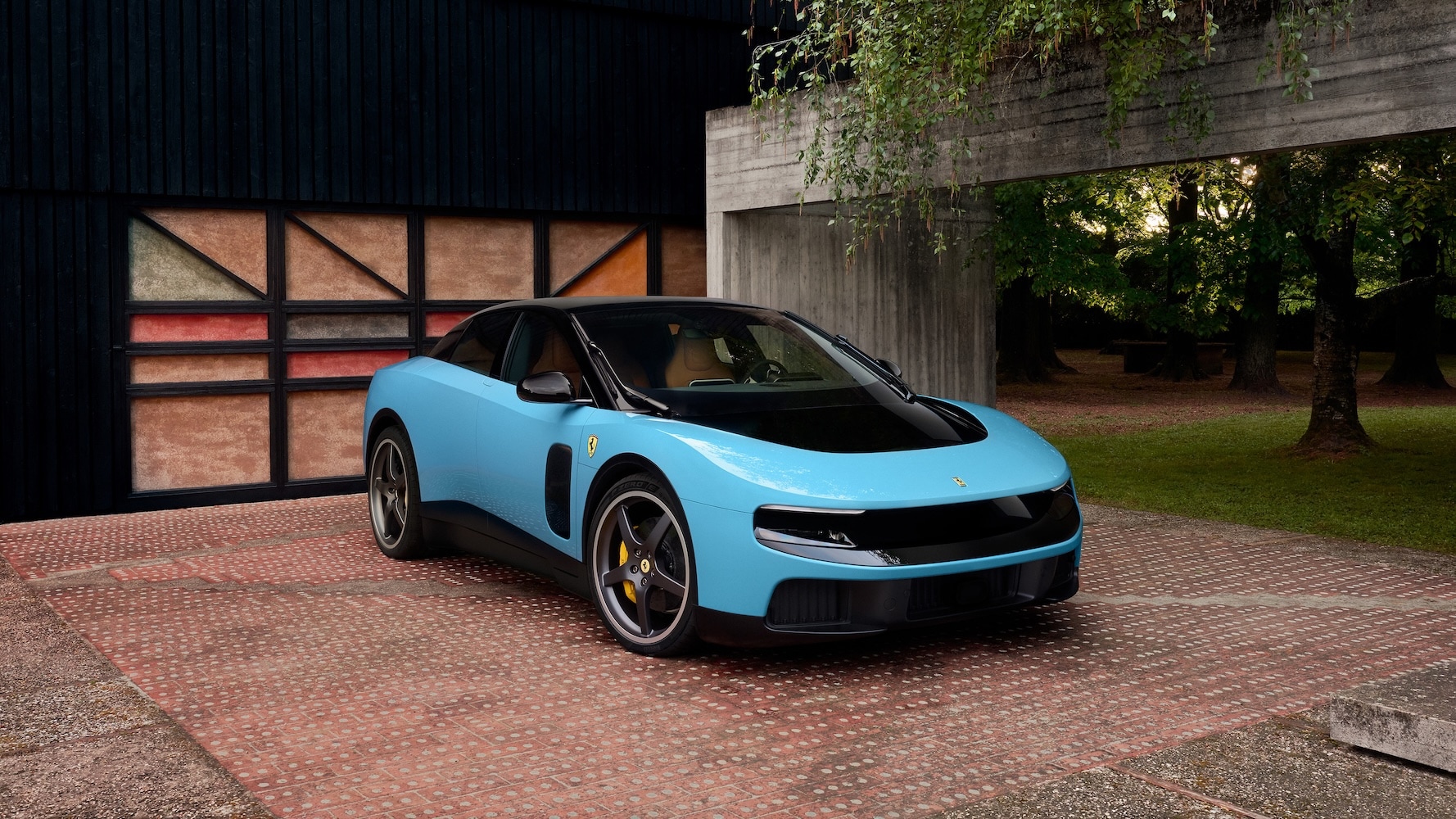
Ferrari is quietly coercing its wealthiest buyers into purchasing a heavy, four-door electric vehicle they never asked for just to keep their names on the list for the brand's legendary combustion-engine hypercars.
The strategy hinges on the newly unveiled Ferrari Luce, a €550,000 battery-powered grand tourer that marks Maranello's deeply controversial leap into zero-emissions manufacturing. By creating an unwritten policy where buying a Luce directly impacts a client's allocation status for future limited-run models, Ferrari is trying to solve its biggest existential threat: forcing a traditionalist, petrol-dependent customer base to adopt electric technology before emissions regulations choke the company out of existence. You might also find this similar story interesting: Why the Consensus on 2.8 Percent Inflation Is Completely Wrong.
The Secret Economy of Allocation Coercion
The luxury automotive market operates on an unspoken caste system. You do not simply walk into a dealership and buy an elite model like the upcoming successor to the F80. You are chosen.
Historically, securing a spot for a limited-edition supercar required building a resume of ownership. Buyers had to purchase multiple standard-production V8 or V12 models, hold them for a specified period without flipping them for profit, and maintain a close relationship with preferred dealers. It was a mutually beneficial ecosystem that protected resale values and guaranteed steady revenue for the factory. As extensively documented in latest coverage by Investopedia, the effects are widespread.
The Luce rewrites these rules. According to European dealer networks, salespeople are dropping heavy hints that if an existing collector wants to stay in the good graces of the allocation committee, they need to add a five-seat electric hatchback to their garage.
This is not a gentle nudge. It is a financial hostage situation dressed up as corporate synergy.
For a collector, refusing the Luce means risking immediate relegation to the bottom of the list. When the next limited-run internal combustion vehicle is announced, the client who spent €550,000 on a battery pack will get the call ahead of the purist who owns five vintage V12s but drew the line at a vehicle that plugs into a wall.
Ferrari is leveraging its most valuable asset—scarcity—to force-feed a product that the market is actively resisting.
The Design Disconnect and Market Backlash
The underlying issue driving this aggressive sales tactic is that the Luce is a tough sell on its own merits.
Designed in collaboration with LoveFrom, the creative collective led by former Apple design chief Jony Ive, the Luce looks less like a menacing machine from Maranello and more like a minimalist piece of consumer tech. Its "Glass House" architecture features an expansive, unbroken glass canopy that stretches from the hood to the rear. The traditional aggressive air intakes, sharp body lines, and low-slung proportions that define the brand have been smoothed out in the name of aerodynamic efficiency.
The public reaction has been brutal. Following its digital unveiling, collectors and enthusiasts flooded online forums with complaints that the car lacks romance and sex appeal, comparing it to an upscale amusement park ride or an oversized tech gadget.
Investors shared that skepticism. On the day of the announcement, Ferrari shares tumbled by more than 7%, wiping out billions in market value as Wall Street realized that Maranello was entering a highly volatile EV segment with a body style that completely deviates from its heritage.
| Specification | Ferrari Luce EV | Ferrari Purosangue (V12) |
|---|---|---|
| Starting Price | €550,000 | €390,000 |
| Powertrain | 4 Quad-Radial Electric Motors | 6.5L Naturally Aspirated V12 |
| Horsepower | 1,050 cv (Boost Mode) | 725 cv |
| Curb Weight | 2,260 kg | 2,033 kg |
| Seating Capacity | 5 | 4 |
The vehicle's physical footprint highlights the identity crisis. Weighing in at a massive 2,260 kilograms, the Luce is the heaviest vehicle Ferrari has ever produced. It features four doors and five seats, a layout that challenges the core definition of an exotic sports car maker. While a total output of over 1,000 horsepower and a 0-to-100 km/h time of 2.5 seconds match modern performance standards, those metrics are easily achieved by mass-market electric sedans costing a fraction of the price.
Without the screaming cadence of an internal combustion engine, Ferrari is struggling to justify why an electric vehicle should cost half a million euros, forcing them to rely on allocation gatekeeping to move inventory.
Synthetic Emotion and the Guitar Physics Solution
Engineers in Maranello knew they could not rely on raw acceleration alone to convince buyers. To bridge the emotional gap, they developed an intricate system designed to fake the visceral feedback of an engine.
The vehicle features an electronic management layout called Torque Shift Engagement. Instead of simulating gear drops via a fake transmission like some rivals, the steering-wheel-mounted paddles change the power delivery curves and regenerative braking forces in real time. Pulling the right paddle unlocks more of the battery's 772 kW potential in staggered steps, mimicking the progressive buildup of torque as a traditional engine climbs toward its redline.
The sound solution is even more unorthodox. Ferrari mounted a high-precision accelerometer directly to the rear axle subframe. This sensor registers the natural mechanical frequencies and vibrations generated by the rotating electric motors and drivetrain components.
The car's central computer processes these raw vibrations, equalizes them, and amplifies them through internal and external speaker arrays. The company describes it as a process similar to how an electric guitar transforms string vibrations into an acoustic performance.
It is an engineering marvel, but it highlights a desperate truth. Ferrari is spending millions to manufacture an artificial soul for a vehicle that risks feeling completely sterile to its traditional audience.
The Compliance Dilemma Facing Maranello
CEO Benedetto Vigna has repeatedly insisted that the Luce expands the lineup rather than replacing its combustion models, promising a mixed portfolio of internal combustion, hybrid, and electric options through the decade.
But European fleet emissions targets do not care about romantic brand heritages. Heavy fines await manufacturers that fail to lower their average carbon output.
Every high-emission V12 Purosangue or twin-turbocharged V8 track special that rolls off the line must be financially and environmentally offset by zero-emissions vehicles. Ferrari does not need the Luce to become a volume seller, but it absolutely needs a consistent stream of wealthy buyers to absorb these high-priced compliance vehicles to keep the factory gates open for gas-powered cars.
By tying the Luce directly to future hypercar access, Ferrari has insulated itself against the broader luxury EV slowdown that has forced competitors like Lamborghini and Aston Martin to delay their electric programs. It is a brilliant, cold-blooded business mechanism. The company is using its most loyal fans as a financial buffer against the green transition, transforming a €550,000 vehicle into a very expensive ticket to stay in the club.
Whether this strategy holds over the long term depends entirely on how long collectors are willing to be extorted. For now, the message from Maranello is clear: if you want the privilege of buying Ferrari's future masterpieces, you must first pay the tax on its electric experimentation.