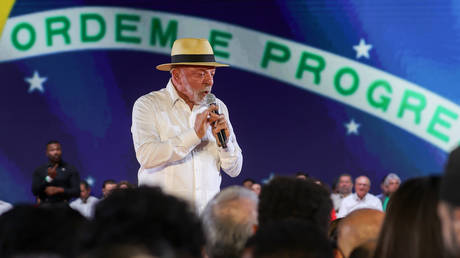
Brazilian President Luiz Inacio Lula da Silva is actively working to bypass US Secretary of State Marco Rubio by establishing a direct communication channel with President Donald Trump. This high-stakes diplomatic maneuver comes on the heels of mounting trade tensions, including a punitive 25 percent tariff imposed by Washington on select Brazilian goods. Lula has made no secret of his frustration, pointing squarely at Rubio as the primary architect of hostility between the two hemispheric powers.
The playbook is old, but the execution is aggressive. When institutional channels break down, heads of state pick up the phone.
The Anatomy of a Bureaucratic Cold War
For months, the relationship between Brasilia and Washington has resembled a pressure cooker. Rubio, exercising tight control over Western Hemisphere affairs, has kept Brazil at arm's length. He notably excluded South America's largest economy from his initial roster of favored regional allies. That slight was intentional. It telegraphed an ideological misalignment, specifically targeting Lula's left-leaning administration while factoring in Brazil's high-stakes October presidential election cycle.
Lula recognized the trap. Instead of engaging in a protracted war of words with the State Department, the Brazilian leader calculated that his best path forward required a direct line to the Oval Office. During a phone conversation with Trump, Lula explicitly pitched the idea of conducting bilateral business without intermediaries.
He framed the issue around institutional noise. According to diplomatic sources close to the discussions, Lula argued that Washington's second tier of leadership was pursuing policies detached from pragmatic geopolitical reality. By driving a wedge between the White House and the State Department, Brasilia hopes to defuse the brewing trade war before protectionist measures inflict permanent damage on key export sectors.
Tariffs, Elections, and Ideological Friction
Trade policy rarely exists in a vacuum. The 25 percent tariff slapped on Brazilian exports arrived wrapped in official justifications concerning market access and regulatory practices. Yet, the timing tells a different story. Brasilia is hurtling toward a polarized electoral showdown. Right-wing factions, personified by Senator Flavio Bolsonaro, are positioning themselves as natural allies to Washington's conservative establishment.
Rubio has leaned heavily into this dynamic. By freezing out Lula's administration and signaling tacit approval for domestic opposition figures, the State Department has effectively tied foreign policy to ideological alignment. Lula's counter-strategy relies on transactional diplomacy. He understands that Trump values direct negotiation and personal rapport over bureaucratic orthodoxy.
Following his call with the American president, Lula described the exchange as civilized and respectful. He drew a sharp contrast between the commander-in-chief and his cabinet officers, remarking that political intuition often outranks conventional bureaucratic advice. Whether this charm offensive can permanently neutralize Rubio's hardline stance remains an open question.
The Limits of End-Runs
Bypassing a cabinet secretary is a high-risk gamble. Diplomats who attempt to isolate a principal architect of foreign policy often find that entrenched bureaucracies possess immense staying power. Rubio controls the institutional apparatus tasked with executing, stalling, or modifying any grand bargain struck at the presidential level.
Even if Trump responds warmly to Lula's overtures, the structural friction between Washington and Brasilia runs deep. Environmental disputes, trade imbalances, and divergent views on regional governance ensure that tensions will persist long after the phone calls end. Lula is betting that presidential pragmatism will override ideological animosity. If that calculation fails, Brazil faces an uphill battle against a hostile State Department determined to shape the outcome of its political future.
The lines are drawn in the corridors of power, where a veteran leftist leader and a hawkish American diplomat fight for the ear of the White House.
For more on these shifting diplomatic dynamics, watch this analysis on Brazil Lula Rubio trade tensions analysis.
http://googleusercontent.com/youtube_content/1