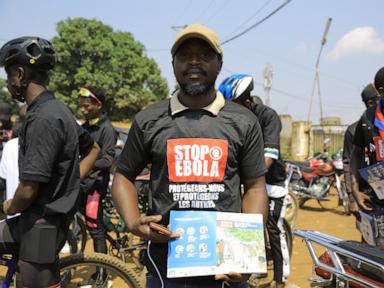
Sixteen thousand doses of the Ebola vaccine have landed in the Democratic Republic of Congo. On paper, it sounds like salvation. In the chaotic reality of Central Africa's conflict zones, it is merely a drop in an ocean of systemic vulnerability.
The latest Ebola outbreak in the Democratic Republic of Congo continues to expand despite these incoming pharmaceutical shipments because supply chains, community distrust, and chronic geopolitical instability routinely outpace cold-chain logistics. Anyone tracking global health updates wants a straightforward answer to when the epidemic will stop. The unvarnished truth is that vaccines alone cannot halt a virus when the infrastructure required to deploy them is fractured by armed conflict and decades of institutional neglect.
We have watched this exact tragedy unfold before. Reporters fly into Kinshasa or Goma, tally the shipment numbers provided by international bodies, and broadcast a sigh of relief. Meanwhile, healthcare workers on the ground face armed militias, burned clinics, and populations fleeing into dense forests where contact tracing becomes an absolute impossibility.
The Cold Chain Logistics Nightmare
Moving biological assets that require ultra-low temperatures through a region lacking paved roads and reliable electrical grids is an engineering nightmare. Vaccine shipments do not simply arrive at an international airport and teleport to frontline villages.
Solar-powered refrigerators break down. Diesel for generators runs dry because fuel convoys get ambushed. When a batch of temperature-sensitive vials sits on a tarmac under an equatorial sun, the chemical composition degrades silently. The doses remain numerically present on administrative spreadsheets while losing biological efficacy in the field.
Procuring sixteen thousand doses is the easy part. Preserving their integrity across a hundred miles of rugged terrain without functional refrigeration networks represents a monumental barrier. International agencies often announce acquisition totals while glossing over the terrifying logistics of the final mile.
- Freezer Failures: Standard cold-chain equipment fails when electrical grids fluctuate or collapse entirely.
- Transport Bottlenecks: Motorcycles and canoes form the primary delivery fleet, exposing fragile vials to extreme heat and physical trauma.
- Inventory Decay: Expired or heat-damaged doses occasionally get administered out of desperation, eroding public trust even further.
The Anatomy of Distrust
Medical intervention without local consent is an occupation. When foreign teams descend upon rural communities in hazard suits without prior cultural consultation, panic follows instantly.
Decades of exploitation by external powers have left citizens deeply suspicious of men and women arriving from capital cities or overseas bearing mysterious needles. Rumors spread faster than the pathogen itself. People hide their sick relatives under beds or flee into the brush to avoid quarantine centers that resemble military compounds.
You cannot vaccinate an invisible population. When community leaders are bypassed in favor of top-down edicts issued from distant ministries, resistance hardens into active hostility. Local nurses and community health workers must lead the charge because they speak the dialects, understand the burial customs, and know who holds actual authority in the village square. Ignoring this human element guarantees failure, regardless of how many cargo planes touch down with medical supplies.
The Political Economy of Epidemics
Disease outbreaks do not occur in a vacuum. They thrive precisely where governance has withered.
The eastern provinces of the Democratic Republic of Congo have endured continuous warfare for decades. Mineral wealth fuels militias that control territory, tax local populations, and target infrastructure. Health workers become pawns in a broader conflict where checkpoints restrict movement and ambulances are commandeered for military transport.
When an outbreak hits a rebel-held zone, standard epidemiological protocols shatter. Government health ministries cannot operate freely in areas controlled by hostile armed groups. Negotiating humanitarian access takes days or weeks while the virus doubles its footprint.
"Epidemics are deeply political events that expose the fault lines of the societies they strike."
🔗 Read more: The Invisible Stowaway on the Atlantic Tide
Throwing medical supplies at a failed state without addressing the underlying security vacuum is akin to bailing water from a sinking ship with a thimble. The sixteen thousand doses represent a vital tactical tool, but they cannot compensate for a strategic void.
Breaking the Cycle
Real reform demands shifting from reactive emergency responses to long-term infrastructural investment. International donors prefer the dramatic optics of emergency vaccine airlifts over the tedious, unglamorous work of training local clinicians, building permanent clinics, and establishing trust over years of peace.
Until local health boards possess autonomous budgets, reliable supply lines, and genuine political backing, every new outbreak will trigger the same frantic cycle of international panic, shipment announcements, and tragic operational gridlock. The sixteen thousand doses will be injected, more will be requested, and the virus will continue to probe the weak spots of a broken system. The brutal truth remains that saving lives requires fixing the foundation, not just restocking the medicine cabinet.