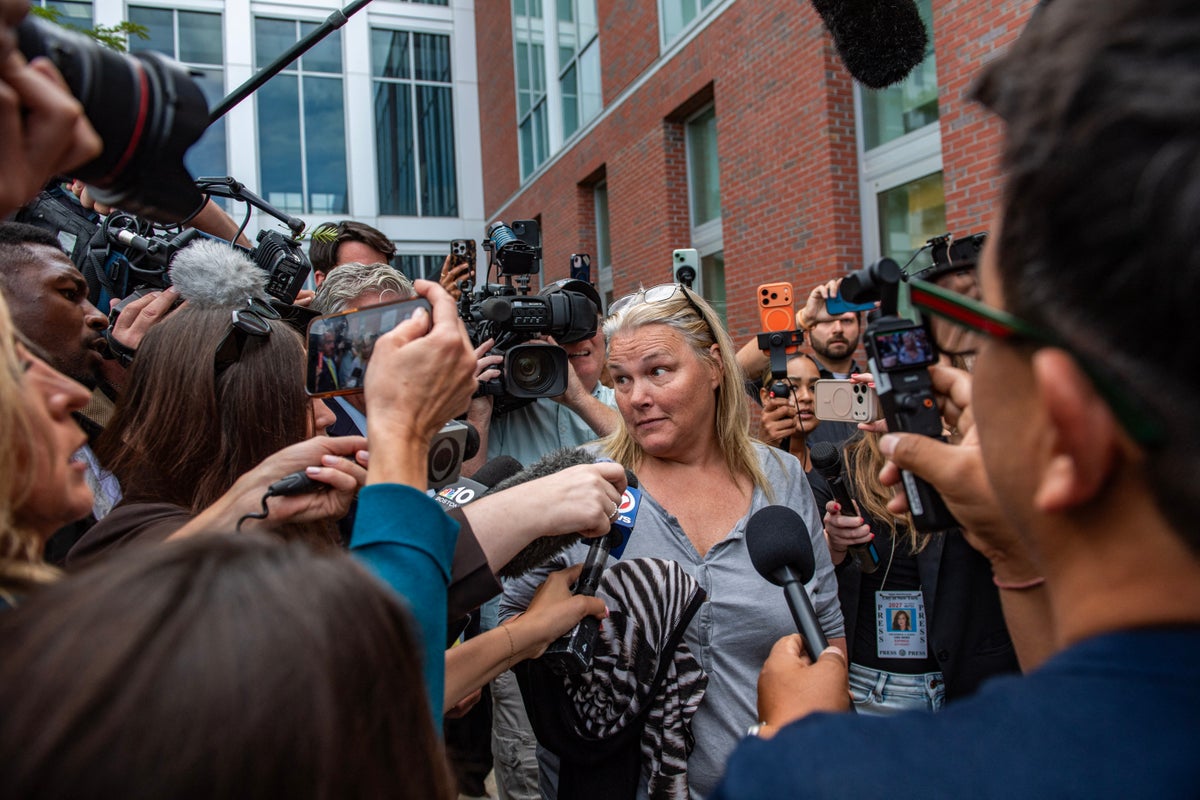
High-profile trials draw intense public fascination, but crossing legal boundaries outside the courtroom changes everything. When a 56-year-old woman named Dawn Light was slapped with an aggravated juror intimidation charge outside Plymouth Superior Court, it threw an already volatile murder trial into absolute chaos.
The incident unfolded late Tuesday afternoon as the jury in the Lindsay Clancy case wrapped up another grueling day of deliberations. Clancy, a 36-year-old mother from Duxbury, stands accused of strangling her three young children—Cora, Dawson, and Callan—in January 2023. Her defense team argues she suffered from severe postpartum psychosis, leaving the public deeply divided and the courtroom packed with intense spectators.
That toxic mix of public passion and legal boundaries collided when state troopers detained Light in a restricted parking area behind the courthouse. Prosecutors stated that Light was caught recording individuals leaving the building.
What Actually Happened Outside the Courtroom
According to court arguments presented by Assistant District Attorney Nicole Piacentini, troopers approached Light after spotting her vehicle in a restricted zone. When questioned, Light insisted she was simply waiting to catch a glimpse of Lindsay Clancy being transported.
State police inspected her phone. Initially, they found nothing obvious, but a deeper check of the device's deleted files told a different story. Troppers recovered video clips showing confirmed members of the Clancy jury leaving the courthouse.
The fallout was immediate. Recording or photographing jurors is strictly prohibited across all jurisdictions, particularly in high-stakes murder trials where panel safety and anonymity dictate the integrity of the verdict. Jurors had already reported being deadlocked, struggling to reach a unanimous decision after dozens of hours behind closed doors. Introducing potential juror harassment into an already stalled deliberation process is a worst-case scenario for any presiding judge.
The Legal Defense and Courtroom Fallout
During her arraignment the following morning, a not-guilty plea was entered on Light's behalf. Her defense attorney, Jennifer White, maintained it was all a simple misunderstanding. Light, a retired nurse living on a fixed income, reportedly described herself as a true-crime enthusiast who only wanted a photograph of the defendant.
Despite prosecutors requesting a $50,000 cash bail, the judge released Light without cash bail under strict conditions. She must stay completely away from the Plymouth County courthouse, the witnesses, and every member of the jury. If eventually convicted of the intimidation charge, she faces up to 21 and a half years in state prison.
Inside the courtroom, Judge William Sullivan took zero chances. Before letting the 12-member jury resume their fifth day of deliberations, Sullivan questioned each juror individually at sidebar to ensure their impartiality hadn't been compromised by the security breach. The judge also issued a sharp public warning to the gallery and online observers, making it clear that court orders protecting jurors from tracking, filming, or contact will be aggressively enforced.
Public obsession with true crime frequently spills past digital comment sections and into real-world spaces. This arrest serves as a harsh reminder that filming private citizens fulfilling their civic duty is a fast track to criminal charges.
Keep your distance, respect court orders, and let the justice system function without outside interference.


