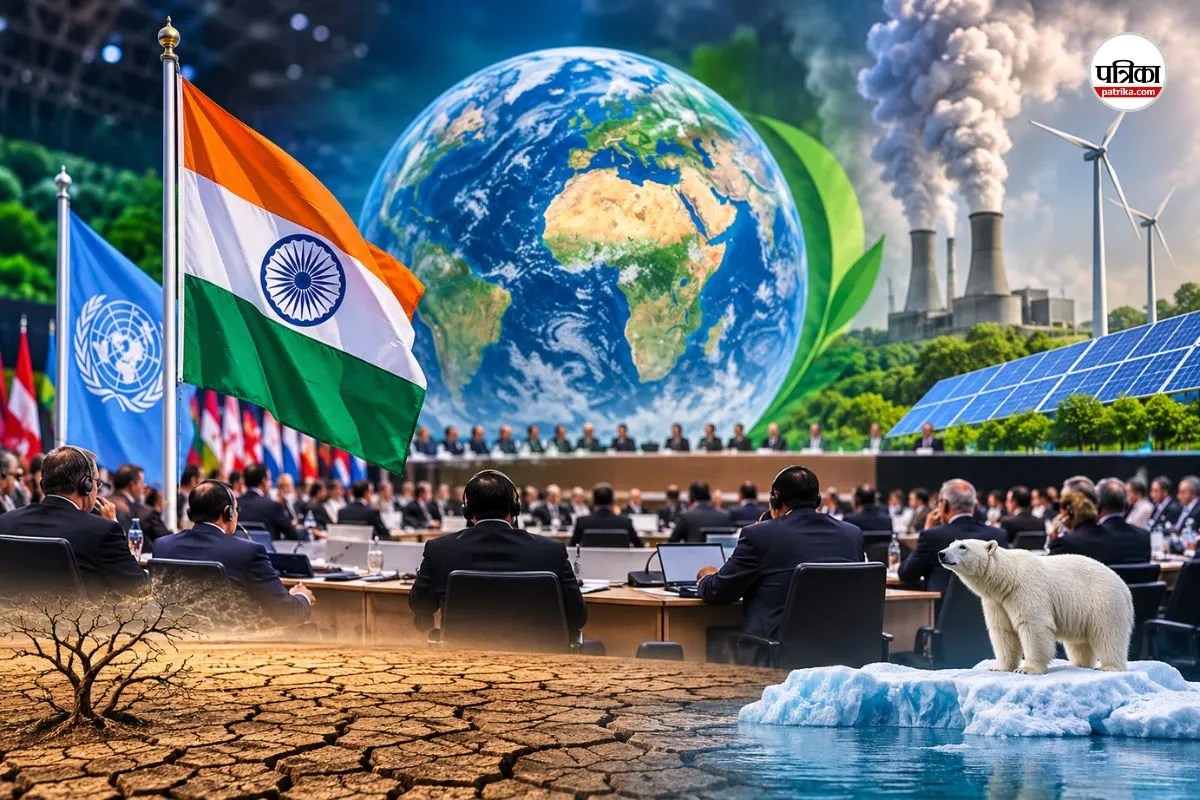
COP-31 ended without a binding climate agreement, leaving nearly two hundred nations staring at a draft text that scrubbed any mention of transitioning away from fossil fuels. India pressed hard against the omission, arguing that rich economies were dodging accountability while demanding steep decarbonization targets from developing countries. Anyone who has covered UN climate summits for twenty years knows the choreography. Late-night huddles, exhausted translators, and carefully worded compromises that promise everything and enforce almost nothing. Yet the collapse at COP-31 felt sharper than routine diplomatic fatigue because the omission was deliberate, not accidental.
To understand why the climate agreement stalled, you have to follow the money and the grid constraints rather than the podium speeches. Energy ministers arrived with domestic political headaches that made sweeping commitments toxic back home. High interest rates, volatile gas prices, and sluggish industrial output have turned energy security into a blunt instrument for voters across both hemispheres.
Why Fossil Fuel Language Vanished From the Text
Consensus rules in UN negotiations give any determined bloc an effective veto. When major oil and gas producers push back against explicit phase-out or transition language, drafting tables tend to retreat toward vague pledges on efficiency, innovation, or voluntary action.
That retreat is not just about protecting wells and refineries. It is about protecting balance sheets. Sovereign wealth funds, state-owned utilities, and export-dependent budgets still rely heavily on fossil fuel revenues to fund public payrolls, subsidies, and grid upgrades. Stripping out explicit language on transitioning away from fossil fuels buys time for incumbents while shifting the political cost onto future summits.
The Politics of Grid Reliability and Voters
Power grid operators do not care about diplomatic communiques. They care about voltage stability, spinning reserves, and peak summer or winter loads. In several industrial economies, transmission bottlenecks and permitting delays have slowed renewable hookups just as electricity demand from data centers, heat pumps, and electric vehicles is climbing.
Politicians read those bottlenecks quickly. Telling constituents to accept higher power bills or rolling reliability risks in the name of a multilateral text is a hard sell before an election. Negotiators watered down the text because their domestic constituencies demanded cheap, steady power today rather than aspirational targets in 2040.
How Carbon Accounting Masks Real Emissions
Even when countries agree on headline targets, creative accounting blurs what is actually happening in the atmosphere. Carbon offsets, territorial versus consumption accounting, and delayed base years allow governments to claim progress on paper while domestic emissions remain stubbornly high.
Consider a hypothetical example to see how the math bends. Suppose a mid-sized economy retires an aging coal boiler at home, cuts domestic emissions by four percent, and imports steel and petrochemicals produced elsewhere using coal-fired power. On its national ledger, the country looks virtuous. Globally, the smokestack simply moved across a border.
India's Objections and the North South Fault Line
India's pushback at COP-31 cut straight to a longstanding grievance over historical emissions and climate finance. New Delhi has consistently argued that countries responsible for the bulk of cumulative greenhouse gases since the Industrial Revolution carry a larger obligation to cut fast and fund the transition elsewhere.
When a draft text drops explicit pressure on fossil fuels while keeping scrutiny on fast-growing economies, developing nations see a double standard. India still needs affordable, reliable baseload power to lift hundreds of millions of citizens into higher living standards, expand manufacturing, and cool cities facing brutal heat waves. Signing onto vague language that lets big polluters off the hook while squeezing developing economies is a non-starter for Indian negotiators.
- Per Capita Reality: Total national emissions look large for a populous country, yet per capita emissions remain a fraction of those in wealthy industrial states.
- Development Pressure: Millions of new urban households and factories require steady electricity before clean alternatives can scale at matching speed.
- Finance Gap: Promised climate finance from wealthier nations often arrives as loans rather than grants, adding debt strain to already tight budgets.
Critics of India's stance point out that rapid domestic solar and wind growth gives the country real leverage to move faster away from coal. That argument has merit on cost curves, since solar generation has become cheaper than new coal in many regions. Still, cheap panels do not solve land acquisition disputes, grid congestion, or the need for firm backup power when wind lulls and clouds roll in.
What Stalled Talks Mean for Markets and Industry
Diplomats may walk away empty-handed, but corporate treasurers and infrastructure builders cannot afford to freeze. Capital allocation in energy, heavy industry, and transport responds to policy signals, project economics, and trade rules rather than UN press releases alone.
When multilateral talks fail to produce a firm climate agreement, policy fragments into bilateral deals, national industrial subsidies, and border carbon adjustments. Companies operating across borders face a patchwork of rules instead of a single global standard. That fragmentation raises compliance costs, slows cross-border supply chains, and rewards firms that hedge across multiple energy pathways.
| Factor | Multilateral Consensus | Fragmented National Policy |
|---|---|---|
| Rule Stability | Broad targets, slow enforcement | Uneven rules, faster local shifts |
| Capital Cost | Lower uncertainty on long bets | Higher risk premium on big projects |
| Trade Friction | Fewer unilateral tariffs | More border carbon disputes |
| Pace of Change | Lowest-common-denominator speed | Leaders move fast, laggards stall |
Winners and Losers in a Stalled Regime
Oil and gas majors gain breathing room when explicit transition timelines disappear from UN text. Higher near-term demand supports cash flows, shareholder buybacks, and brownfield expansion in regions with low extraction costs.
Clean energy developers face a tougher environment. Without strong international pressure to phase out fossil fuels, project developers rely even more heavily on domestic auctions, grid interconnections, and corporate power purchase agreements. If interest rates stay elevated or permitting drags on, marginal renewable and storage projects get shelved.
The Hidden Trap of Incrementalism
Incrementalism sounds reasonable in a conference room. Small steps avoid shocks. Over a decade, though, incrementalism can lock in high-emission infrastructure like gas pipelines, LNG terminals, and coal refurbishment projects that need thirty or forty years of operation to pay back capital.
Once billions of dollars sit in long-lived assets, political resistance to early retirement hardens. A stalled climate agreement today makes deeper cuts harder and more expensive tomorrow, not easier.
Overlooked Factors Behind the Deadlock
Most coverage frames climate summits as a morality play between climate heroes and climate villains. That framing misses the structural friction inside almost every negotiating delegation.
Inside a single government, the environment ministry, energy ministry, finance ministry, and trade ministry often pull in opposite directions. Climate negotiators may want ambitious language to preserve international standing, while finance officials worry about sovereign debt and energy officials worry about winter shortages. When those internal ministries clash at home, the delegation arrives in the negotiation hall already divided.
Geopolitics and Supply Chain Chokepoints
Clean energy transitions depend heavily on critical minerals, refined metals, and specialized manufacturing supply chains. Concerns over concentration in processing and refining have turned supply chain security into a strategic priority alongside emissions targets.
Countries worry about trading dependence on foreign oil and gas for dependence on foreign battery supply chains or solar manufacturing. That anxiety slows down unconditional pledges and pushes governments to build domestic capacity first, even when doing so costs more or takes longer.
Negotiation Fatigue and Credibility Erosion
After decades of summits, credibility erosion is real. Past pledges have frequently missed deadlines or relied on distant net-zero dates that shift responsibility to future administrations.
Negotiators know when a text is theater. Pushing for weaker wording sometimes reflects a cynical honesty about what governments actually intend to deliver, rather than a sudden conversion to climate denial. Neither outcome helps the climate, yet pretending a hollow text equals real progress does even more damage by breeding public cynicism.
Where Real Leverage Still Exists
If UN plenary halls remain gridlocked over transitioning away from fossil fuels, pressure has to come from places that do not require unanimous consent. Subnational governments, state utilities, industrial buyers, and financial regulators already shape real-world emissions every day.
Procurement rules set by major corporations and public agencies can create steady demand for low-carbon steel, cement, and industrial heat long before a UN draft mentions phase-outs. Likewise, transparent reporting on actual methane leaks and plant-level emissions gives investors sharper tools than diplomatic pledges ever provided.
India's sharp questions at COP-31 exposed an uncomfortable truth that no drafting committee wanted to write down. Wealthy nations want emissions cuts without bearing the full financial and political cost, while developing nations refuse to cap their own growth to subsidize someone else's transition. Until those two realities are reconciled with real money and credible rules, summit texts will keep dodging the hardest words, and the gap between diplomatic promises and physical emissions will keep widening.