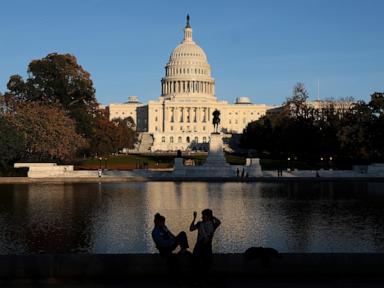
Control of the United States House of Representatives runs directly through Colorado's Front Range and Western Slope. While national pundits obsess over traditional coastal battlegrounds, Colorado congressional races have quietly become the definitive proving ground for modern American political realignment, driven by a massive bloc of unaffiliated voters who routinely ignore party orthodoxy and swing narrow districts by a few thousand ballots.
For decades, Colorado politics followed a predictable geographic script. Denver and Boulder anchored the Democratic base, Colorado Springs and the Eastern Plains locked down Republican majorities, and the suburbs fought over the scraps. That era is dead. Rapid population growth, post-2020 redistricting, and the creation of an independent redistricting commission transformed the state into a volatile mix of deeply entrenched ideological fortresses and razor-thin swing districts where national money pours in by the tens of millions.
The Structural Shift Behind Colorado Politics
To understand why these races carry outsized national weight, you have to look at the state's voter registration rolls. Unaffiliated voters make up the single largest voting bloc in Colorado, outnumbering both registered Democrats and registered Republicans by wide margins. Unlike states with closed primaries that reward ideological rigidity, Colorado allows unaffiliated voters to cast ballots in either party's primary.
This single rule changes everything. Candidates cannot simply pander to their base during the spring and sprint to the center in the autumn. Because independents participate early, extreme rhetoric often backfires before the general election even begins, yet candidates who appear too moderate risk alienating the dedicated activists who knock on doors and staff phone banks. It is a structural trap that has ended the careers of seasoned politicians on both sides of the aisle.
Redistricting after the 2020 census compounded this volatility. Instead of allowing the state legislature to draw lines behind closed doors, voters approved an independent commission tasked with creating competitive districts. The commission delivered. It carved out the 8th Congressional District north of Denver—a territory specifically engineered to be a true toss-up—while altering the boundaries of the sprawling 3rd District on the Western Slope, turning what was once safe Republican territory into a perpetual cliffhanger.
District 8 and the Suburban Battleground
If you want to take the temperature of the American electorate, look at Colorado's 8th Congressional District. Stretching from the northern suburbs of Denver through Thornton, Brighton, and up into the agricultural and energy-producing hubs of Greeley and Weld County, CD-8 is a microcosm of the nation's economic and cultural divides.
The district features a massive Latino population, a booming suburban commuter class priced out of Denver proper, and legacy oil and gas workers whose livelihoods depend on state and federal regulatory policies. Elections here are not decided by sweeping ideological manifestos. They are won and lost at the kitchen table over concrete metrics: the price of groceries, mortgage interest rates, property taxes, and local air quality regulations.
Campaign spending in CD-8 routinely breaks state records. Outside super PACs flood local television markets with relentless attack ads, often spending more per vote than in almost any other House race in the country. Yet the sheer volume of advertising creates a diminishing return. Voters in Adams and Weld counties have grown deeply cynical of out-of-state money telling them how to vote. Ground game—actual human beings showing up at doors and local community meetings—consistently outperforms glossy mailers.
The Energy and Economy Tightrope
Candidates in the 8th District walk an impossible line regarding energy policy. Weld County produces the vast majority of Colorado's crude oil and natural gas. Any candidate perceived as hostile to domestic energy production faces immediate backlash from union workers, local business owners, and municipal leaders whose tax bases rely on extraction revenues.
Conversely, suburban voters closer to the Denver metro area express deep concern over ozone pollution along the Front Range, urban sprawl, and water scarcity. A candidate who dismisses environmental oversight loses the suburbs. A candidate who threatens energy jobs loses the north. Success requires a pragmatic, granular policy platform that rejects national talking points in favor of localized solutions.
The Western Slope and District 3
Cross the Continental Divide, and the political calculus shifts entirely. Colorado's 3rd Congressional District covers nearly half the state's landmass, stretching from the rugged mining towns of the San Juan Mountains to the high desert mesas of Grand Junction and the agricultural valleys of Pueblo.
For years, political analysts wrote off CD-3 as a guaranteed Republican hold. That assumption shattered when razor-thin margins proved that the Western Slope is far more complex than simple rural stereotypes suggest. While ranching, agriculture, and resource extraction remain vital cultural and economic pillars, the region has experienced a dramatic demographic transformation.
Remote workers fleeing high-cost coastal cities have settled in mountain towns and regional hubs like Durango, Glenwood Springs, and Grand Junction. They bring different priorities regarding public lands, reproductive rights, and climate resilience. At the same time, Pueblo—a historically blue-collar, union-heavy steel town in the southern part of the district—has drifted rightward on cultural issues while remaining fiercely protective of federal infrastructure spending and healthcare access.
Public Lands and Water Rights
In CD-3, federal policy is not an abstract concept debated in Washington; it is the landlord next door. Over half the land in the district is owned and managed by the federal government through the Bureau of Land Management, the U.S. Forest Service, and the National Park Service.
Decisions made in Washington regarding grazing permits, wildfire mitigation, forest management, and mining leases have immediate consequences for local economies. Furthermore, the ongoing crisis in the Colorado River Basin looms over every campaign event. Farmers and ranchers in the Grand Valley and San Luis Valley face existential threats from prolonged drought and interstate water compacts. Candidates who speak in vague platitudes about conservation or deregulation without understanding the intricacies of prior appropriation water law are quickly exposed as tourists in their own district.
District 4 and the Eastern Plains Dynamic
While CD-3 and CD-8 grab the lion's share of national headlines, Colorado's 4th Congressional District illustrates the internal fractures reshaping the modern Republican Party. Encompassing the vast agricultural expanse of the Eastern Plains along with the affluent, fast-growing suburbs of Douglas County south of Denver, CD-4 is heavily conservative. The real fight here happens in the primary, not November.
Douglas County represents a wealthy, educated suburban conservatism focused on low taxes, school choice, and business-friendly policies. The Eastern Plains, by contrast, is deeply agrarian, socially traditional, and increasingly populist. When high-profile national figures parachute into the district—or when incumbent Republicans retire—the resulting primary battles expose the widening gulf between traditional chamber-of-commerce Republicans and populist insurgents.
These primary fights have real consequences for the state party. When candidates spend months attacking one another's ideological purity, they drain financial resources and alienate the very unaffiliated voters needed to win statewide races for Senate and Governor. The Republican Party in Colorado has struggled to rebuild its statewide bench precisely because the dynamics required to win a safe seat like CD-4 are toxic in swing districts like CD-8.
The Denver Metro Fortresses
On the other side of the political spectrum, Districts 1, 2, 6, and 7 form a solid blue wall anchored in the Denver-Boulder corridor and extending into the central mountain communities.
- District 1 covers the city and county of Denver, functioning as a reliable stronghold for progressive policies and urban infrastructure investment.
- District 2 stretches from Boulder through Larimer County and into the ski resort communities of Summit and Eagle counties, blending academic liberalism with mountain-town environmentalism.
- District 6, once a fierce suburban battleground encompassing Aurora and parts of Arapahoe and Adams counties, has shifted decisively toward Democrats over the past decade due to rapid demographic diversification and changing suburban attitudes.
- District 7 reaches from the western suburbs of Lakewood and Arvada down into the central mountains of Chaffee and Fremont counties, balancing suburban commuter interests with rural mountain economies.
Even in these safer Democratic seats, primaries serve as critical battlegrounds over the future direction of the party. Younger, more progressive challengers routinely test the durability of established incumbents, forcing debates over housing affordability, immigration policy, transit funding, and federal healthcare reform.
The Influence of Independent Money and Ballot Measures
You cannot analyze Colorado congressional races in a vacuum. Because Colorado relies heavily on citizen-initiated ballot measures, statewide referendums routinely drive turnout in ways that skew federal races.
When high-profile initiatives regarding abortion access, property tax caps, minimum wage hikes, or criminal justice sentencing appear on the November ballot, they act as turnout engines for specific demographics. A ballot measure that energizes young voters in Boulder and Denver can inadvertently rescue a struggling Democratic candidate in a neighboring swing district. Conversely, a tax-related measure that infuriates suburban homeowners in Jefferson and Adams counties can fuel a wave of anti-incumbent sentiment that sweeps Republicans into office.
Campaign strategists spend millions trying to game this interplay. They pair federal candidates with specific ballot initiatives, crafting messaging that links a congressional candidate's platform directly to the state-level issues dominating local news cycles.
The Death of Local Media and the Rise of Dark Money
This dynamic is amplified by the hollowed-out state of local journalism. Like the rest of the country, Colorado has seen dozens of local newspapers shrink or shutter over the past twenty years. With fewer investigative reporters covering city councils, county commissions, and congressional town halls, voters have fewer reliable sources of objective information.
Political action committees have eagerly filled that void. Outside groups flood digital platforms, streaming services, and mailboxes with hyper-targeted micro-ads tailored to specific zip codes and demographic profiles. Voters in Greeley see one message about border security and energy independence; voters twenty miles away in Broomfield see an entirely different message about healthcare costs and environmental protection—all funded by the same opaque national committees.
Why Colorado Remains the Ultimate Bellwether
Political analysts often look to states like Pennsylvania, Michigan, or Arizona to predict national trends, yet Colorado offers a sharper glimpse into the future of American elections. Its combination of mail-in voting accessibility, automatic voter registration, independent redistricting, and a dominant unaffiliated electorate removes many of the structural barriers that suppress turnout elsewhere.
In Colorado, participation rates consistently rank among the highest in the nation. When voters reject a candidate in the Centennial State, it is rarely because they stayed home; it is because they actively weighed the alternatives and made a deliberate choice.
The lessons learned in Colorado's congressional battlegrounds—how to speak to independent suburbanites without losing rural working-class voters, how to navigate complex environmental and economic trade-offs, and how to survive in an era of relentless outside spending—become the blueprints used by national party committees across the country two years later. Watching how candidates survive the gauntlet of the Front Range and the Western Slope is not just about counting seats for the next congressional session; it is about seeing which political coalition actually knows how to govern a divided nation.