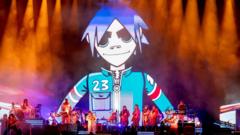
Damon Albarn is running across the stage, sweating through a T-shirt, and screaming into a megaphone. Behind him, a massive screen flashes hyper-kinetic animation of cartoon band members Murdoc, 2D, Noodle, and Russel. A twenty-piece choir is trading vocal runs with a legendary hip-hop icon who flew in just for this three-minute cameo. The bass doesn't just vibrate your chest. It alters your heart rate.
That is the reality of a Gorillaz stadium show. It is loud. It is messy. It is completely brilliant.
Most bands scale up their production for a massive, one-off stadium gig by hiring more lights or building a bigger runway. Gorillaz does it by throwing a massive, chaotic family reunion where everyone happens to be a musical genius. If you've ever wondered how a virtual band created by a rock star and a comic book artist manages to pull off the most vibrant live experience in music, the answer lies in the beautiful friction between the digital and the physical.
The Beautiful Friction of a Virtual Band in a Real Stadium
Pulling off a Gorillaz stadium show is a logistical nightmare that should not work. You are dealing with two completely different entities occupying the same space. On one hand, you have the virtual band. Those cartoon avatars require precise timing, synchronized video feeds, and perfect lighting cues. On the other hand, you have Albarn and a rotating door of flesh-and-blood guest artists who thrive entirely on improvisation and raw energy.
When Gorillaz hits a massive venue, they don't hide the human elements behind a screen. They force them into the spotlight.
The magic happens when these two worlds collide. You watch the giant animated visuals overhead, but your eyes keep darting back to the stage floor where a massive collective of live musicians is tearing through genres. One minute it is British punk, the next it is dub reggae, and then it shifts instantly into early 2000s alternative hip-hop. The digital characters give the show its identity, but the live band gives it a pulse.
Why the Guest List Matters More Than the Technology
Let's be honest about something. A lot of legacy acts use guest features as a gimmick. They bring out a rapper or a pop star for a quick verse to get a social media clip, and then they send them packing.
Gorillaz operates like a traveling festival.
Look at the lineup of any major Gorillaz stadium gig. You will see pioneers from different generations sharing a single green room. You might find De La Soul warming up in one corner, while Del the Funky Homosapien is checking his mic in another. Then you have standard touring members like Seye Adelekan holding down the low end, keeping the energy high before the curtain even goes up.
The backstage vibe at these massive shows isn't corporate or uptight. It feels like a chaotic block party. Artists who have never collaborated before end up hanging out, watching the opening acts, and bouncing ideas off each other. That lacks pretension. It is exactly why the performances feel so urgent and alive. The guests aren't just hitting their cues. They are genuinely hyped to be there.
The Auditory Heavy Lifting
Behind the scenes, the musical director has the hardest job in showbiz. They have to anchor the chaos.
- Managing the transitions between prerecorded cartoon backing tracks and live instrumentation.
- Balancing a massive choir against heavy electronic sub-bass.
- Adapting to Albarn's frequent mid-song audibles when he decides to extend a jam.
Keeping the Human Element in a Screen-Dominated Era
We live in a time where massive concerts are becoming increasingly automated. Timecodes run everything. Pyro goes off at the exact millisecond every single night. Pop stars lip-sync to flawless tracks because the choreography is too intense to allow for actual breathing.
Gorillaz rejects that perfectionism.
Albarn is the ultimate chaotic neutral frontman. He dives into the crowd. He forgets lyrics. He gets overwhelmed by the emotion of the crowd and lets a song breathe for an extra two minutes. He interacts with the front row like he's playing a sweaty club in 1995, completely ignoring the fact that there are 50,000 people watching him.
That unpredictability makes the stadium show work. If it were just a perfectly synced playback of cartoon music videos, you might as well stay home and watch YouTube. Instead, you get a sweaty, unpredictable human spectacle that happens to have a multi-million-dollar animation budget running parallel to it.
Your Next Steps to Experiencing the Madness
If you are planning to catch a massive one-off stadium show from Gorillaz or a similar hyper-production act, you need to change how you approach the night.
First, ditch the seated sections if you can afford the floor ticket. This isn't a show meant to be viewed passively from afar. The energy climbs from the front rail backward. You want to be in the crowd where you can see the sweat and feel the sub-bass rattling your shins.
Second, pay attention to the openers and the unannounced guests. Gorillaz rarely plays a massive show without bringing out surprise collaborators who aren't on the bill. Show up early, watch the stage hands, and keep your eyes peeled for legendary figures lurking in the wings. The best moments of these shows are almost always the ones that weren't advertised on the poster.