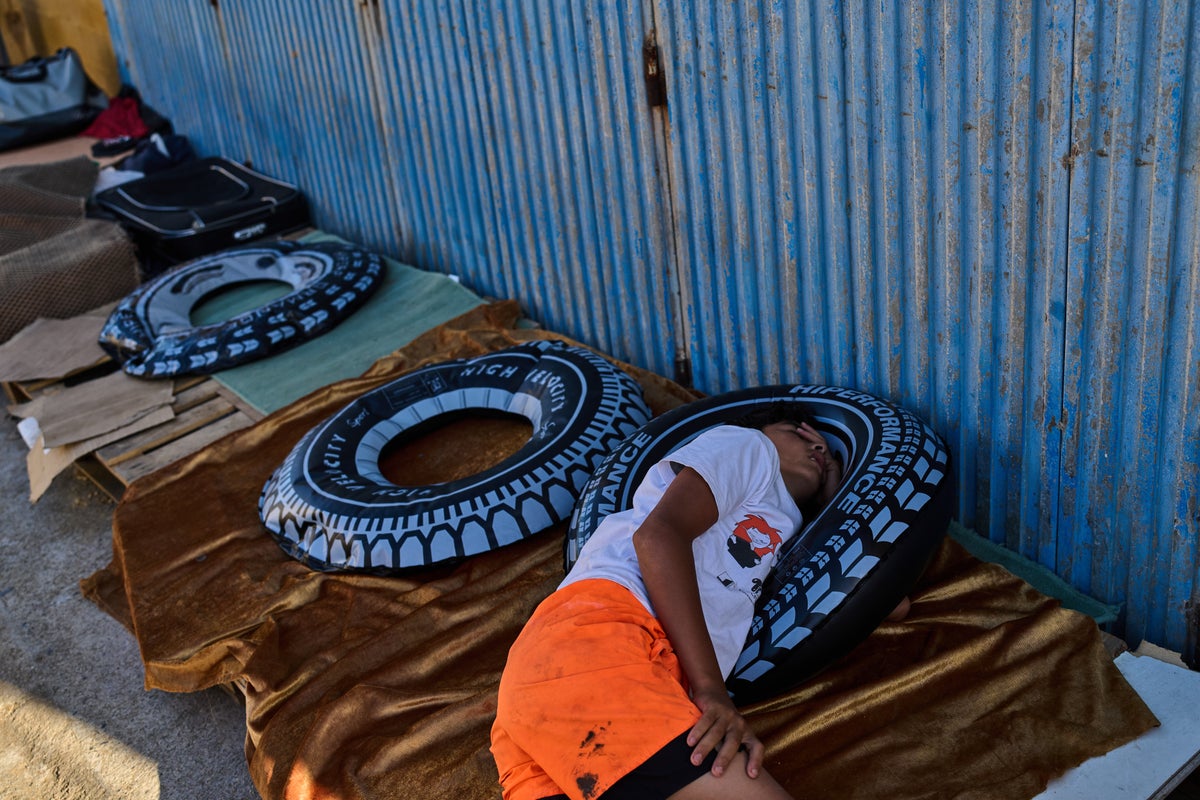
Thousands of unaccompanied migrant children stranded in the Spanish enclave of Ceuta face immediate danger amid escalating sexual assault accusations, severe overcrowding, and systemic institutional failure. Situated on the North African coast, this border territory has long served as a pressure valve for European migration policy. Today, it functions as a glaring humanitarian hazard zone where minors, who are legally under state protection, fall victim to predation, neglect, and a profound lack of security infrastructure.
The crisis is not an accidental byproduct of sudden geopolitical shifts. It is the predictable outcome of chronic bureaucratic inertia, structural underfunding, and an immigration framework designed for containment rather than child welfare. When a state assumes custody of vulnerable minors, a baseline duty of care attaches. In Ceuta, that duty has collapsed. Meanwhile, you can read similar developments here: Why the Latest Attack on Balochistan Minister Mir Ziaullah Langove Changes Nothing on the Ground.
The Anatomy of a Border Enclave Trap
Geography dictates destiny for Ceuta. Capped by a massive perimeter fence and bordered by the Mediterranean Sea, the territory spans roughly 18 square kilometers. It is a tiny slice of Europe physically attached to Morocco, making it a magnetic destination for youths seeking passage to the Spanish mainland.
When arrival surges occur, the local intake apparatus buckles instantly. Shelters designed for a fraction of their current population absorb multiples of their capacity. Minors sleep on mattresses lining corridors, in makeshift tents, or directly on concrete floors. To understand the complete picture, we recommend the excellent analysis by Al Jazeera.
Privacy vanishes. Basic hygiene becomes a luxury. In these conditions, supervision breaks down completely, creating fertile ground for exploitation.
Local authorities and aid organizations have documented a sharp rise in friction between older youth cohorts and younger children housed in the same facilities. The lack of proper age-verification protocols compounds the danger. Adult males frequently slip into minor-designated facilities by discarding identification documents, exploiting weak administrative checks to access spaces populated by children as young as ten or eleven years old.
Behind the Assault Allegations
The recent wave of sexual assault accusations within Ceuta facilities did not materialize in a vacuum. Investigative reporting and internal reports from humanitarian workers point to a toxic mix of overcrowding, absent security personnel, and an atmosphere of impunity.
Victims often find themselves trapped within the same physical compound as their alleged abusers. Reporting an incident carries heavy social and institutional penalties. Trust in the management staff is practically nonexistent, driven by high staff turnover and reports of indifference from overworked handlers.
When police reports are filed, they crawl through a sluggish judicial process. Meanwhile, the victims remain exposed to retaliation or psychological intimidation within the very walls meant to safeguard them.
The Spanish government routinely points to financial allocations sent to local authorities in Ceuta as proof of corrective action. Money alone, however, cannot fix a broken operational model. Funds frequently vanish into bureaucratic overhead or emergency contracts with private security firms whose employees receive minimal training in child protection, trauma-informed care, or conflict de-escalation.
The Failure of the Transfer Pipeline
Under Spanish law, unaccompanied minors arriving in border regions are supposed to be integrated into a nationwide solidarity mechanism. Other autonomous communities on the mainland are mandated to take in a share of these children to relieve pressure on front-line territories like Ceuta and the Canary Islands.
In practice, this mechanism is broken. Political posturing between regional and national governments turns human lives into bargaining chips. Mainstream political parties trade accusations over funding and resource distribution while deportation treaties and legal bottlenecks stall movement.
As a result, Ceuta becomes a permanent holding pen. Children arrive hoping for a quick transit to continental Europe. Instead, they find themselves stuck behind razor wire for months, sometimes years, watching their adolescence evaporate in a grey zone of legal limbo.
Despair breeds volatility. Riots, escape attempts, and self-harm incidents have surged inside the facilities. Desperate youths scale perimeter walls or attempt to swim around breakwaters into the open sea, choosing the high risk of drowning over the crushing psychological toll of indefinite detention.
The Legal and Moral Blind Spot
International human rights conventions are explicit regarding the treatment of minors. The principle of the best interests of the child is supposed to guide every decision made by state authorities.
Yet, in Ceuta, bureaucratic expediency overrides legal obligations. The system treats these children primarily as border security problems rather than individuals requiring specialized care, psychological rehabilitation, and educational continuity.
Access to formal schooling is patchy at best. Language barriers remain unaddressed. Psychological support, critical for children who have often survived harrowing desert crossings, sea shipwrecks, and physical abuse before reaching the border, is virtually non-existent on the ground.
When a state fails to provide education, safety, or basic stability, it manufactures the very social pathology it later condemns. Juvenile delinquency rates among stranded youth rise, reinforcing a toxic political narrative that paints these children as security threats rather than victims of circumstance.
Breaking the Cycle
Resolving the crisis in Ceuta requires dismantling the current model of mass containment. Incremental adjustments to facility security or minor budgetary increases will yield no meaningful change.
First, mandatory relocation quotas must be enforced across all Spanish regions without exception. No single territory should shoulder the disproportionate burden of a national and international geopolitical reality.
Second, rigorous vetting and specialized training must become mandatory for all personnel operating within youth shelters. Security guards must be replaced or supplemented by certified child protection professionals, social workers, and psychological specialists capable of recognizing and mitigating abuse patterns before they escalate.
Third, transparent, independent oversight bodies must be granted unannounced access to every facility in Ceuta. Accountability thrives in the light. Secrecy protects abusers and institutional negligence.
Until these structural transformations occur, thousands of children will continue to bear the cost of political cowardice and administrative failure on the edges of Europe.