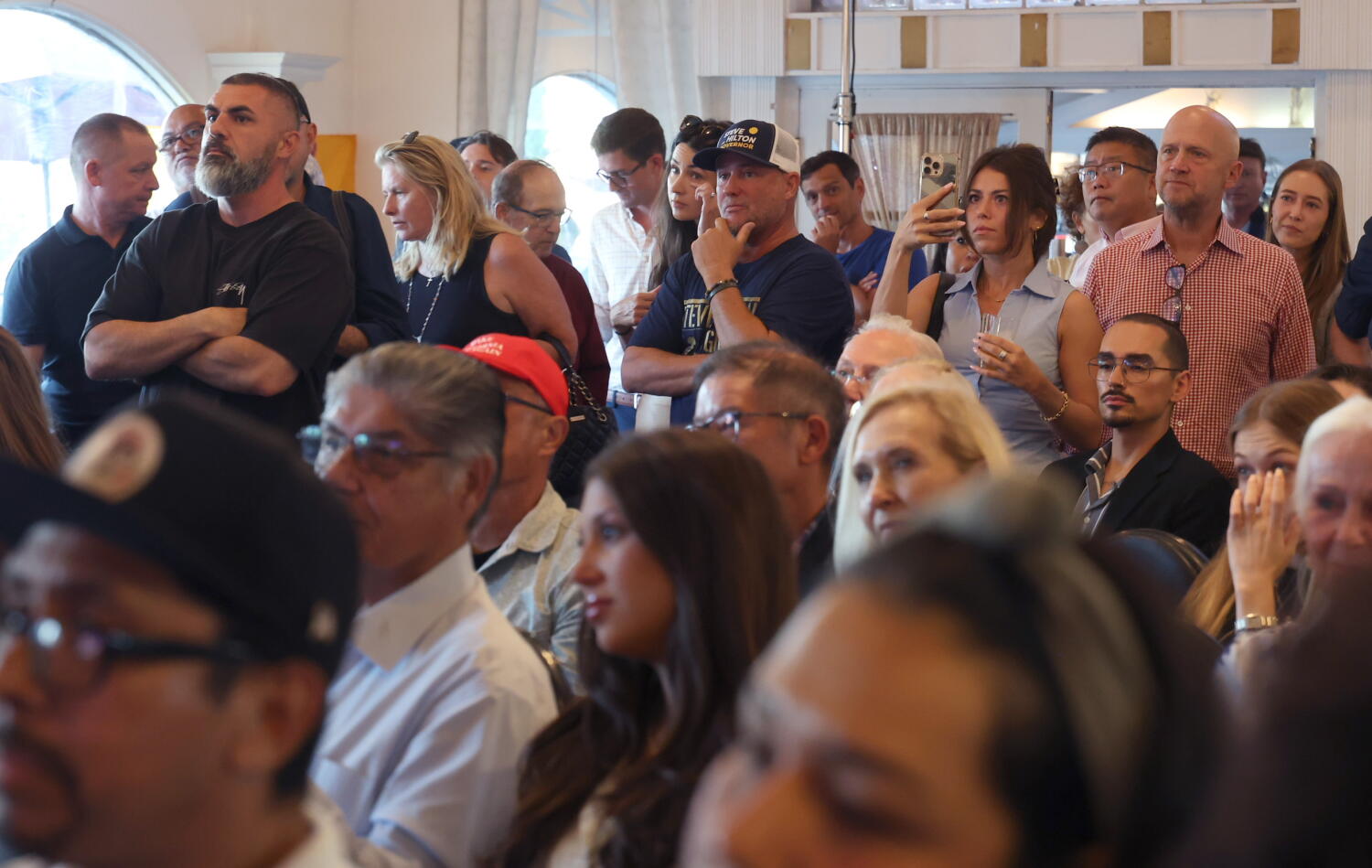
Walk into any county Republican headquarters from Redding down to San Diego right before Election Day, and the air feels thick with two competing emotions that should never occupy the same room. Hope and despair. For California Republicans, Election Day is rarely a simple referendum on policy; it is a high-stakes psychological endurance test where grassroots optimism collides head-on with brutal registration math and institutional infighting.
To understand why the California GOP oscillates between euphoric predictions of a red wave and fatalistic resignation, you have to look past the surface-level horse race. The emotional whiplash gripping conservative voters in the Golden State isn't a sign of confusion—it is the logical byproduct of a political minority trying to survive inside a one-party supermajority while tearing itself apart over how to fight back.
The Structural Trap Behind the Emotional Whiplash
Politics in California operates on an asymmetrical playing field. When conservative activists knock on doors in Orange County, the Inland Empire, or the Central Valley, they hear real anger over the cost of living, gas prices, housing affordability, and public safety. Those grievances are tangible. They fuel genuine hope that voters—particularly working-class families and shifting demographics—are finally ready to punish Sacramento's ruling establishment.
Then reality sets in.
California’s electoral mechanics punish fractured opposition. Under the state's top-two primary system, candidates from all parties run on a single ballot, with the top two vote-getters advancing to the general election regardless of party affiliation. In theory, this was designed to reward moderation. In practice, it frequently locks Republicans out of statewide races entirely or forces conservative candidates into general election matchups where overwhelming Democratic registration advantages make victory nearly impossible without massive crossover support.
Voter registration asymmetry remains the immovable boulder on the track. Even when independent and "No Party Preference" voters express dissatisfaction with state governance, converting general frustration into Republican votes requires overcoming deep brand resistance. National political dynamics routinely bleed into local races. When voters cast ballots in California, they are often reacting to national headlines and federal party platforms rather than local school board records or state assembly voting histories. For a Republican running in a suburban swing district, nationalization is an anchor they cannot cut loose.
The Illusion of Election Night Returns
Part of the recurring cycle of hope and despair comes down to how California counts its votes—a mechanical quirk that produces predictable emotional highs followed by crushing lows.
California relies heavily on universal vote-by-mail, paired with strict signature-verification procedures and late postmark allowances. Ballots postmarked on or before Election Day can legally arrive days later and still be counted. Meanwhile, demographic voting habits split sharply along temporal lines:
- Early and Election Day In-Person Ballots: Republican voters disproportionately favor casting ballots in person on Election Day or dropping them off early in the cycle. These ballots are often tabulated first on Tuesday night.
- Late-Arriving Mail Ballots: Democratic and younger voters tend to mail their ballots closer to Election Day, creating massive batches of uncounted votes that take election officials weeks to process and certify.
This creates what political analysts call the "red mirage" and "blue shift." On Tuesday night, early returns frequently show Republican candidates leading in competitive congressional and legislative districts. Champagne corks pop at watch parties. By Friday—and continuing for weeks afterward—those leads systematically evaporate as urban and late-arriving mail ballots are tallied.
For rank-and-file conservatives who don't live inside campaign war rooms, watching a three-point lead turn into a two-point loss over ten days feels less like arithmetic and more like betrayal. It breeds cynicism, depresses future turnout, and feeds a lingering suspicion of the electoral machinery itself, even when the timeline is functioning exactly as state law dictates.
A House Divided Against Itself
If external structural hurdles were the only problem, California Republicans could at least unify around a shared survival strategy. Instead, the party has spent years locked in an internal civil war over ideology, money, and tactics.
At the core of the divide is a fundamental disagreement on how to win in a deep-blue state:
The Pragmatic Incrementalists
One camp—largely composed of legislative leaders, institutional fundraisers, and suburban strategists—argues that Republicans can only survive by running disciplined, laser-focused campaigns centered on pocketbook issues. Their playbook avoids culture-war flashpoints, recruits moderate problem-solvers, and pours money into defending a small cluster of vulnerable seats in Orange County, the Central Valley, and Southern California's inland suburbs. To them, winning back power is a slow, decade-long grind of flipping two or three legislative seats at a time.
The Populist Insurgents
The opposing faction views incrementalism as cowardice. Fueled by talk radio, grassroots activists, and independent conservative organizations, this camp demands aggressive confrontation. They argue that softening the conservative message to appease suburban moderates simply gives voters "Democrats-lite," leaving the base uninspired and at home on Election Day. Instead of deferring to the official state party apparatus, populist leaders have built parallel fundraising machines, urging small-dollar donors to bypass traditional party committees altogether.
The financial consequences of this split are severe. When legislative caucuses, state party chairs, and outside activist groups compete for the same shrinking pool of donor dollars, resources get burned on internal messaging wars rather than voter registration drives and ballot-harvesting operations. While Democratic-aligned labor unions and political action committees operate a unified, year-round ground game, California Republicans frequently enter the final weeks of a campaign outspent, out-organized, and publicly sniping at one another.
The Ballot-Gathering Deficit
Nowhere is the gap between conservative aspiration and operational reality clearer than in voter outreach mechanics. Following changes to state election law allowing third parties to collect and return completed mail ballots—a practice critics deride as "ballot harvesting" and supporters call community voter assistance—Democrats built an expansive infrastructure through unions, nonprofits, and neighborhood canvassers.
For years, many California Republicans resisted adopting the same tactics on principle, arguing the practice invited abuse and should be repealed rather than utilized. By the time party leaders realized that unilateral disarmament was costing them close races, they were years behind in data modeling, volunteer training, and legal compliance.
Attempting to build a competitive ballot-collection network while simultaneously telling voters that mail-in voting is compromised creates an obvious strategic contradiction. You cannot effectively persuade a skeptical voter to hand their ballot to a volunteer if your own media ecosystem spends twelve months warning them not to trust the mail system. That mixed messaging has left conservative turnout operations fighting with one hand tied behind their back.
Where Real Leverage Still Exists
Despite the gloom hanging over statewide prospects, writing off California conservatives entirely misses where actual political power is shifting. Despair dominates the statewide conversation, yet localized pockets of resilience tell a very different story.
In the Central Valley and Inland Empire, economic shifts are reshaping political allegiances. Working-class Latino and Asian American voters—long treated as reliable components of the Democratic coalition—have shown increasing willingness to split their tickets when confronted with rising energy costs, inflation, and regulatory burdens on agriculture and small business. In several congressional and state legislative districts, Republican candidates have managed to remain fiercely competitive precisely because they speak directly to bread-and-butter economic anxiety rather than abstract partisan grievances.
Furthermore, California's direct democracy system gives conservatives a legislative bypass that minority status in Sacramento cannot block. When Republicans are shut out of committee rooms in the state Capitol, ballot propositions allow them to take issues directly to the electorate. Measures focusing on retail theft penalties, drug treatment mandates, and tax caps have repeatedly demonstrated that California voters are far more pragmatic—and skeptical of progressive orthodoxy—on specific policy questions than they are when choosing between party labels.
Even inside Sacramento, where Democratic supermajorities routinely pass sweeping legislation without a single Republican vote, strategic pressure still works when applied to fractures within the ruling party. Moderate Democrats representing swing districts frequently face intense pressure from business groups and local constituents over housing mandates, crime, and utility rates. When Republicans align with those vulnerable moderates on targeted issues, they can stall or reshape legislation despite holding a fraction of the seats.
The Cost of Permanent Crisis
The danger for California Republicans isn't losing an election cycle; it is mistaking a structural marathon for a single-day sprint. Every two years, the emotional pendulum swings violently from delusional overconfidence in October to existential despair in November. Neither extreme builds lasting political power.
Overconfidence leads campaigns to chase unwinnable vanity races instead of hardening vulnerable districts. Despair convinces donors to close their checkbooks and persuades qualified candidates that running for office in California is a waste of time and reputation.
A party operating as a permanent minority in America's most populous state cannot afford the luxury of emotional volatility. Winning back relevance requires unglamorous, relentless work: registering voters one household at a time, unifying fractured fundraising streams, mastering the state's mail-ballot rules without ideological hesitation, and recruiting candidates who understand the specific neighborhoods they want to represent. Until the California GOP stops treating Election Day as either a miraculous rescue or a funeral, the cycle of hope and despair will keep repeating itself—and the electoral map will refuse to budge.