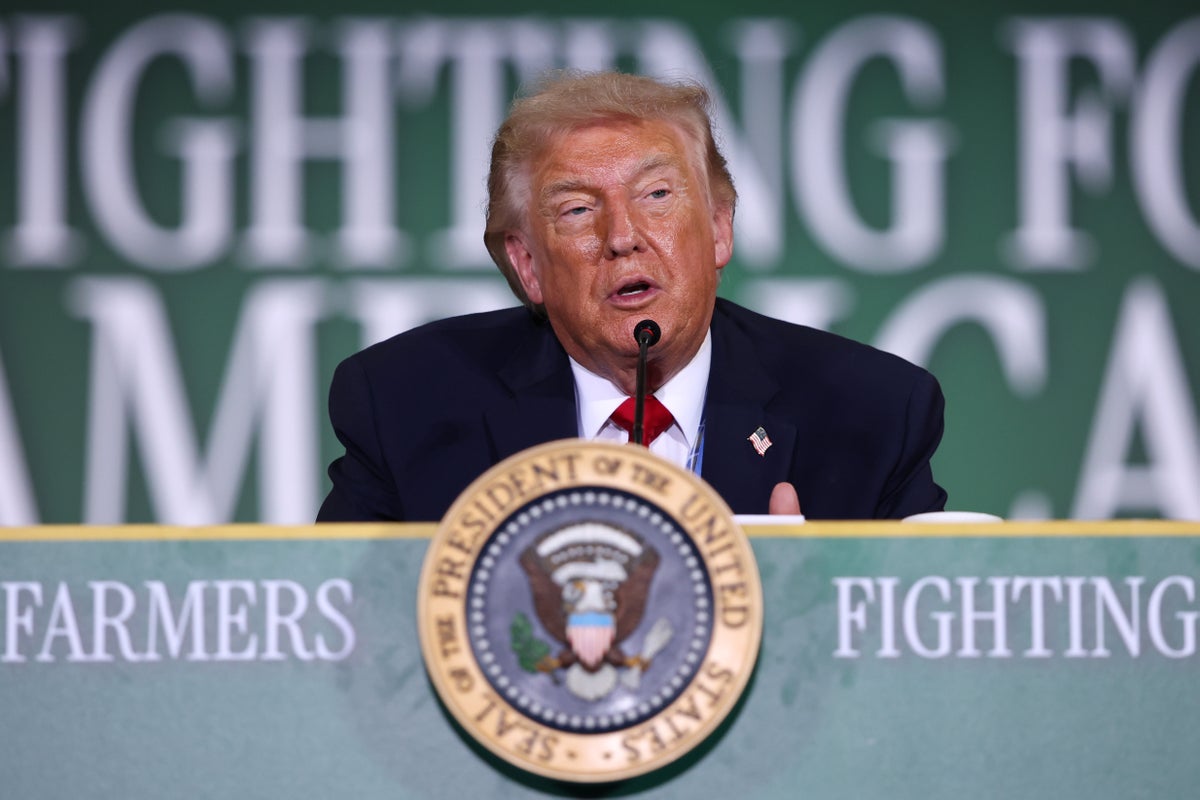
American family farmers are facing a catastrophic economic squeeze driven by soaring input costs, crushing debt, and worsening severe weather events. Yet, during a critical roundtable event meant to address emergency farm aid, the federal government’s primary focus veered sharply into an obsessive, multimillion-dollar aesthetic renovation of Washington D.C. infrastructure.
While growers gathered in Wisconsin to demand relief for plummeting crop margins and erratic fertilizer prices, the executive presentation centered on printed graphics and charts celebrating the completion of the Lincoln Memorial Reflecting Pool’s new blue paint job.
This stark disconnect exposes a broader crisis in agricultural policy. The machinery of state is increasingly preoccupied with superficial civic showmanship while the foundational producers of the domestic food supply line are left to absorb systemic macroeconomic shocks entirely on their own.
The Reality of the Modern Farm Squeeze
The immediate crisis facing the agricultural sector cannot be solved by optimistic rhetoric. Over the past twenty-four months, the price of nitrogen-based fertilizers, essential for standard corn and wheat yields, fluctuated violently due to supply chain disruptions and shifting trade policy. Production costs have outpaced market returns to such an extent that mid-sized family operations are burning through capital reserves just to plant for the next season.
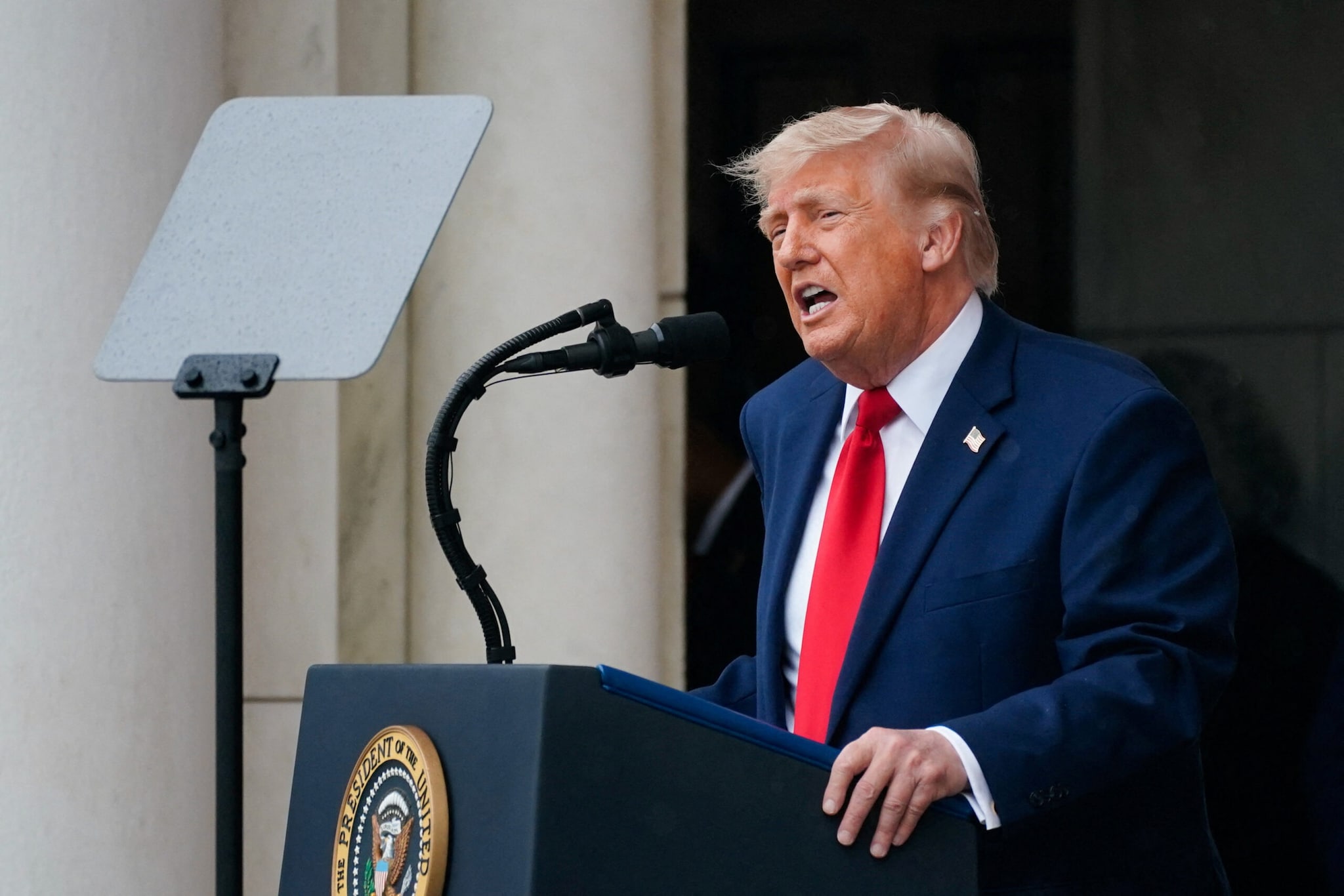
At the Chippewa Falls roundtable, which was explicitly billed as an emergency policy forum to address these economic pressures, attendees expected concrete proposals on direct subsidy adjustments, fuel tax relief, or supply-chain stabilization. Instead, the focus shifted to a literal slideshow of municipal construction. The administration displayed large, high-resolution graphics detailing the application of an "American flag blue" industrial-grade coating to the basin of the National Mall's iconic pool.
This was not an isolated tangent. It represents a fundamental misallocation of executive attention. When a government spends critical policy hours contrasting the square footage of a decorative pond against Chicago skyscrapers to prove it is "bigger than a corporation," it signals that public relations has entirely supplanted economic governance.
The True Cost of Vanity Infrastructure
The administrative defense of the Reflecting Pool project rests on national pride and civic beautification ahead of the country's upcoming semi-quincentennial celebrations. However, a deep dive into the federal procurement logs reveals a chaotic fiscal picture that contradicts the narrative of decisive, cost-effective leadership.
- Initial Public Estimate: $1.5 million to $2 million.
- Actual Awarded Contracts: $14.8 million.
- Primary Contractor: Atlantic Industrial Coatings.
- The Overrun: An escalation of over 700 percent, funded entirely through discretionary reallocations that critics argue plunder funds originally earmarked for broader public land management and rural infrastructure.
While a $15 million overrun might appear as a rounding error within a multi-trillion-dollar federal budget, the symbolic weight is crushing to rural communities. That exact figure represents the annual operating budget for dozens of regional agricultural extension offices—the very institutions that help farmers innovate, survive droughts, and manage pest crises.
A History of Diverted Focus
This is not the first time Washington has prioritized monuments over markets. A historic look at the executive management of the National Park Service and public spaces shows a recurring pattern. Landmark areas are frequently utilized as literal stages for executive branding, drawing vital administrative focus away from complex, unglamorous regulatory and economic crises.
The decision to bypass traditional historic preservation reviews to apply a bright blue swimming-pool liner over historic granite was met with immediate litigation from conservation groups. The administration’s response was a swift notification to the courts that the work was already finished, effectively creating a fait accompli. This aggressive maneuver required a level of intense, daily executive oversight that has been noticeably absent from the complex, multi-agency effort required to reform domestic fertilizer supply networks or lower agricultural diesel tariffs.
The contrast on the ground is stark. In the American Midwest, topsoil erosion and shifting precipitation patterns are forcing producers to completely overhaul their crop rotation strategies under immense financial strain. In Washington, the administration deployed the U.S. Motorcade to drive directly into the drained, painted basin of the Reflecting Pool for a photo opportunity.
The Policy Vacuum Left Behind
The long-term danger of this governance style is the complete stagnation of meaningful agricultural policy. When an executive roundtable concludes with a directive for farmers to keep their statements brief because leadership needs to get back to Washington to "protect" them, it leaves real structural flaws unaddressed.
The current safety net for American farmers relies heavily on a complex web of crop insurance and emergency relief bills that are increasingly ill-equipped to handle modern climate volatility and global trade warfare. The transition from substantive policy debates to aesthetic grandstanding means that when the next major global supply shock hits, the domestic agricultural sector will be forced to rely on ad-hoc bailouts rather than a structured, resilient framework.
True operational security for the American food supply cannot be achieved through top-down aesthetic mandates or boasting about the scale of a decorative pool. It requires meticulous, sustained attention to the unsexy details of logistics, tariff structures, and credit accessibility for rural banks. Until the printed pictures of municipal paint jobs are replaced on the executive desk by comprehensive economic blueprints, the stability of the American agricultural sector remains fundamentally at risk.