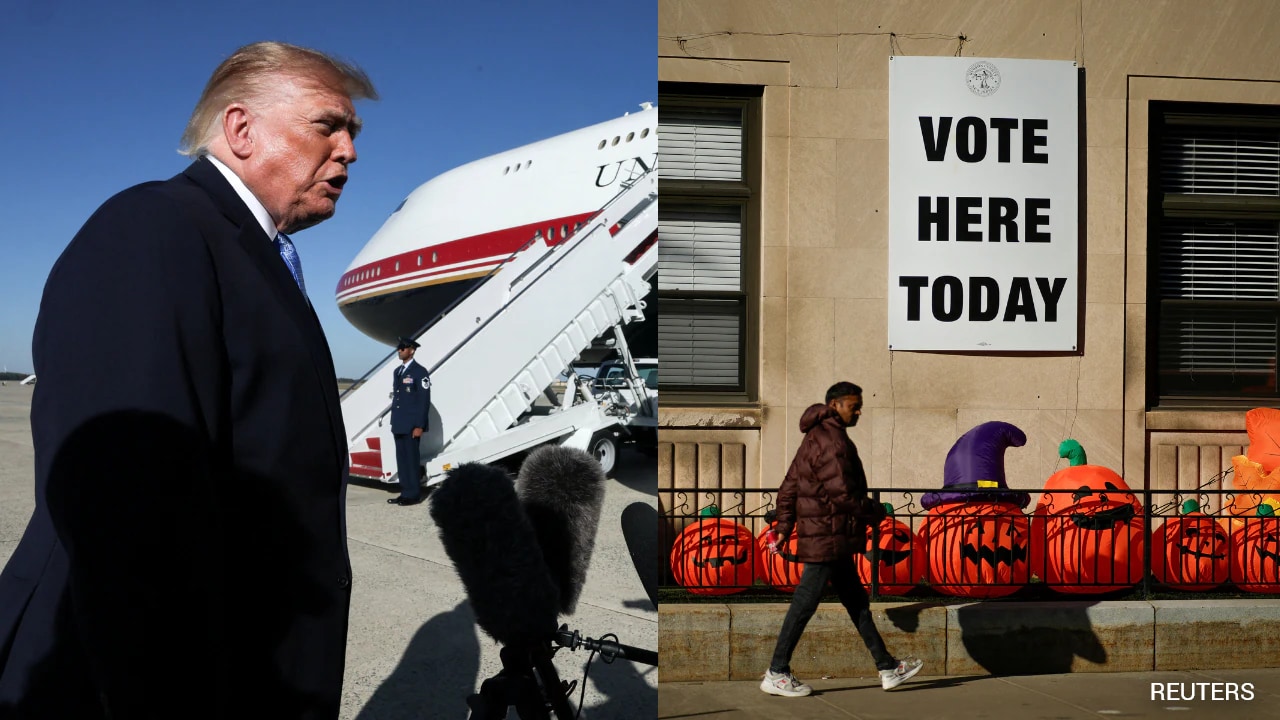
The US midterm elections are an exercise in concentrated financial power disguised as a grassroots referendum. On the surface, the math appears straightforward. Voters weigh in on 435 House seats and 35 Senate seats—a total of 470 federal races—while delivering a verdict on the sitting president. Beneath that surface lies an industrial complex burning through roughly $12 billion in political ad spend, an unprecedented sum designed not to persuade the undecided, but to engineer turnout through calculated outrage.
For decades, political analysts treated midterm elections as simple temperature checks on the White House. If the president's approval rating hovered below 50 percent, the opposing party reliably swept Congress. That correlation still holds weight, yet the mechanics behind it have mutated. Campaign operatives no longer rely on broad ideological appeals or traditional coalition building. Instead, they deploy massive capital reserves into hyper-targeted media ecosystems, turning local congressional races into nationalized proxy wars where the actual candidate barely matters.
The Illusion of the 470-Seat Battlefield
Open any mainstream political tracker and you will see a map highlighting 470 federal contests. It looks like a nationwide brawl. It is not.
In reality, the structural architecture of American politics has rendered nearly 85 percent of those seats completely uncompetitive before a single ballot is cast. Aggressive redistricting—the decennial redrawing of congressional boundaries by state legislatures—has created a fortress of safe seats for both Republicans and Democrats. Sophisticated mapping software allows partisan cartographers to pack opposing voters into dense districts while cracking remaining communities across surrounding areas, guaranteeing predetermined outcomes.
Where the Real Fight Happens
When you strip away the safe seats, the battle for control of the United States Congress shrinks to roughly 30 to 40 competitive House districts and fewer than eight Senate races. This geographic compression changes everything about how campaigns operate.
Because the battlefield is so narrow, money does not spread evenly across the country. It pools in specific media markets like Phoenix, Atlanta, Philadelphia, and Las Vegas. Residents in these battleground zones experience an entirely different election than citizens in non-competitive states. While voters in safe districts might see a handful of generic digital banners, swing-district residents are subjected to a relentless saturation bombing of television spots, streaming interruptions, text messages, and physical mailers from dawn until midnight.
The consequence of this geographic concentration is a profound distortion of legislative priorities. Candidates in those 40 swing districts are forced to run campaigns tailored to national donors rather than local constituents. A representative from a suburban district in Pennsylvania or California relies heavily on out-of-state fundraising networks to survive the financial onslaught, creating a structural dependency that pulls lawmakers away from the specific economic needs of the people they actually represent.
Follow the $12 Billion Ad Spend
Twelve billion dollars is a difficult figure to comprehend in the context of an election that does not even feature a presidential race at the top of the ticket. To put that number in perspective, it exceeds the annual gross domestic product of several small nations, all spent within a compressed window of roughly eighteen months to influence a fraction of the electorate.
Most voters assume this money flows directly to the candidates they see on screen. That assumption is outdated. Following the Supreme Court's Citizens United decision and subsequent deregulation of campaign finance, the financial center of gravity shifted decisively toward Super PACs and opaque dark money networks.
- Candidate Committees: Subject to strict individual contribution limits, these official campaigns actually pay the highest advertising rates. Federal law guarantees them the lowest unit charge during specific windows before an election, yet their reliance on small-dollar donations requires massive upfront spending on digital fundraising infrastructure just to keep the lights on.
- Super PACs: Allowed to raise and spend unlimited sums from corporations, unions, and wealthy individuals, these outside groups now dominate the airwaves. Because they are legally barred from coordinating directly with candidates, they operate as parallel shadow campaigns, often dictating the messaging strategy while the official candidate plays catch-up.
- 501(c)(4) Nonprofits: Commonly known as dark money groups, these organizations do not have to disclose their donors. They funnel tens of millions of dollars into Super PACs or run issue ads directly, obscuring the true financial architects behind the most aggressive attack campaigns.
The Economics of Outrage
Why does it take $12 billion to reach a few million swing voters? The answer lies in the fractured media environment and the steep cost of attention.
Twenty years ago, a campaign could buy ad time on three local network affiliates and reach 70 percent of the voting public during the evening news. Today, audiences are splintered across hundreds of cable channels, subscription streaming platforms, podcasts, and algorithmic social feeds. Reaching those same voters requires buying inventory across dozens of disconnected platforms simultaneously.
More importantly, the economics of digital fundraising incentivize maximum hostility. Algorithms on major social platforms reward emotional engagement—specifically anger and fear. Digital consultants discovered years ago that nuanced policy proposals generate terrible return on ad spend. Conversely, a frantic fundraising email or video warning that the opposing party is on the verge of destroying the country yields immediate small-dollar donations. Campaigns spend millions on ads simply to acquire donor email addresses, creating a self-sustaining loop where outrage funds the next wave of outrage.
Local television stations remain the quiet beneficiaries of this cycle. Despite the rise of digital media, broadcast television still captures the largest single slice of political ad budgets because older, high-propensity midterm voters still watch live local news and sports. For broadcast executives in battleground states, the fourth quarter of an even-numbered year represents a financial windfall that subsidizes their operations for the subsequent twenty-four months.
The Presidential Approval Trap
Every midterm cycle inevitably narrows into a referendum on the occupant of the Oval Office. Whether analyzing Donald Trump's historical polling benchmarks or tracking subsequent administrations, the mathematical relationship between presidential approval ratings and midterm seat losses has remained one of the most durable laws in American politics.
Historically, when a president's job approval sits above 50 percent, their party loses an average of 14 House seats. When that rating drops below 50 percent, the average loss skyrockets to nearly 37 seats. This phenomenon—known as the midterm penalty—occurs because the opposing party's base is inherently more motivated to vote out of frustration, while the president's supporters often suffer from complacency or disappointment that campaign promises have stalled in Congress.
Why Polling Numbers Mislead the Public
Relying solely on national approval ratings to predict midterm outcomes is a classic analytical mistake. National polls measure popular sentiment across the entire country, including massive population centers like New York, Texas, and California where congressional outcomes are largely locked in.
An approval rating of 42 percent nationally tells you very little about how a president is performing in the specific suburban counties of Wisconsin, Michigan, or North Carolina that actually decide Senate control. A president can be deeply unpopular nationally while remaining competitive in critical swing states, or vice versa.
Furthermore, modern polling struggles with severe non-response bias. As trust in media and public institutions has eroded, specific demographic groups—particularly working-class voters without college degrees—routinely ignore calls or texts from pollsters. Polling firms attempt to correct for this through complex statistical weighting, essentially guessing how non-responders would vote based on census demographics. When those assumptions are off by even two percentage points, pre-election forecasts collapse.
The Turnout Engine Over Persuasion
If you ask a veteran campaign manager how much of their multi-million-dollar budget goes toward changing a voter's mind, they will likely laugh. True persuasion—convincing a dedicated Republican to vote Democrat, or vice versa—is virtually dead in modern American politics.
Political polarization has hardened party identification to the point where ticket-splitting has hit historic lows. Voters who cast a ballot for a presidential candidate of one party almost universally vote for the same party's House and Senate candidates down the ballot. The pool of genuinely undecided, persuadable swing voters has shrunk to a razor-thin sliver of the electorate, perhaps 3 to 5 percent in any given district.
Consequently, the $12 billion machine is not built for persuasion. It is built for base mobilization.
The Mechanics of Micro-Targeting
Modern campaigns operate like massive data-brokerage firms. Before a single door is knocked, data scientists merge public voter files—which show party registration and whether a citizen voted in past elections—with commercial consumer data purchased from third-party brokers.
Campaigns know what kind of car you drive, what magazines you subscribe to, whether you own firearms, what charities you support, and what you buy at the grocery store. Using predictive modeling, they assign every registered voter two scores on a scale of one to one hundred: a support score (how likely you are to back their candidate) and a turnout score (how likely you are to actually cast a ballot).
The money flows almost exclusively toward voters with high support scores and moderate-to-low turnout scores. These are the reliable partisans who simply stay home during non-presidential years. Instead of trying to win over a moderate neighbor, campaigns spend millions serving hyper-specific digital ads to their own lukewarm supporters, reminding them of existential threats to their way of life until they finally mail in their ballot or show up at the precinct.
This strategic shift explains why political rhetoric feels increasingly extreme. When your sole objective is waking up your own base rather than appealing to the political center, moderation becomes a liability. Nuance does not drive turnout; existential dread does.
The Invisible Infrastructure of Ground Games
While television ads capture the headlines and the bulk of the spending, the decisive margin in tight races often comes down to field operations—the unglamorous, labor-intensive work of tracking down sporadic voters in the final seventy-two hours before polls close.
In recent cycles, both parties have experimented with outsourcing their ground games to third-party Super PACs, a move enabled by shifting campaign finance interpretations that allow outside groups to coordinate canvassing efforts with official campaigns. On paper, this allows billionaires to fund massive door-knocking armies without bumping against individual contribution caps.
In practice, outsourcing field operations introduces significant execution risks. Paid canvassers hired through third-party vendors often lack the ideological commitment of traditional grassroots volunteers. Investigations across multiple battleground states have uncovered instances of contracted canvassers falsifying data, skipping houses, or logging fake interactions into campaign apps just to hit daily quotas. When a campaign relies on corrupted field data to allocate its final-week resources, the entire turnout model breaks down.
The Ballot Harvesting Reality
Overlaying these field operations is the ongoing war over voting mechanics. The expansion of no-excuse mail-in voting and early in-person voting has transformed Election Day from a single Tuesday in November into a six-week rolling election.
Campaigns no longer wait until November to begin their get-out-the-vote pushes. The moment ballots drop in the mail—often in September or early October—field teams shift into aggressive ballot chasing. Using daily updates from county election boards showing who has requested a mail ballot and who has returned it, campaigns immediately pull voters who have already voted off their advertising and canvassing lists, reallocating those saved dollars toward the shrinking pool of voters still holding unreturned ballots.
In states where third-party ballot collection is legal, organized networks actively go door-to-door to collect completed ballots from low-propensity voters and deliver them to drop boxes. Where the practice is restricted or banned, parties pour millions into legal challenges, deploying armies of election attorneys to contest signature verification rules, postmark deadlines, and drop-box surveillance protocols months before a single vote is counted.
Why the System Cannot Reform Itself
Looking at the sheer waste of a $12 billion midterm cycle—the endless negative ads, the hyper-partisan gerrymandering, the reliance on dark money—it is natural to ask why Congress does not step in to fix the mechanics.
The answer is simple: the people writing the rules are the exact individuals who mastered the current system to win their seats.
Any meaningful reform to campaign finance, redistricting, or primary election structures requires sitting members of Congress to vote against their own structural advantages. A representative sitting in a safely gerrymandered district has zero incentive to support independent redistricting commissions that might put their career at risk. A senator who relies on Super PAC air cover to survive every six years will never vote to strip away the dark money apparatus that protects their incumbency.
Even when bipartisan momentum briefly builds around transparency measures, those efforts routinely die quietly in committee, buried beneath procedural hurdles and competing legislative emergencies. The political-industrial complex—comprising media buyers, polling firms, data vendors, direct-mail printers, and legal consultancies—has grown into a multi-billion-dollar economy of its own. Consultants routinely take a percentage cut of the ad buys they place, creating a direct financial incentive to push campaigns toward maximum spending regardless of whether those ads actually move the needle with voters.
Until voters fundamentally reject the tribal mechanics that reward outrage over governance, the price tag for controlling those 470 seats will only continue to climb, turning every even-numbered autumn into a high-stakes auction for the levers of federal power.