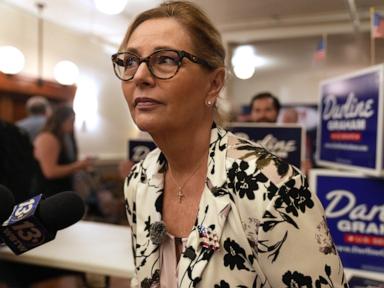
The sudden death of Senator Lindsey Graham in July 2026 tore open a vacancy in Washington and triggered an immediate, high-stakes scramble across South Carolina. Governor Henry McMaster appointed the late senator's sister, Darline Graham, to temporarily occupy the seat. Almost overnight, an administrative bureaucrat with zero legislative background was thrust into the upper chamber of the United States Congress and onto the ballot for a special Republican primary.
This compressed political timeline has forced South Carolina voters to weigh a heavy sentimental legacy against a severe lack of traditional political experience. Critics call it an attempted coronation. Supporters view it as an act of duty tethered to presidential backing. Beneath the surface noise of campaign advertisements and stump speeches lies a cold calculation about how political power transfers in the modern era, and whether a famous surname can substitute for a track record in elected office.
The Weight of a Name in Palmetto State Politics
Family dynasties are nothing new in American politics. Voters frequently gravitate toward familiar brands because recognition lowers the friction of choice. Yet, passing a Senate seat directly to a sibling without a bruising primary fight is a rare maneuver. Lindsey Graham held that seat for decades, building a complex network of alliances, committee power, and institutional memory. When he died, the immediate impulse from state leadership was to freeze the political landscape by installing his sister to finish the term.
President Donald Trump quickly moved to solidify that advantage, granting a swift endorsement and urging Darline Graham to run for a full six-year term. For a significant portion of the Republican base, that presidential nod functions as a heavy anchor. It tells loyalists that the candidate will protect an established agenda.
However, political appointments born from grief create distinct vulnerabilities. Veterans of local campaigns who spent years grinding through county GOP meetings look at an appointed incumbent with skepticism. They argue that a Senate seat is not an heirloom to be passed across a kitchen table. This tension defines the primary contest, turning every rally into a referendum on entitlement versus earned momentum.
A Career Spent Outside the Arena
To understand Darline Graham's political viability, one must examine what she was doing before the summer of 2026. Her professional life was spent in public administration and human services rather than legislative chambers or campaign bullpens. She worked within the South Carolina Vocational Rehabilitation Department and later led the South Carolina Commission for the Blind. Her day-to-day work centered on disability services, workforce development programs, and agency budgeting.
On the campaign trail, her lack of a legislative record is framed in two entirely different ways. Her opponents weaponize her administrative background as proof of political naivete, arguing she lacks the strategic chops to spar with seasoned lawmakers or navigate intricate federal budgets. They point to her public admissions that politics was never her personal ambition as evidence that she is an accidental occupant of an office that demands relentless ambition.
Conversely, her team leans heavily into that exact biography as an asset. In an anti-establishment political climate, having spent decades outside the traditional political class can read as authenticity. When she talks about grocery prices, inflation, and healthcare costs, she pitches herself as an ordinary citizen who was called to step into the breach. It is a populist tightrope act. She relies on the institutional machinery built by her brother while simultaneously presenting herself as an outsider to the system he inhabited for decades.
The Challenger Landscape and the Runoff Math
The primary field features several seasoned contenders eager to exploit the vulnerability of an appointed newcomer. Figures like Representative Ralph Norman and former Governor Mark Sanford command built-in donor networks and deep reservoirs of conservative voters who know their voting records intimately. These challengers do not need to introduce themselves to the electorate. They have spent decades sharpening their ideological identities before Palmetto State voters.
Because the primary ballot is crowded with nearly a dozen candidates, the math grows volatile. South Carolina election law dictates that if no single candidate crosses the fifty percent threshold, the contest proceeds to a runoff between the top two finishers.
Polls indicate that while Darline Graham holds a prominent position fueled by name recognition and the presidential seal of approval, her opponents are aggressively fighting for the runner-up slot. Once inside a head-to-head runoff, the dynamic shifts entirely. Sentiment fades, and the ground game takes over. Without the initial cushion of a royal appointment narrative, a candidate must prove their individual dominance precinct by precinct.
Substance Versus Symbolism in the Senate
The legislative reality awaiting the winner of this primary is unforgiving. While the campaign trail focuses heavily on symbolic alignment with national figures and broad cultural arguments, the seat itself carries massive appropriations power. Lindsey Graham wielded immense influence over defense spending, judicial confirmations, and foreign policy.
Darline Graham's early legislative posture has pivoted sharply toward domestic economic relief, border enforcement, and anti-fraud measures, signaling an effort to appeal directly to the populist wing of her party. Yet, committee assignments and federal budget negotiations require a granular grasp of policy mechanics that cannot be absorbed overnight. The transition from managing state disability agencies to drafting federal legislation is steep.
Voters in the primary are ultimately forced to ask a pragmatic question. Do they want a placeholder who embodies a continuation of personal legacy, or do they want a seasoned political operator capable of matching the historical footprint of the office from day one? The answer will dictate the trajectory of South Carolina's representation in Washington for the next six years.
The ballots are printed, the rallies are concluding, and the machinery of political survival is running at full throttle.


/cdn.vox-cdn.com/uploads/chorus_asset/file/22155007/doc_ock.jpg)