The friction between executive economic messaging and structural data has reached a critical inflection point. While the Director of the National Economic Council, Kevin Hassett, and other senior administration officials assert that a supply-side boom is systematically dampening price pressures, the primary metrics used to gauge macroeconomic health demonstrate that inflation is becoming more entrenched.
To evaluate the validity of current policy declarations, one must look past top-line political talking points and analyze the specific structural pillars driving current economic performance. The disconnect stems from a fundamental miscalculation of how supply-side tax policy, tariff-induced supply chain friction, and external geopolitical shocks interact within a highly pressurized domestic economy.
The Core Inflation Equation and Truncated Metrics
The administration's optimistic baseline relies heavily on specific, volatile metrics designed to isolate underlying economic trends but which occasionally obscure immediate financial friction.
National Economic Council officials frequently emphasize the trimmed mean Personal Consumption Expenditures (PCE) price index, calculated by the Federal Reserve Bank of Dallas, which fell slightly from 2.5% to 2.3% in early 2026. By dropping the most extreme price movements at either end of the spectrum, this metric is intended to track core, long-term trends.
However, relying entirely on trimmed or core metrics during structural economic shifts introduces a severe analytical bottleneck. The reality of the broader consumer landscape is captured by the unadjusted Consumer Price Index (CPI), which reached 3.8% in April 2026, its highest mark in three years.
This divergence highlights a structural failure in the administration’s narrative. Core inflation—which excludes food and energy—has risen steadily from an annualized 2.5% in January to 2.8% in April. Simultaneously, standard core PCE moved upward from 3.1% to 3.3% over the same four-month window.
The underlying mathematical mechanism demonstrates that inflation is not stabilizing near the Federal Reserve's 2% target; instead, the baseline trend is moving upward. The divergence between trimmed metrics and actual consumer data reveals that instead of temporary, isolated price spikes, inflationary pressures are broadening across the entire domestic distribution.
The Supply-Side Tax Hypothesis vs. Monetary Reality
The administration’s growth thesis is built upon the implementation of the Omnibus Balanced Budget and Growth Act (OBBBA), an extension and expansion of the 2017 Tax Cuts and Jobs Act (TCJA). The policy framework assumes that by making full expensing of capital investment permanent and lowering corporate rates, a massive expansion in production capacity will occur.
According to this model, an outward shift in the aggregate supply curve will absorb excess liquid demand, driving gross domestic product (GDP) growth toward 5% or 6% without generating corresponding inflation.
Supply-Side Theory:
[Tax Incentives / Full Expensing] ➔ [Increased Capital Investment] ➔ [Outward Aggregate Supply Shift] ➔ [Growth Without Inflation]

Monetary Reality:
[Massive Tax Refunds + Deficit Expansion] ➔ [Immediate Liquid Consumer Demand] ➔ [Velocity of Money Accelerates] ➔ [Demand Outpaces Supply Capacity] ➔ [Entrenched Inflation]
This model breaks down when exposed to the actual mechanics of current corporate and consumer behavior:
- Demand Acceleration Outpacing Capital Deployment: While corporate fixed nonresidential investment rose 5.5% in 2025, the timeline required to translate physical capital investment into active market supply is measured in quarters and years. Conversely, the immediate injection of cash via large tax refunds has provided an instantaneous boost to aggregate demand.
- The Velocity of Consumer Liquid Wealth: Because these tax provisions put high volumes of liquid capital directly into the economy simultaneously, the velocity of money accelerates faster than physical production can scale. This is the classic macroeconomic bottleneck: too many dollars chasing a rigid, capacity-constrained volume of goods.
- Fiscal Deficit Pressures on Bond Yields: The long-term financing of these tax structures has expanded the federal deficit, contributing to a scenario where servicing the national debt costs over $1 trillion annually. This fiscal expansion has forced the 10-year U.S. Treasury rate as high as 4.67% in mid-2026. High bond yields reflect the market's pricing-in of long-term structural inflation, directly undermining the administration's claims of an imminent cooling period.
The Tariff Friction and Regulatory Bottleneck
A secondary pillar of the administration's economic narrative relies on the unwinding of extreme "Liberation Day" import levies from 2025, alongside the Supreme Court's February 2026 decision striking down broad executive tariffs. Administration strategists argue that the subsequent reduction in import tax rates acts as a deflationary force, lowering input costs for domestic businesses and easing supply chains.
This perspective ignores the structural friction left behind by rapid tariff oscillations. Supply chains do not adjust symmetrically to policy changes.
When tariffs were initially imposed in 2025, wholesalers and retailers faced severe cost shocks. To preserve operating margins, firms implemented structural price adjustments, passing the cost burden down to end consumers. The subsequent clawback of these tariffs in early 2026 has not resulted in a corresponding reduction in retail prices. Instead, corporations are utilizing the lower input costs to rebuild eroded margins or offset other rising operational expenses, such as domestic logistics and credit costs.
Furthermore, the uncertainty generated by volatile trade policy has created a risk premium. Businesses are keeping higher cash reserves and maintaining cautious inventory strategies rather than engaging in aggressive, price-competitive market expansions. The tariff policy has ultimately introduced structural stickiness into consumer prices, meaning that even when the direct tax is removed, the elevated price baseline remains locked in.
Geopolitical Energy Shocks and the Wage-Price Ceiling
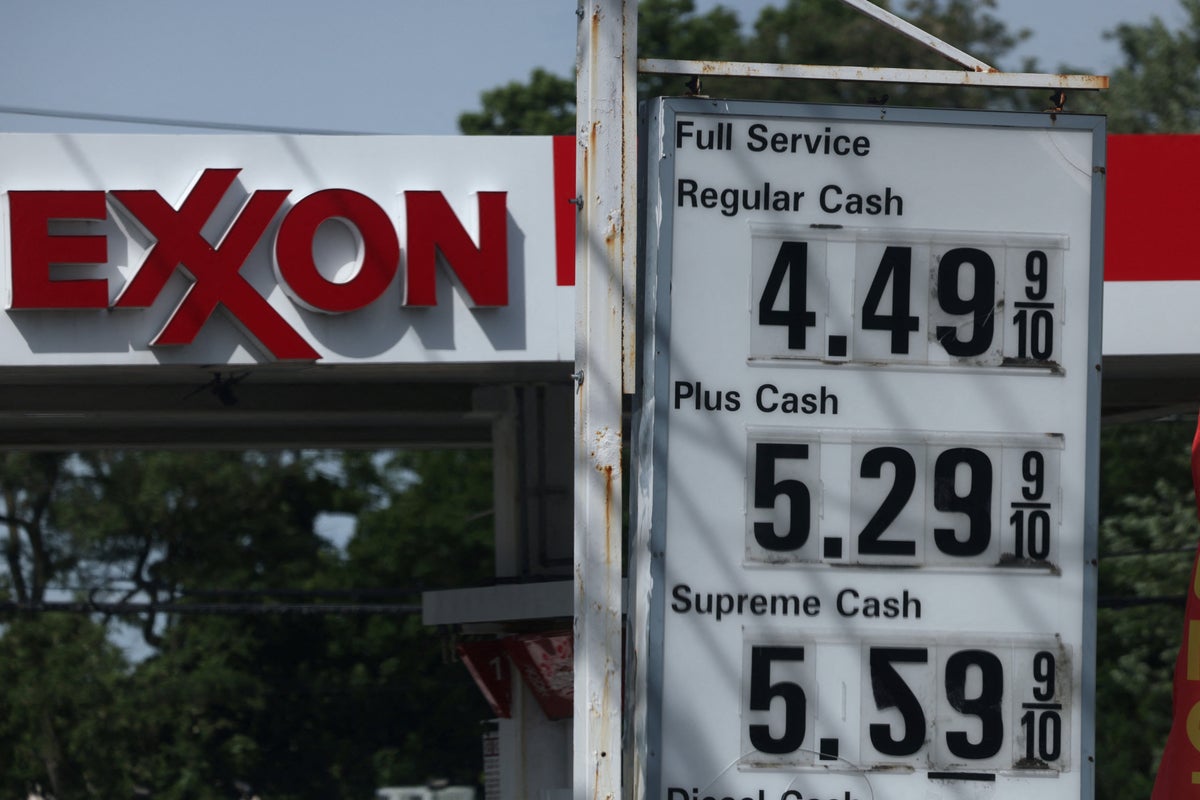
No domestic supply-side policy operates in a vacuum, and the current inflationary environment is heavily compounded by external energy shocks. The military conflict involving U.S. and Israeli actions with Iran, now in its fourth month, has triggered an acute energy disruption that directly invalidates domestic supply-side cooling theories.
[Iran Conflict / Energy Disruption] ➔ [Gasoline Sustained Above $4/Gallon]
                                                 │
                        ┌────────────────────────┴────────────────────────┐
                        ▼                                                 ▼
          [Direct Consumer Squeeze]                          [Indirect Industrial Pressures]
      (Erosion of Real Disposable Income)               (Surging Transportation & Logistics Costs)
                        │                                                 │
                        └────────────────────────┬────────────────────────┘
                                                 ▼
                                   [Stuck Core & Headline Inflation]
Gasoline prices have remained rigidly above $4 per gallon since March 2026. This energy shock ripples through the consumer economy via two distinct mechanisms:
Direct Variable Cost Squeezes
For the average household, energy costs are inelastic. When fuel prices spike, a larger share of disposable income is diverted immediately to basic transportation, directly reducing the purchasing power of nominal wage gains. While average hourly wages rose 3.4% year over year in May 2026, this growth is completely erased by a headline CPI rate of 3.8%, resulting in negative real wage growth for the typical worker.
Indirect Logistic Cost Compounding
Petroleum is a core input for domestic transportation, agricultural logistics, and industrial manufacturing. The sustained cost of fuel acts as an additional regressive tax across the supply chain, inflating the embedded delivery costs of groceries, clothing, and utilities.
Because these energy shocks hit the foundational layers of production and distribution, they cannot be neutralized by domestic corporate tax cuts. Instead, they keep both headline and core inflation measures elevated, regardless of internal supply-side adjustments.
The Divergent Macroeconomic Playbook
The tension between executive economic messaging and empirical reality leaves corporate leaders, institutional investors, and monetary policymakers with a highly complex landscape to navigate. The administration’s public position is that the market is mispricing risk and that interest rates should be cut immediately to sustain growth.
However, the Federal Reserve’s dual mandate requires an objective evaluation of structural data over political forecasts. With nonfarm payrolls showing continued resilience—averaging 76,000 new jobs in the first four months of 2026—and inflation moving away from the 2% target, the central bank’s policy path has fundamentally shifted.
The appointment of Jerome Warsh as the new Federal Reserve Chair in mid-May 2026 was initially expected by the administration to usher in a period of lower benchmark rates. Yet the persistent 3.5% to 3.8% inflation baseline has forced a hawkish pivot. Key policymakers, including Fed Governor Christopher Waller, have publicly adjusted their guidance, noting that further interest rate hikes cannot be ruled out if the current inflationary trajectory does not reverse.
Rather than expecting monetary easing, institutional strategies must now prepare for a higher-for-longer interest rate environment, with financial markets increasingly pricing in a decisive interest rate hike by December 2026. The supply-side boom envisioned by administration officials is currently being outpaced by demand-side stimulus and geopolitical realities, requiring defensive corporate positioning against prolonged, entrenched inflation.