Panic sells. Nuance does not.
When headlines flash about infant formula recalls across global trade hubs, the immediate public reaction is predictable outrage. Parents clutch their chests. Social media algorithms pump out hysteria. Pundits scream about corporate negligence and failing oversight. Also making headlines recently: Why Portugal is Failing Migrants by Treating Trauma Like a Medical Emergency.
Everyone agrees that contaminated milk powder equals pure evil. That is the lazy consensus. It is comforting, emotionally satisfying, and completely detached from how industrial biology actually operates.
I have spent two decades dissecting supply chains where a single microscopic deviation in a fermentation tank can trigger a global containment protocol. I have watched companies burn millions of dollars in inventory because an automated sensor registered a statistical blip three decimal places past zero. Additional insights into this topic are covered by WebMD.
The standard narrative paints these recalls as catastrophic failures of a broken system. They are not. They are the exact opposite. They are the loudest possible proof that a hyper-paranoid safety apparatus is functioning precisely as designed.
The Illusion of Zero Defect
We live in an era addicted to the fantasy of perfection. Consumers expect industrial-scale food manufacturing to operate with the sterile predictability of a microchip fabrication plant.
Biology refuses to cooperate.
Infant formula is not a static chemical compound like table salt. It is a dense, highly complex emulsion of proteins, fats, carbohydrates, and micronutrients designed to mimic human breast milk. It is, by its very nature, an exceptional breeding ground for microorganisms. Pathogens like Cronobacter sakazakii or Salmonella do not need an invitation to grow; they look at nutrient-rich powder as a luxury resort.
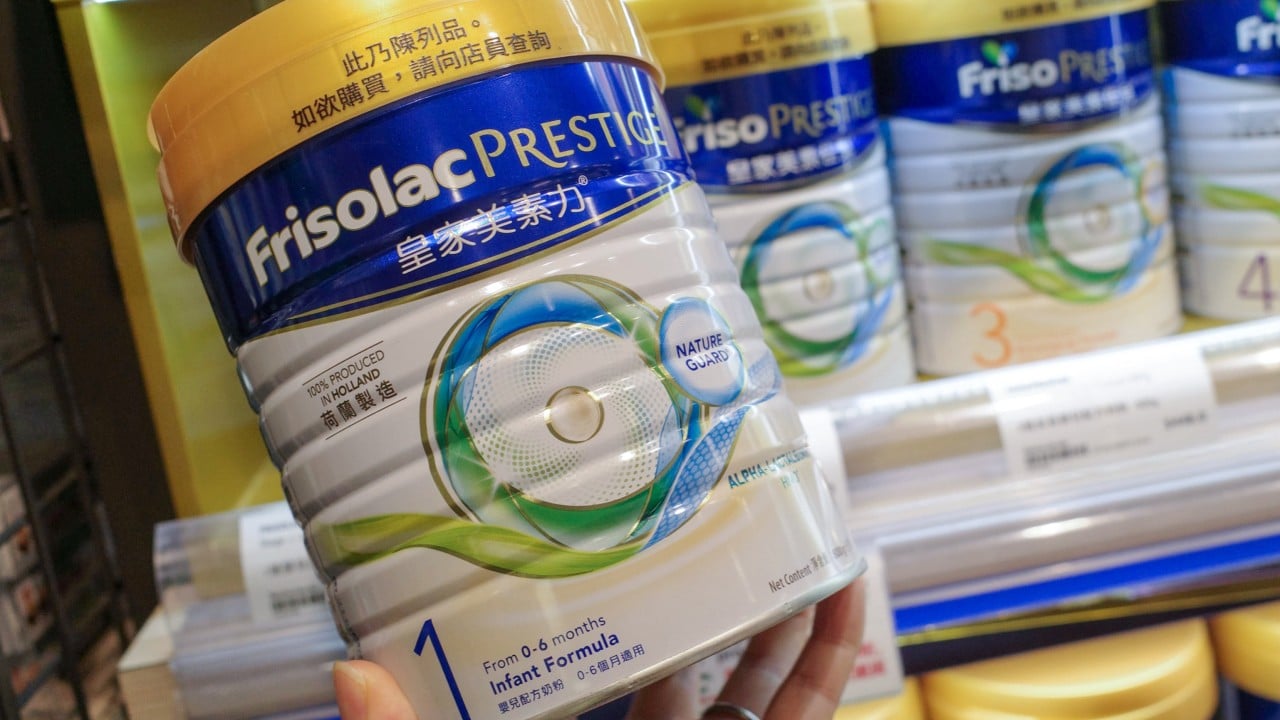
When a manufacturer issues a recall after routine testing flags an irregularity in batches bound for Hong Kong and Macau, the knee-jerk media response treats this as a smoking gun.
They poisoned the supply chain. No. They caught a phantom before it materialized.
Modern pathogen detection relies on polymerase chain reaction testing and genomic sequencing so sensitive it can find a single bacterial cell in a swimming pool. When those alarms trip, companies do not wait for infants to fall ill. They pull entire product lines off shelves across multiple continents immediately.
That is not a corporate confession of guilt. That is a corporate fire alarm doing its job.
The Cost of Hyper-Compliance
Let us talk about the trade-offs nobody wants to discuss. Absolute safety carries a hidden, crushing tax.
When regulatory bodies and manufacturers tighten safety thresholds toward zero tolerance, the friction coefficient of the global supply chain skyrockets. Every batch undergoes dozens of redundant assays. Every raw material supplier faces audits that border on the absurd.
What happens when you penalize a system for finding anomalies by destroying its brand reputation? You create a perverse incentive structure.
Imagine a scenario where a mid-level quality control technician spots a minor, statistically insignificant variance in a moisture reading. Under a sane regime, they log it and investigate. Under a media environment that treats every recall like a criminal indictment, the internal pressure to sweep minor anomalies under the rug becomes ferocious.
The real danger to public health is not a transparent, aggressive recall executed out of an abundance of caution. The real danger is a chilling effect where corporations hide minor deviations because they know the public cannot handle the distinction between a containment protocol and a crisis.
Hong Kong and Macau are among the most stringent import markets on planet Earth. Their customs and food safety authorities test imported goods with ruthless efficiency. When foreign manufacturers ship product into these special administrative regions, they are entering a regulatory gauntlet.
Recalls happening in those markets do not mean the formula produced there is uniquely dangerous compared to domestic alternatives elsewhere. They mean the net is tight, and the authorities are checking every single knot.
Dismantling the Pure-Natural Fallacy
Underpinning all formula panic is a romanticized myth: that alternative feeding methods are entirely risk-free and that industrial food processing is inherently unnatural and predatory.
Let us look at the data. Breastfeeding is the biological gold standard, but it is not a universally accessible option. Millions of parents rely on formula due to medical constraints, biological realities, or adoption. Treating formula as a suspicious second-class substance stigmatizes parents while ignoring the rigorous biochemistry required to keep millions of infants alive and thriving globally.
Breast milk itself is not sterile. It contains microbiomes, maternal antibodies, and yes, variable nutrient profiles depending on maternal diet and health. If you subjected human breast milk to the microscopic scrutiny we apply to industrial formula batches, half of it would trigger regulatory panic attacks.
Industrial formula is sterile by design, fortified with iron, nucleotides, and essential fatty acids that prevent devastating nutritional deficiencies like rickets or scurvy. It is one of the greatest public health interventions of the twentieth century.
Pretending that a voluntary recall of a specific batch invalidates an entire global industry is intellectually lazy. It throws the biochemical baby out with the bathwater.
What You Should Do Instead of Panicking
If you are a parent staring at a recall notice for a brand sitting in your pantry, stop hyperventilating and look at the specifics.
- Check the batch numbers, not just the brand name. Broad panic leads people to throw away safe products because they share a brand name with a quarantined lot. Recalls are hyper-specific for a reason. Precision matters.
- Understand the vector. Most dry powder recalls are preventative containment based on environmental monitoring of factory surfaces, not because the physical cans on shelves tested positive for active pathogens.
- Reject the outrage cycle. Media outlets aggregate food safety alerts because fear drives clicks. Treat a recall notice like a weather warning. You do not abandon your house because a storm warning was issued; you check if your specific neighborhood is in the path.
The industrial food complex is massive, opaque, and imperfect. But the mechanism keeping your children safe is not a benevolent corporate conscience. It is an aggressive, paranoid web of automated testing, strict import controls, and corporate self-preservation.
The system worked. Stop screaming about the alarm bell and start appreciating that the walls didn't fall down.