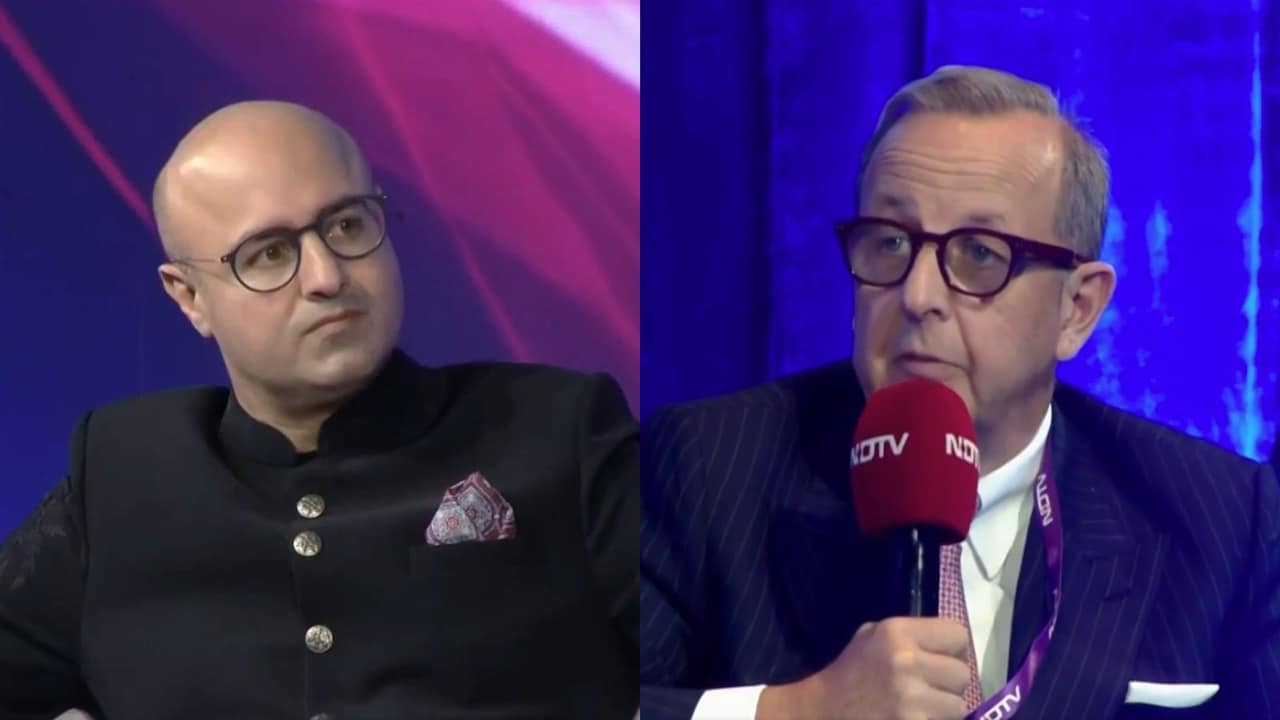
Western capitals increasingly treat New Delhi not merely as a large market or hedging power, but as a consequential diplomatic actor whose posture on global conflicts carries material weight—even as deeper economic interdependence fails to guarantee peaceful geopolitical outcomes.
Surface-level commentary around Italian remarks on India's peacemaking profile often stops at diplomatic politeness or headline catchphrases. A rigorous strategic audit requires separating ceremonial endorsement from structural incentives. When Rome welcomes a larger Indian role in conflict resolution while warning that expanded influence brings heavier obligations, the underlying logic rests on how middle and major powers price risk across fragmented supply chains, maritime chokepoints, and shifting alignment blocs.
This analysis unpacks the mechanics behind India's emerging mediation profile as viewed from Rome, maps the trade-offs that conventional coverage glosses over, and outlines how policymakers and corporate strategists can evaluate New Delhi's diplomatic bandwidth in practice.
The Globalization Paradox Behind the Shift
Conventional postwar trade theory assumed that dense commercial interdependence raises the opportunity cost of military conflict enough to stabilize international order. Recent geopolitical friction—spanning eastern Europe, West Asia, and maritime trade arteries—has exposed the limits of that assumption. Economic integration creates shared exposure, yet divergent security fears, energy dependencies, and sovereign ambitions can override shared balance sheets.
When diplomats from Rome point out that global interconnectedness has not automatically produced broader peace or democratic stability, they are describing a structural mismatch between network density and institutional alignment. Supply chains can link adversaries and partners simultaneously while security guarantees remain asymmetric.
- Asymmetric energy and commodity exposure: States that rely on contested shipping lanes or discounted energy supplies face different immediate cost curves than states bound to multilateral sanctions regimes.
- Multi-alignment rather than bloc loyalty: New Delhi maintains working channels with Western partners alongside ties to Moscow and the Global South, creating diplomatic reach that single-bloc actors often lack.
- Corridor and maritime stakes: Trade initiatives such as the India-Middle East-Europe Economic Corridor (IMEC) and maritime security operations around the Red Sea and Strait of Hormuz turn diplomatic stability into a direct logistics variable.
In this environment, being "no longer a spectator" does not mean India acts as a Western proxy or a universal peace guarantor. Rather, New Delhi's position gives it conversational access across divides that are otherwise frozen.
The Three Pillars of New Delhi's Mediation Leverage
To understand why European capitals—including Italy, which elevated ties with India to a Special Strategic Partnership in May 2026 alongside a Joint Strategic Action Plan for 2025–2029—pay close attention to India's diplomatic footprint, it helps to break New Delhi's leverage into three distinct mechanisms.
1. Channel Breadth Across Rival Camps
Mediation requires credibility or at least functional acceptability with parties that refuse to negotiate directly. Because India has historically resisted formal military alliances and kept diplomatic missions open across competing capitals, New Delhi can transmit signals and test off-ramps without immediately forfeiting standing in every camp. That channel breadth is a positional asset, not a guarantee of agreement; an interlocutor can carry messages without dictating terms.
2. Material Scale in Trade and Connectivity
Diplomacy carries more weight when paired with economic gravity. Bilateral merchandise and services flows between India and Italy—reaching €14.25 billion in 2025 with a stated ambition of €20 billion annually by 2029—sit inside a broader push toward EU-India trade integration and cross-corridor infrastructure. When a country anchors major consumer markets, industrial supply chains, and maritime routes, its preference for de-escalation affects real commercial risk models.
3. Plurilateral Convening Power
Beyond bilateral summits, New Delhi has invested in issue-specific coalitions and Global South diplomacy—ranging from maritime and resilience groupings to high-profile multilateral hosting. Convening power lowers transaction costs for bringing reluctant stakeholders into the same room, even when formal treaty mechanisms are gridlocked.
Separating Known Facts From Educated Hypotheses
A serious strategic assessment must draw a hard line between documented developments and analytical inference. Conflating the two produces overconfident forecasts that break down under pressure.
Known facts include official diplomatic milestones and public policy statements: Italy and India elevated their relationship to a Special Strategic Partnership in May 2026, advanced defense and mobility cooperation, backed connectivity concepts like IMEC, and voiced support for diplomatic de-escalation in West Asia and freedom of navigation around key waterways. Senior officials from both sides have also publicly framed India's expanded international profile alongside the responsibilities that accompany it.
Educated hypotheses concern how durable or decisive that peacemaking role will prove in high-stakes wars. One plausible hypothesis is that New Delhi will remain strongest as a facilitator, voice for de-escalation, and bridge-builder on issues affecting global supply chains, energy markets, and Global South priorities, rather than acting as a sole security guarantor capable of enforcing settlements on warring parties. Another hypothesis is that friction over third-party ties—such as energy procurement or defense relationships—will periodically test how warmly Western partners receive Indian initiatives. Neither outcome is automatic; both depend on how core belligerents calculate their military and political options.
The Cost Function of Stepping Out of the Spectator Seat
Competitor coverage often treats rising diplomatic visibility as pure upside. In reality, moving from bystander to active broker alters a state's cost function across four dimensions.
- Reputational exposure on stalled talks: Publicly leaning into peacemaking raises expectations. If talks stall or fighting resumes, the perceived mediator absorbs reputational drag even when the root causes lie with the combatants.
- Expectation pressure from partners: When European or other partners welcome a stronger peacemaking role while noting heavier responsibilities, they are signaling a desire for alignment on norms, stability, or burden-sharing—creating subtle pressure that New Delhi must balance against its own strategic autonomy.
- Domestic and border resource allocation: Foreign policy bandwidth is constrained by immediate national security demands, including border commitments and economic modernization at home. Every diplomatic initiative competes for senior executive and bureaucratic attention.
- Commercial blowback risk: Taking a visible stand on contested geopolitical files can complicate trade, investment, or energy negotiations with affected parties.
Limitations and Blind Spots in Mediation Narratives
Even the most capable diplomatic actor faces structural ceilings that commentary frequently overlooks.
First, mediators rarely create political will where none exists. A diplomatic channel can clarify red lines, lower face-saving barriers, and sequence humanitarian or cease-fire steps, yet belligerents fight or negotiate based on perceived battlefield leverage, regime survival, and domestic politics.
Second, bilateral warmth does not erase structural divergence. Strong momentum between Rome and New Delhi in trade, defense planning, or corridor diplomacy does not mean Italy and India view every regional crisis through an identical lens. Differences over regional security priorities or third-country relationships remain real constraints.
Third, headline diplomacy can overstate operational leverage. High-profile summits and welcoming remarks signal intent and goodwill, but concrete conflict resolution requires sustained backchannel verification, economic incentives, and security guarantees that no single middle-ground actor can supply alone.
An Operational Framework for Tracking India's Diplomatic Role
For analysts, executives, and policy teams monitoring how New Delhi's peacemaking profile evolves, relying on summit rhetoric is a weak signal. A tighter operational test tracks four observable indicators over time:
- Mandate specificity: Distinguish general calls for dialogue and de-escalation from concrete proposals tied to cease-fires, prisoner or hostage releases, humanitarian corridors, or shipping security.
- Multi-party reception: Watch whether both sides in a dispute—and key external powers—remain willing to engage New Delhi simultaneously rather than treating India as aligned with one camp.
- Infrastructure and trade follow-through: Track whether connectivity frameworks like IMEC, port agreements, and bilateral trade targets convert into financed projects and customs or logistics milestones.
- Risk-hedging discipline: Observe how New Delhi calibrates statements and economic ties when partner expectations collide with India's own energy, defense, or regional security interests.
Strategic Play for Decision-Makers
Treat India's growing peacemaking profile as a selective de-escalation and connectivity lever, not a substitute for hard risk management in conflict zones. Organizations with exposure to Eurasian, West Asian, or maritime trade routes should pair diplomatic monitoring of New Delhi's outreach with concrete operational buffers—diversified routing, inventory and insurance stress tests, and scenario plans that assume geopolitical friction can persist even as diplomatic channels expand.
India No Longer Spectator video on YouTube
This video provides the original summit context and Italian diplomatic remarks on India's peacemaking role that serve as the starting point for this analysis.


