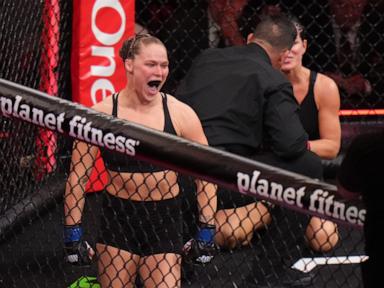
Netflix shattered United States mixed martial arts viewership records with its debut fight card on May 16, 2026, drawing a peak domestic audience of 11.6 million viewers for Ronda Rousey’s brief return to the cage. The event, headlined by 39-year-old Rousey submitting 44-year-old Gina Carano in just 17 seconds, averaged 9.3 million domestic viewers and 12.4 million globally. While these self-reported figures surpass the previous American MMA broadcasting high-water mark set by UFC on FOX 1 in 2011, the numbers mask a more complicated reality about the financial viability of live sports streaming and the diminishing returns of nostalgia-driven matchmaking.
The record-breaking metrics, compiled by VideoAmp and G&G Closed Circuit Events alongside Netflix, prove that the barrier of entry remains the ultimate arbiter of audience size. By removing the traditional $80 pay-per-view wall and offering the event to an existing global subscriber base at no additional cost, Netflix did not expand the core MMA fan base so much as it tapped an existing reservoir of casual curiosity.
The Economics of Free vs Pay Per View
Mainstream sports media quickly celebrated the 17-million global peak audience as a historic triumph for combat sports. To view this strictly as an editorial victory, however, ignores the structural shift in how live events generate revenue.
When the UFC drew 8.8 million viewers to its network television debut fifteen years ago, it did so within an ecosystem supported by traditional commercial advertising and escalating carriage fees. When premium combat sports events happen today on traditional platforms, they rely on a dual-revenue stream of high subscription prices and premium pay-per-view fees. Netflix is operating on an entirely different balance sheet.
| Event | Global Peak Audience | Distribution Model | Estimated Core Revenue Mechanism |
|---|---|---|---|
| MVP MMA: Rousey vs. Carano (2026) | 17.0 Million | Included with Base Subscription | Subscriber Retention & Ad-Tier Growth |
| Terence Crawford vs. Canelo Álvarez (2025) | 36.6 Million | Included with Base Subscription | Corporate Sponsorship & Scale Testing |
| Anthony Joshua vs. Jake Paul (2025) | 33.0 Million | Included with Base Subscription | Global Live Event Brand Building |
The downward trend in global viewership from previous Netflix sporting experiments reveals the limits of the nostalgia model. The 12.4 million global average for the Rousey-Carano card represents a sharp decline from the 36.6 million global viewers who tuned in for Canelo Álvarez in September 2025, and the 33 million who watched Jake Paul face Anthony Joshua in December 2025.
Nostalgia possesses an immediate expiry date. Relying on fighters whose athletic primes concluded during the Obama administration creates a fundamental problem for sustained programming.
The Shortest Main Event in Modern History
The actual sporting contest inside the Intuit Dome in Inglewood, California, lasted roughly as long as a standard television commercial. Rousey charged across the canvas, executed an immediate takedown, survived a brief guillotine attempt, and locked in her signature armbar to end the contest in 120 seconds less than a single round.
It was a perfectly executed sequence that reminded the audience why Rousey became a global phenomenon a decade ago. It also exposed the structural weakness of the promotion, which was co-founded by Jake Paul and Nakisa Bidarian under the Most Valuable Promotions banner.
Carano entered the cage after a 17-year absence from professional competition. Her previous fight took place in August 2009 against Cris Cyborg. Asking a 44-year-old actress to compete against an Olympic judo medalist after nearly two decades away from the gym belongs more to the realm of exhibition theater than legitimate athletic competition.
The undercard offered similar instances of high-visibility, low-longevity matchmaking. Former UFC heavyweight champion Francis Ngannou knocked out Philipe Lins in the first round, while bare-knuckle specialist Mike Perry defeated Nate Diaz via a doctor's stoppage after bloodies scarred the veteran's face. These are names familiar to anyone who followed the sport in 2018, but they offer little in the way of building a sustainable, long-term athletic roster.
The Streaming Infrastructure Gambit
Netflix is using these combat sports spectacles to stress-test an infrastructure designed for a broader corporate objective. The company is preparing for a massive expansion of live programming, including the T-Mobile Home Run Derby in July 2026, an increased slate of NFL games later this winter, and the global streaming rights for the 2027 FIFA Women's World Cup.
Fights are uniquely suited for this type of structural analysis. They require minimal overhead compared to a full season of team sports, they feature centralized narratives that are easy to market, and they attract an audience that tolerates the minor buffering and latency issues that still plague large-scale live streaming.
The real question is whether the massive promotional fees paid to talent like Rousey and Carano translate into permanent subscriber acquisition. Internal data suggests that while these events trigger spikes in sign-ups for the ad-supported subscription tiers, a significant portion of that audience churns away once the main event concludes.
The Illusion of Competition with the UFC
Speculation immediately surfaced following the ratings announcement that Netflix could position itself as a direct competitor to Dana White’s UFC monopoly. This perspective misunderstands the operational reality of both companies.
The UFC runs an efficient assembly line. They produce over forty events a year, maintaining a roster of hundreds of active athletes bound by restrictive, exclusive contracts. They do not rely on single-night spectacles; they rely on an ecosystem of continuous content that feeds their broadcast partners.
Most Valuable Promotions and Netflix are running a carnival model. They locate an underserved pocket of public curiosity, draft an enormous check to individuals with high social media followings, and capture a transient audience for a single Saturday night.
Rousey made it clear immediately after her victory that she has no intention of launching a sustained comeback campaign. She stated inside the cage that this was her final appearance, citing a desire to return to her family and focus on raising her children.
Without Rousey, and without a roster of active, elite talent in their physical primes, MVP MMA remains an event promoter rather than a sports league. The 11.6 million domestic peak viewers showed up to watch a ghost from MMA's past perform a familiar routine, not to invest their attention in the future of a new athletic organization.
Netflix proved it can aggregate a massive audience whenever it chooses to waive the entry fee to a major cultural event. It has not yet proved that it can convert that temporary curiosity into a stable, profitable engine for live sports entertainment.