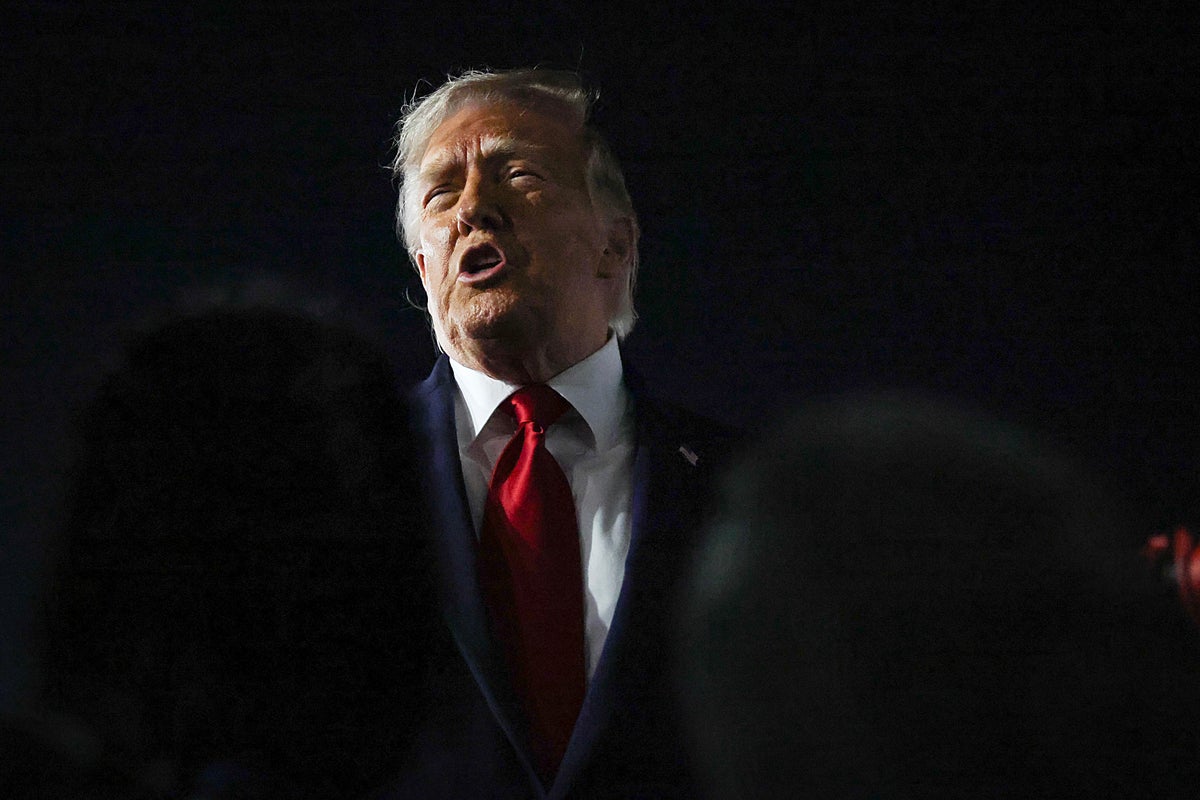
Donald Trump wants the world to believe the war is over. With his trademark bravado on Truth Social, the US President declared a comprehensive peace agreement with Tehran, ordering the "Ships of the World" to start their engines and "let the oil flow." The announcement, timed perfectly for the opening of Asian markets, triggered an immediate four percent drop in crude futures and sparked a wave of relief across a global economy battered by a five-week shooting war and a subsequent multi-month naval blockade.
But a closer look at the actual text of the fourteen-point memorandum of understanding reveals a starkly different reality. This is not a definitive peace treaty; it is a highly volatile 60-day ceasefire that leaves the most explosive structural triggers of the conflict entirely intact. By rushing to claim a foreign policy win ahead of the upcoming midterm elections, Washington has fundamentally shifted its strategy from enforcing regime change to bargaining with an emboldened Islamic Republic. Iran has successfully demonstrated that its long-standing threat to choke the Strait of Hormuz is not an empty boast, but an operational lever capable of bending American foreign policy to its will.
The Mirage of Toll Free Transit
The headline victory claimed by the White House is the immediate reopening of the Strait of Hormuz and the lifting of the US naval blockade on Iranian ports. The reality on the water, however, defies the presidential rhetoric. Energy markets run on certainty, and certainty is the one commodity this memorandum fails to provide.
More than 500 merchant vessels currently sit idly inside the Persian Gulf, trapped by months of hostiles and a dense network of naval blockades. Clearing this logistical backlog will not happen with the turn of a key. Under the terms negotiated via Pakistani and Qatari mediators, Iran is tasked with demining the strategic waterway. This introduces a massive operational lag. Maritime insurance syndicates in London are already signaling extreme skepticism. Shipowners are unlikely to send multi-million-dollar tankers through an eight-hour transit zone where the waters are littered with remnants of recent mine-laying operations and drone skirmishes.
Furthermore, the structural damage inflicted during the war cannot be wished away. Key downstream energy infrastructure, including major liquefied natural gas export facilities at Ras Laffan and various regional port terminals, sustained direct hits during the peak of the fighting. Industry analysts estimate that repairing this infrastructure and restoring depleted global inventories will drag well into next year. The market may enjoy a brief psychological rally, but the structural reality is that oil supplies will remain tight, and risk premiums will stay embedded in every barrel transiting the region.
The Structural Mechanics of the Interim Deal
To understand why this agreement is so fragile, one must look at what both sides actually surrendered—and what they retained. The framework, scheduled for an official signing ceremony in Switzerland on Friday, operates on a dual-track timeline that essentially kicks every hard decision down the road.
| Country | Key Concessions Offered | Strategic Leverage Retained |
|---|---|---|
| United States | Lifts naval blockade on Iranian ports; Agrees to the phased release of $25 billion in frozen assets. | Retains secondary sanctions; Sanctions snapback mechanism remains active via European allies. |
| Iran | Commits to a 60-day freeze on expanding uranium enrichment; Calls off retaliatory strikes in Lebanon. | Retains intact domestic nuclear infrastructure; Keeps ballistic missile and regional proxy networks active. |
The draft framework hinges on a massive financial concession: the release of $25 billion in frozen Iranian assets by the United States. In return, Tehran has agreed to a temporary status quo freeze on its nuclear program. They will halt the expansion of uranium enrichment and refrain from enlarging physical facilities for the duration of the 60-day talks.
The central flaw in this mechanism is the domestic handling of the nuclear material. While American negotiators originally demanded the complete removal and destruction of Iran's highly enriched uranium stockpile to a third country, the final draft compromises. Tehran is permitted to dilute its enriched uranium within its own borders. This leaves the technical knowledge, the centrifuges, and the primary industrial framework completely intact. The regime has not dismantled its nuclear ambitions; it has merely paused them in exchange for a massive liquidity injection.
The Fractured Fronts from Washington to Jerusalem
The announcement has exposed deep, rancorous divisions within the geopolitical coalitions on both sides of the ledger. In Washington, the administration is already facing fierce blowback from hardline Republicans. Critics are pointing out that this interim deal offers terms that are significantly weaker than the 2015 Joint Comprehensive Plan of Action—the very agreement Trump famously tore apart during his first term.
More critical is the open fracturing of the US-Israeli alliance. Israel was largely sidelined during the intense rounds of mediation held in Muscat and Islamabad. This peripheral status culminated in a massive diplomatic flare-up when Israeli forces launched a series of deadly airstrikes against the Dahiya district in southern Beirut, just hours before the peace deal was set to be finalized.
The attack infuriated the White House. Trump took the unprecedented step of publicly condemning the Israeli operation, stating it "should not have happened" on such a critical day. Behind closed doors, the language was reportedly far more profane, with the president accusing Israeli Prime Minister Benjamin Netanyahu of deliberately attempting to sabotage the peace framework to prolong the military campaign.
Iran faces its own internal civil war over the text. President Masoud Pezeshkian had to plead for national unity before the Iranian parliament, openly calling it a "disgrace" that hardline factions were labeling his negotiators as traitors. The regime's new Supreme Leader—the son of the late Ayatollah Ali Khamenei, who was killed in the opening salvos of the war on February 28—has remained entirely out of public sight since the conflict began. While his rubber-stamp approval was secured for this memorandum, the silence from the top of the clerical establishment suggests a deep, ongoing power struggle over the wisdom of cutting a deal with Washington.
The Sword of Damocles Over Global Energy
The ultimate legacy of this five-week war is that it proved the validity of Iran's asymmetrical warfare doctrine. For decades, Western military planners treated Tehran's threats to close the Strait of Hormuz as a theoretical deterrent. By actually shutting down a fifth of the world's oil trade, disrupting global shipping logistics, and launching retaliatory missile strikes that reached deep into Gulf nations hosting US facilities, Iran proved it could inflict unmanageable pain on the global economy.
The war ended not with the capitulation of the regime, but with Washington changing its objective. The rhetoric of unconditional surrender and regime change has been quietly replaced by a transactional compromise. Vice President JD Vance defended the shift by arguing that a stabilized Middle East would transform regional dynamics for the next fifty years, but seasoned defense analysts see a far more perilous precedent.
By leaving Iran in effective operational control of the strait and allowing it to retain its ballistic missile and drone arsenals, the agreement ensures that the threat of renewed economic disruption remains a permanent fixture of international diplomacy. If the upcoming technical talks in Switzerland stall over the next 60 days, or if regional proxies break the tenuous ceasefires in Lebanon and Yemen, Tehran knows exactly which economic artery to squeeze to force Washington back to the negotiating table. The ships may start their engines, but they are sailing into a waterway where the rules of engagement have been permanently rewritten in Iran's favor.