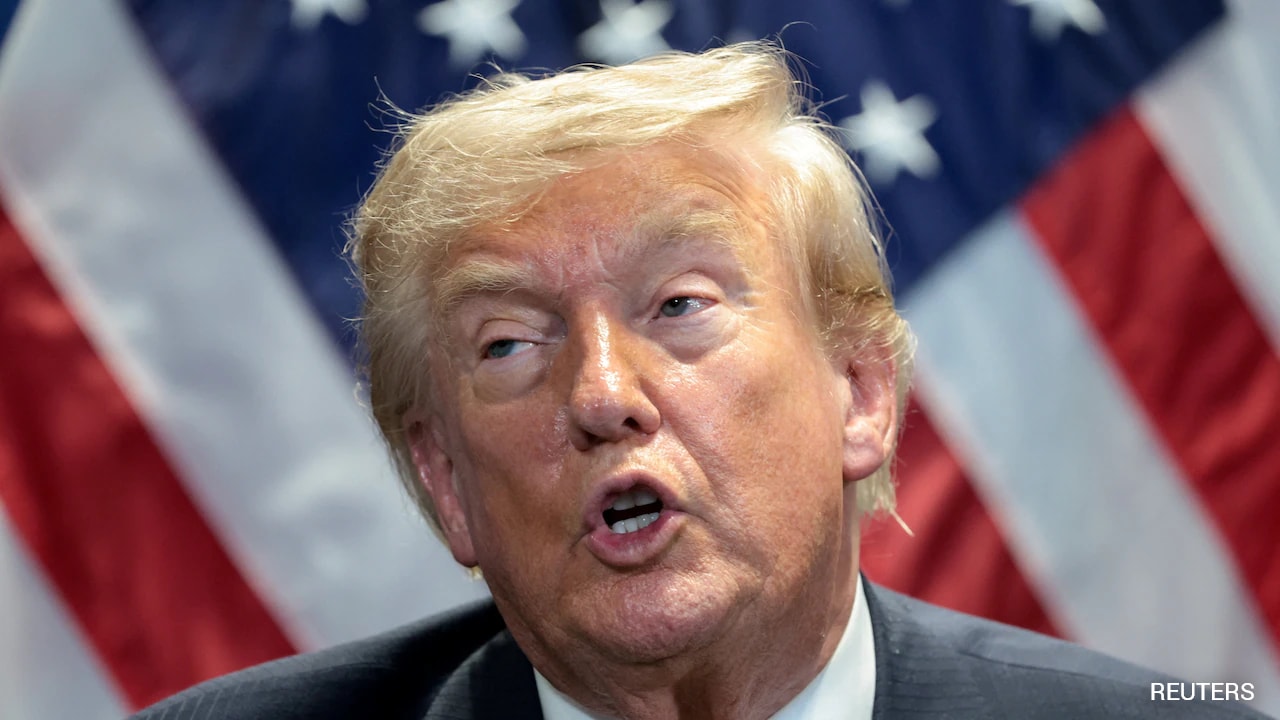
Whenever the smoke clears over the Persian Gulf, a familiar script plays out in Washington. Following a series of heavy military exchanges in the Strait of Hormuz, the public is treated to an assurance that the enemy is on the ropes. The enemy, we are told, is practically begging for a way out.
"They called a little while ago," Donald Trump announced to reporters aboard Air Force One, just hours after American forces launched another round of airstrikes against Iranian targets. "They want to make a deal so badly."
It is a striking claim, especially coming in the middle of an active conflict where missiles are still flying. According to the official narrative, the Pentagon's strategy of hitting back "20-to-1" has worked. The Iranian regime, battered by the destruction of its naval assets and facing crippling infrastructure damage, is supposedly desperate to sign whatever paper Washington puts in front of them.
But anyone who has watched Middle Eastern diplomacy over the last thirty years knows that international relations are rarely that simple. The reality on the ground contradicts this picture of total capitulation. While the White House projects an image of a defeated adversary rushing to the negotiating table, Tehran's public stance remains defiant. Iranian Foreign Minister Abbas Araghchi quickly dismissed the idea of direct talks, clarifying that while messages are being passed through intermediaries like Pakistan, back-channel communication is not the same as a surrender.
This disconnect highlights a fundamental misunderstanding of how asymmetric conflicts work. Believing that a few weeks of heavy bombing will completely break a regime's political will ignores decades of history. It mistakes tactical retreats and back-channel signaling for a willingness to completely surrender.
The Strategy Behind the Performance
To understand why the administration keeps insisting a deal is imminent, you have to look at the domestic pressure building at home. The current conflict has taken a massive toll on the global economy. Fuel shortages are spreading, supply chains are choking, and energy prices are climbing. With the mid-term congressional elections rapidly approaching, a prolonged war in the Middle East is the last thing any incumbent administration wants.
Insisting that the enemy is desperate serves a dual purpose. First, it justifies the heavy use of military force to a domestic audience that is increasingly anxious about rising gas prices and economic instability. Second, it attempts to set the psychological terms of any future negotiation. By framing Iran as the party that is desperate to talk, Washington tries to corner Tehran into a position of weakness before anyone even sits down at a table.
This is a classic negotiation tactic, but it carries immense risk. When you publicly claim your opponent is terrified and broken, you make it almost impossible for them to actually negotiate. In a political system like Iran's, where anti-Western defiance is a core pillar of regime legitimacy, appearing to crawl to Washington under duress is a death sentence. Trump even acknowledged this dynamic, noting that Iranian leaders are "afraid to say it because they will be killed by their own people." Yet, by continuing to broadcast this narrative, the administration makes that exact outcome more likely, shutting down the very diplomatic paths it claims to want.
The Reality of Asymmetric Warfare
The military data provided by Western intelligence paints a picture of severe devastation. Reports indicate that a vast majority of Iran's major naval vessels have been neutralized, and its missile launch capabilities have been heavily degraded. From a purely conventional military standpoint, the United States holds all the cards. The administration has openly boasted that it could wipe out Iran's entire power grid in a single afternoon.
But conventional superiority does not automatically translate into political victory. Asymmetric warfare is not about matching an opponent plane for plane or ship for ship. It is about enduring punishment while inflicting just enough economic and political pain to make the conflict unsustainable for the stronger power.
Iran's response to the latest round of American strikes proves this point. Hours after the White House claimed victory, Iran's Revolutionary Guards launched strikes against U.S. facilities in Bahrain and Kuwait, while continuing to threaten commercial shipping lanes.
This is not the behavior of an opponent that feels completely defeated. It is the behavior of a regime that knows its survival depends on projectable defiance. Tehran understands that it cannot win a conventional war against the United States. It does not need to. It only needs to convince the global market that the Strait of Hormuz will remain a volatile, dangerous hazard zone as long as Western pressure continues. Every spike in global oil prices is a point scored in Tehran's favor, regardless of how many shipyards the Pentagon destroys.
The Hidden Costs of the Proposed Terms
The administration has floated a 15-point proposal through regional intermediaries to end the fighting. The terms are incredibly demanding. They require Iran to open the Strait of Hormuz, hand over its stocks of highly enriched uranium, dismantle its ballistic missile programs, and cut ties with its regional proxy network.
In exchange, Washington is offering to unlock tens of billions of dollars in frozen Iranian assets and support a massive regional reconstruction fund. To an outside observer, this might look like a reasonable trade. A battered economy gets a massive financial lifeline in exchange for giving up its military ambitions.
But for the leadership in Tehran, these terms demand total political capitulation. The ballistic missile program and regional alliances are not bargaining chips to be traded away for cash. They are the regime's primary defense mechanism against foreign intervention. Asking Iran to give them up in exchange for unfrozen funds is asking them to trust the word of an administration that previously tore up the 2015 nuclear deal.
Furthermore, any agreement that ignores the broader regional context is bound to fail. Iran has already communicated that any ceasefire must include its regional allies, such as Lebanon. Washington, meanwhile, faces intense pressure from Israel, which is highly skeptical of any diplomatic opening and insists on maintaining the right to launch pre-emptive strikes. This complex web of competing interests means that even if a few officials in Tehran wanted to make a deal, the geopolitical reality prevents a quick fix.
The danger of believing your own rhetoric about a desperate enemy is that it leads to catastrophic policy miscalculations. If Washington believes Iran is on the verge of collapse, it will see no reason to offer meaningful concessions, making a diplomatic breakthrough impossible. True diplomatic progress requires looking past the political theater and recognizing that an adversary can be deeply wounded, economically isolated, and still entirely unwilling to surrender.