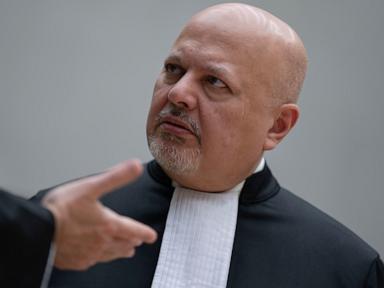
Stop crying over Karim Khan’s blocked entry to Manhattan. The mainstream press is treating the upcoming Assembly of States Parties vote as a tragic procedural melodrama: a heroic chief prosecutor barred from defending himself in New York because of brutal U.S. sanctions, while the fate of global justice hangs in the balance.
It is a comfortable narrative. It is also completely delusional.
The International Criminal Court was never an impartial champion of universal human rights. It was a court designed by Western powers to enforce geopolitical order on non-Western states—right up until its chief prosecutor made the catastrophic career error of applying its mandate to a Western ally. The secret ballot to oust Khan under the banner of workplace misconduct is not a moral reckoning. It is a institutional sacrifice designed to restore diplomatic normalcy.
The Misconduct Investigation Is a Diplomatic Trap Door
Let us be brutal about the sequence of events. Serious allegations of workplace sexual misconduct against a senior executive must be investigated thoroughly. But pretending this vote exists in a sterile legal vacuum stripped of international political pressure is naive.
I have watched international institutions navigate internal scandals for two decades. When a bureaucrat is geopolitically useful, governing bodies bury complaints in endless independent review committees and administrative delays. When a bureaucrat becomes an existential liability to the institution's funding and diplomatic survival, administrative machinery suddenly moves with terrifying speed.
The executive committee of the court's oversight body moved to suspend Khan and push for his removal only after Washington escalated its aggressive campaign against the court. The Trump administration hit 11 top court officials with severe economic sanctions under the International Emergency Economic Powers Act, freezing bank accounts and invalidating credit cards.
| ICC Reality Check | Mainstream Narrative | Cold Hard Truth |
|---|---|---|
| US Sanctions | An unprecedented assault on global justice. | A raw demonstration that state sovereignty crushes international treaties every time. |
| Khan's Absence | A unfair denial of due process in New York. | An intentional feature of imperial enforcement; Washington controls the land the UN sits on. |
| The Ouster Vote | A pure moral response to workplace allegations. | A convenient exit strategy for 125 nations desperate to appease Washington. |
The media paints Khan’s inability to enter the U.S. to defend himself at the UN headquarters as a shocking breach of legal fairness. It is not shocking. It is the core mechanics of power politics. The host country controls the borders. If the U.S. decides you are an adversary, your diplomatic immunity is worth less than the paper the Rome Statute was printed on.
The Illusion of Jurisdiction Was Broken in 2024
The fundamental flaw in the popular analysis of this crisis is the belief that the ICC had functional authority to begin with.
The court relies entirely on the voluntary compliance of sovereign states. It possesses no police force, no sovereign territory, and no independent tax base. For twenty years, the court operated smoothly because its dockets focused almost exclusively on warlords across the Global South—targets whose prosecution aligned with the broad consensus of major Western capitals.
The moment Khan issued arrest warrants for Israeli Prime Minister Benjamin Netanyahu and Yoav Gallant in 2024, he broke the unspoken rule of international tribunals: never issue warrants against non-member states backed by a nuclear superpower.
The backlash was immediate and total. Washington did not negotiate; it retaliated with economic warfare against the judges and prosecutors.
"We know of no court or tribunal in any proper and fair legal system that bars a person facing the gravest professional sanction from being heard," wrote Khan's legal team to the Assembly of States Parties.
💡 You might also like: The Weight of a Handshake on the Steppe
They are asking for legal fairness from an entity that exists purely by political tolerance. The moment an international prosecutor threatens the national security calculations of the United States or its primary allies, the institutional scaffolding collapses.
What Member States Are Actually Voting On
When the 125 member states cast their secret ballots in New York, they are not weighing the credibility of the evidence presented by UN investigators. They are choosing between two catastrophic options:
- Option A: Keep Khan. Reinstating or retaining a chief prosecutor who is actively sanctioned by the United States and facing intense workplace abuse allegations guarantees the ICC’s complete political isolation. State Department officials are already privately pressuring member nations to withdraw from the Rome Statute altogether.
- Option B: Fire Khan. Voting to oust Khan allows member states to throw a scapegoat to the wolves under the cover of administrative integrity. It grants the tribunal a fresh start with a new, predictably cautious chief prosecutor who understands which red lines cannot be crossed.
European diplomats publicizing their unwavering support for the court are playing to domestic audiences. Behind closed doors, they know the math. A tribunal that cannot operate in the global financial system—where its judges cannot hold bank accounts without fear of U.S. asset freezes—is a dead tribunal.
Firing Khan gives 125 nations an easy out. They get to claim they stood up for workplace standards while quietly capitulating to Washington's aggressive campaign to neuter the court.
The Fatal Flaw in International Treaties
The debate over Khan exposes the central fallacy of global governance: you cannot build a binding legal system over nations that possess absolute military and financial hegemony.
The United States never ratified the Rome Statute. Russia withdrew its signature. China never signed. Three of the five permanent members of the UN Security Council do not recognize the court’s jurisdiction over their citizens. The idea that a tribunal backed primarily by middle-tier European nations could force global superpowers to submit to its legal decrees was a fantasy from the start.
If member states vote to keep Khan, he will lead an empty shell of an office, unable to travel to key diplomatic hubs or access international clearing houses. If they vote to fire him, his successor will be selected with one primary mandate: never make Washington angry again.
Either way, the illusion of an independent global judiciary is gone. Stop analyzing the vote in New York as a legal proceeding. It is the formal execution of a court that forgot its place in the global hierarchy.