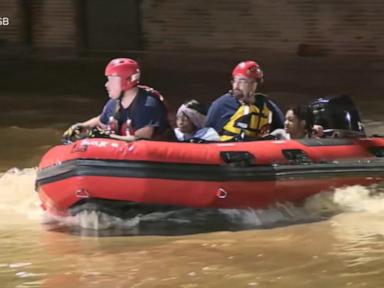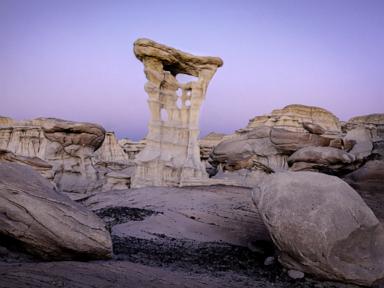
Extreme rainfall in the American Southwest exposes a structural paradox: environments engineered and evolved for chronic water scarcity suffer catastrophic mechanical failure when subjected to rapid hydrological saturation. When intense atmospheric rivers or stalled convective systems dump months of precipitation onto arid basins within hours, the resulting damage is not merely an unfortunate weather anomaly. It is the predictable outcome of high-velocity runoff interacting with hydrophobic soils, shallow-rooted xerophytic flora, and legacy civil infrastructure designed around outdated historical baselines. Understanding the collapse of iconic desert flora—such as Saguaro cacti and Joshua trees—alongside the failure of regional transit and flood-control systems requires isolating the exact physical, biological, and economic mechanisms driving these events.
The Physics of Desert Flash Flooding and Soil Hydrophobicity
Standard hydrological models assume a baseline capacity for soil infiltration, where precipitation percolates downward through porous earth to recharge groundwater aquifers. Arid regions invert this dynamic. Prolonged drought bakes clay-rich desert soils into a hardened crust, creating a condition known as soil hydrophobicity. When high-intensity rainfall strikes this surface, infiltration rates drop near zero, converting almost the entire volume of precipitation into immediate surface runoff.
This runoff follows a compounding kinetic trajectory dictated by three primary variables:
- Topographical Funneling: Desert basins are frequently bounded by steep, sparsely vegetated mountain ranges. Without dense root networks or forest canopies to intercept rainfall and slow overland flow, water accelerates down steep gradients into narrow canyons and dry washes (arroyos).
- Sediment Bulking: As high-velocity water scours dry riverbeds, it entrains massive loads of sand, gravel, and boulders. This process—known as sediment bulking—increases the fluid density and momentum of the flow, transforming standard floodwater into a high-impact debris flow capable of shearing away bridge abutments and roadbeds.
- Thermal Uplift and Convective Stalling: Elevated surface temperatures in the Southwest increase the moisture-holding capacity of the lower atmosphere, governed by the Clausius-Clapeyron relation, which dictates roughly a 7 percent increase in atmospheric water vapor per degree Celsius of warming. When atmospheric dynamics stall these moisture plumes over specific watersheds, localized rainfall totals exceed the storage capacity of natural basins within minutes.
The failure of desert drainage systems during these events is a direct result of volume-to-capacity mismatch. Municipalities across Arizona, Nevada, and Southern California rely on concrete-lined channels and retention basins calibrated to historical 50-year or 100-year storm events. When rainfall intensity breaches those design thresholds, water overtops engineered channels, eroding the unarmored soil behind concrete walls and causing structural collapse from the outside in.
The Biomechanical Failure of Iconic Desert Flora
The collapse of massive desert flora—specifically Carnegiea gigantea (Saguaro) and Yucca brevifolia (Joshua tree)—during severe rainstorms is frequently misattributed solely to wind shear. While high-velocity downdrafts provide the final lateral force, the primary failure mechanism is biomechanical and rooted in evolutionary trade-offs for drought survival.
Xerophytic plants survive extreme aridity by maximizing water uptake during brief, infrequent rain events while minimizing structural investment in deep taproots. A mature Saguaro cactus, which can weigh between 3,200 and 4,800 pounds when fully hydrated, anchors itself using a radial root system that rarely penetrates deeper than four to six inches below the surface, though it may extend outward laterally to a radius equal to the plant's height.
During an extreme precipitation event, three sequential failures occur at the root-soil interface:
- Loss of Soil Shear Strength: Dry desert soil relies on matric suction—the capillary tension holding soil particles together—for mechanical stability. Rapid saturation eliminates matric suction, turning the top layer of earth into a low-friction slurry. The soil loses its ability to grip the cactus's shallow lateral roots.
- Rapid Mass Accumulation: Saguaros possess pleated outer skin designed to expand rapidly as specialized parenchyma tissues absorb water. Within 48 hours of heavy rain, a single specimen can absorb hundreds of gallons of water, adding over a thousand pounds of top-heavy mass. This shifts the plant's center of gravity upward while its structural base is simultaneously liquefying.
- Sub-Surface Tissue Rot and Fungal Infiltration: When desert soils remain waterlogged beyond 72 hours, anaerobic conditions develop around the root crown. Native pathogens and opportunistic fungi, normally kept dormant by extreme dryness, proliferate rapidly, degrading the woody vascular ribs that provide the plant's internal skeleton.
Older specimens suffer the highest mortality rates because they possess the greatest height-to-root-depth ratios and often carry pre-existing micro-fractures from prior freeze-thaw cycles or extreme heat waves. Heat stress preceding the rain compounds the vulnerability; prolonged temperatures above 115 degrees Fahrenheit damage cellular membranes, preventing the plant from regulating water uptake efficiently when the deluge finally arrives. Consequently, the collapse of these desert icons is rarely a single-event phenomenon. It is a multi-season degradation sequence where extreme heat weakens internal structural integrity, and extreme precipitation removes external soil support.
Infrastructure Deficits and the Economics of Arid Flood Mitigation
Civil infrastructure in the American Southwest was overwhelmingly constructed during the mid-to-late twentieth century, a period characterized by relatively predictable seasonal monsoon patterns and distinct drought cycles. Engineering standards for roadways, culverts, and utility corridors prioritized cost efficiency over extreme hydrological resilience, operating on the assumption that dry washes would remain dry 98 percent of the year.
This legacy design philosophy creates acute systemic vulnerabilities when precipitation regimes shift toward high-intensity, low-frequency deluges. The economic cost of these failures extends far beyond immediate debris removal, breaking down into three distinct operational tiers:
- Transportation Corridor Severance: Interstate highways and state routes traversing the Mojave and Sonoran deserts rely on at-grade crossings or low-clearance culverts over alluvial fans. Alluvial fans are inherently unstable geological features where sediment-laden floodwaters continuously shift channels. When a storm overwhelms a culvert, water scours the highway embankment, severing critical supply chain arteries between Pacific ports and inland distribution hubs. Rebuilding washed-out highway sections in remote desert terrain incurs mobilization costs significantly higher than in temperate zones due to supply distances and extreme ambient temperatures.
- Grid and Utility Exposure: Subsurface electrical conduits and municipal water mains in arid regions are often buried at shallower depths than in northern climates because builders do not need to account for deep frost lines. High-velocity flash floods erode surface overburden, exposing pressurized water pipes and high-voltage lines to direct impact from boulders and floating debris.
- Protected Land and Tourism Degradation: National parks and protected monuments—such as Joshua Tree, Saguaro, and Death Valley—operate with thin infrastructure margins. Unpaved access roads, historic adobe structures, and trail networks lack modern drainage engineering. A single catastrophic storm can strip away decades of trail maintenance and force multi-month closures, directly starving gateway communities of seasonal tourism revenue.
The financial bottleneck in addressing these deficits lies in capital allocation models. Municipal bond structures and federal infrastructure grants historically favor projects with high daily utilization metrics. Investing hundreds of millions of dollars into oversized storm drains and deep-pile bridge foundations that sit completely dry for three years at a time is politically and financially difficult to justify under traditional cost-benefit frameworks. Yet, the asymmetric cost of emergency reconstruction—often running three to five times higher per mile than proactive reinforcement—demonstrates that current accounting models systematically underprice tail-risk weather events.
Ecological Cascades and Invasive Species Proliferation
Beyond immediate physical destruction, extreme desert rainfall triggers secondary ecological cascades that permanently alter landscape flammability. Native desert ecosystems are naturally fire-resistant because perennial shrubs and cacti are spaced far apart, separated by bare mineral soil that prevents flames from spreading.
Unseasonal or excessive precipitation disrupts this equilibrium by fueling explosive germination of invasive annual grasses, most notably red brome (Bromus rubens) and buffelgrass (Cenchrus ciliaris). These species evolved to exploit rapid moisture pulses far more aggressively than native desert perennials. Within weeks of a major rain event, invasive grasses carpet the bare interspaces between native cacti and shrubs.
Once the seasonal heat returns, this dense biomass dries into continuous fine fuel. The ecosystem transitions from a discontinuous, fire-proof desert scrub into an interconnected grassland primed for high-intensity wildfire. Native desert flora lacks evolutionary adaptations to fire; while Saguaro cacti and Joshua trees can survive minor flooding if their roots hold, they suffer near-total mortality when exposed to ground fires fueled by invasive grasses. The sequence operates as a destructive feedback loop: extreme rain triggers invasive growth, subsequent drought cures the fuel, wildfire eliminates the native canopy, and the loss of native root systems accelerates soil erosion during the next major storm.
Strategic Adaptation Frameworks for Arid Land and Asset Managers
Mitigating the compound risks of extreme precipitation in arid environments requires abandoning legacy assumptions about desert stability. Land managers, municipal engineers, and infrastructure operators must transition from reactive disaster recovery to preemptive structural hardening.
To break the cycle of hydrological failure, regional planning must execute four targeted adjustments:
- Recalibrate Hydrological Baselines Using Non-Stationary Models: Engineering standards can no longer rely on historical 100-year precipitation averages, which assume climate stationarity. Civil infrastructure projects must adopt non-stationary hydrological modeling that weights recent extreme rainfall intensities more heavily, upsizing culvert capacities and armoring bridge abutments against high-density sediment bulking rather than clear-water flow.
- Implement Distributed Green Infrastructure in Urban Basins: Rather than relying exclusively on centralized concrete channels that accelerate runoff velocity, municipalities must mandate distributed retention systems. Permeable paving, sunken bioswales, and micro-retention basins integrated into commercial developments slow overland flow at the point of impact, forcing water to infiltrate locally before it can aggregate into destructive flash floods.
- Deploy Targeted Invasive Fuel Suppression Post-Precipitation: Land management agencies must treat major rainfall events as immediate precursors to wildfire emergencies. Funding and operational deployment for herbicide application and mechanical removal of buffelgrass and red brome must be triggered automatically within 30 days of any precipitation event exceeding 150 percent of monthly averages, eliminating the biomass before it cures into summer fuel.
- Establish Micro-Topographical Protection for High-Value Flora: In high-priority conservation zones and botanical preserves, active intervention is required to preserve ancient specimens. Creating shallow, permeable rock berms upslope from mature Saguaros and Joshua trees diverts high-velocity sheet flow, reducing soil saturation at the root crown while still allowing controlled moisture percolation.
The operational reality of the American Southwest has shifted from managing chronic scarcity to managing extreme hydrological volatility. Systems built solely for the dry state will continue to fail catastrophically during the wet state until engineering tolerances, ecological management, and capital budgets are calibrated for both extremes.