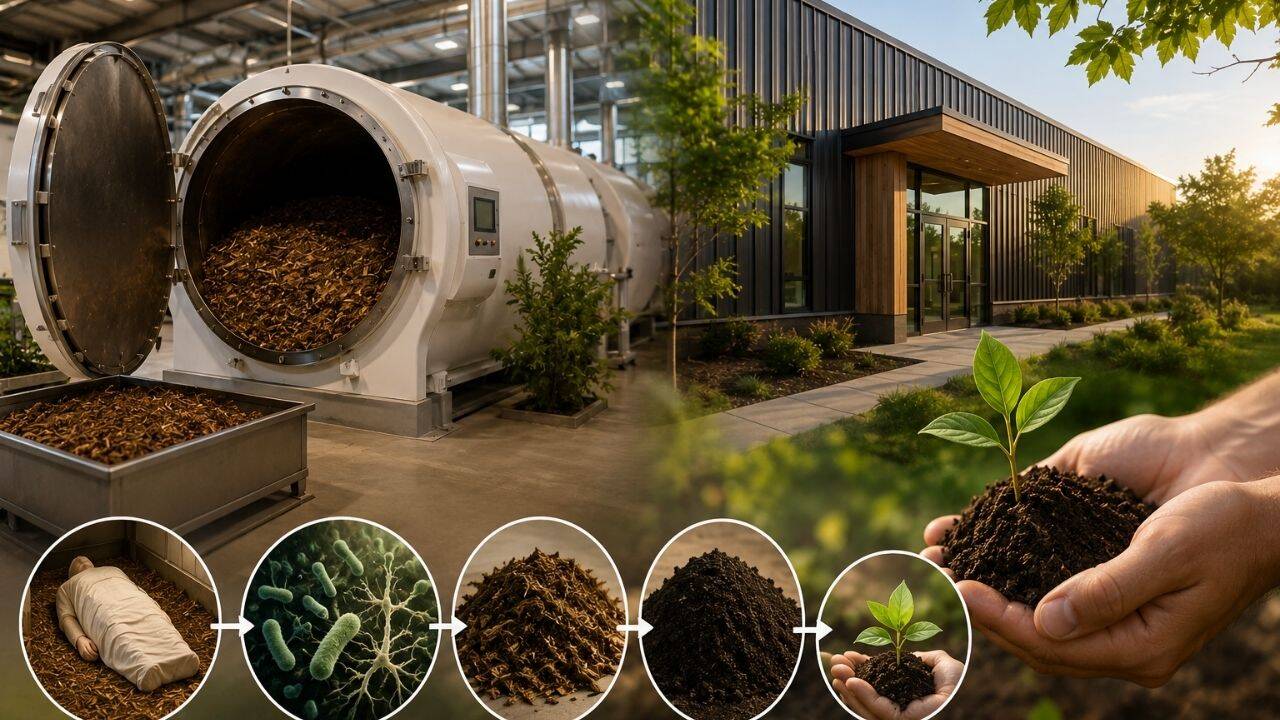
Maryland just greenlit its first human composting facility. The environmental press is popping champagne. They call it organic transformation. They call it a gentle return to the earth. They call it the future of death.
They are wrong.
Strip away the eco-friendly marketing, and soil reduction is just a high-tech marketing spin on an old reality. We traded the pine box for a stainless steel cylinder, added wood chips and alfalfa, and slapped a carbon-offset sticker on the lid. We have not revolutionized how we die. We have just rebranded our anxieties about space, land use, and municipal zoning laws.
Here is what the breathless coverage misses. Traditional burial and cremation carry heavy footprints, sure. But natural organic reduction—or terrmation, if we must use the industry's preferred euphemism—is not a radical departure from the system. It is a logistical workaround for overcrowded suburban cemeteries wrapped in a narrative of personal virtue.
Let us look at the mechanics because the romanticism surrounding the process dissolves the moment you read a regulatory blueprint.
The Industrial Reality of Organic Transformation
When an enterprise pitches you on soil creation, they paint a picture of a sunlit greenhouse where bodies dissolve into rich flowerbeds. The reality is mechanical.
A body goes into a vessel mixed with carbon-rich materials like straw, wood chips, and nitrogen sources. Blowers pump oxygen through the chamber to accelerate microbial activity. This is an engineered environment. It requires electricity, moisture monitoring, temperature regulation, and heavy machinery to turn and screen the resulting material for leftover dental gold, surgical pins, and joint replacements.
Proponents champion this as a closed-loop ecosystem. But let us be precise about the thermodynamics. You are using municipal power and industrial infrastructure to accelerate a natural decomposition process that would otherwise happen beneath a standard headstone, albeit over a longer timeline.
The industry wants you to believe you are opting out of the machine. You are not. You are simply changing which corporate vendor handles the logistics.
The False Choice of Modern Mortuary Math
Public discourse frames the end-of-life decision as a three-way boxing match:
- Traditional burial eats up arable land and pumps embalming fluids into the water table.
- Cremation burns fossil fuels and releases carbon dioxide and mercury emissions.
- Human composting turns you into fertilizer for tomato plants.
This framing presents a false choice. It assumes our only options are toxic preservation, atmospheric incineration, or turning Grandma into topsoil for a municipal park.
We ignore the actual baseline option: direct green burial. Lowering an unembalmed body directly into the earth in a biodegradable shroud requires zero energy inputs, zero industrial vessels, and zero micro-management by facility operators. It is cheaper, simpler, and functionally superior if your goal is low ecological impact.
So why aren't we talking about green burial? Because there is no venture capital model in digging a hole. You cannot brand a shovel. You cannot scale a shroud business with subscription tiers and premium vessel upgrades.
Human composting gained traction not because it is the most ecologically pure choice, but because it is monetizable. It provides a high-margin product for death-care startups looking to capture affluent, environmentally conscious urbanites who want their final consumer choice to signal ethical superiority.
Dismantling the Green Death Industrial Complex
Let us address the common defenses of soil reduction head-on.
People ask: "Doesn't this solve the urban cemetery space crunch?"
Only if you assume we must keep burying people according to nineteenth-century suburban real estate models. Cemeteries are land banks holding out for perpetual maintenance fees. The crisis is not a lack of physical earth; it is antiquated zoning laws and restrictive municipal ordinances that outlaw natural burial grounds within city limits.
If cities permitted shallow, unlined green burials in dedicated public parks or conservation trusts, the space crunch would vanish overnight. We do not need industrial composting cylinders. We need deregulation of the graveyard.
People ask: "Isn't it comforting to know your remains will nourish life?"
This is where sentimentality overpowers physics. The output of a composting facility is not magical soil meant for your backyard vegetable patch. State regulations governing these facilities typically restrict the distribution of the resulting compost. In many jurisdictions, the material cannot be used on food crops grown for public consumption. Much of it ends up used for land restoration projects, highway medians, or timberland fertilization.
There is nothing inherently wrong with restoring a deforested hillside. But let us stop pretending that you are personally feeding the apple tree in your front yard. You are bulk soil amendment for a state-approved land-reclamation site managed by a commercial contractor.
The Privilege of Eco-Mortuary Branding
Death care has always been a predatory market that capitalizes on grief to upsell grieving families. The green death sector is no different. It has simply shifted its target demographic.
Traditional funeral homes sold titanium caskets and velvet-lined vaults by weaponizing guilt: If you loved them, you would buy the best protection against decay.
Green facilities sell vessel-based composting by weaponizing ego: If you cared about the planet, you would choose this premium technological return to nature.
Both approaches miss the point. They turn mortality into a consumer transaction where your choice of disposal acts as a final moral report card.
The most radical act you can take regarding your own death is not picking the newest, trendiest facility in Maryland. It is rejecting the entire apparatus of industrial management.
Decline the embalming. Skip the chemical preservation. Skip the high-tech industrial vessel with automated blowers and temperature logs. Choose a simple plot of earth or an unlined trench, wrap yourself in plain cotton, and let nature do the work without a corporate intermediary billing your estate for the privilege of aeration.
Death does not need a startup pitch.


