The dust in South Lebanon does not settle; it hangs. As thousands of displaced families push through the charred remains of the coastal highways and mountain passes, they are not returning to a life, but to a graveyard of infrastructure. The immediate ceasefire may have silenced the jets, but it has exposed a deeper, more permanent fracture in the Lebanese state. For the families navigating craters to reach villages like Bint Jbeil or Khiam, the physical destruction of their homes is only the first layer of a much larger betrayal.
The Geography of Erased Villages
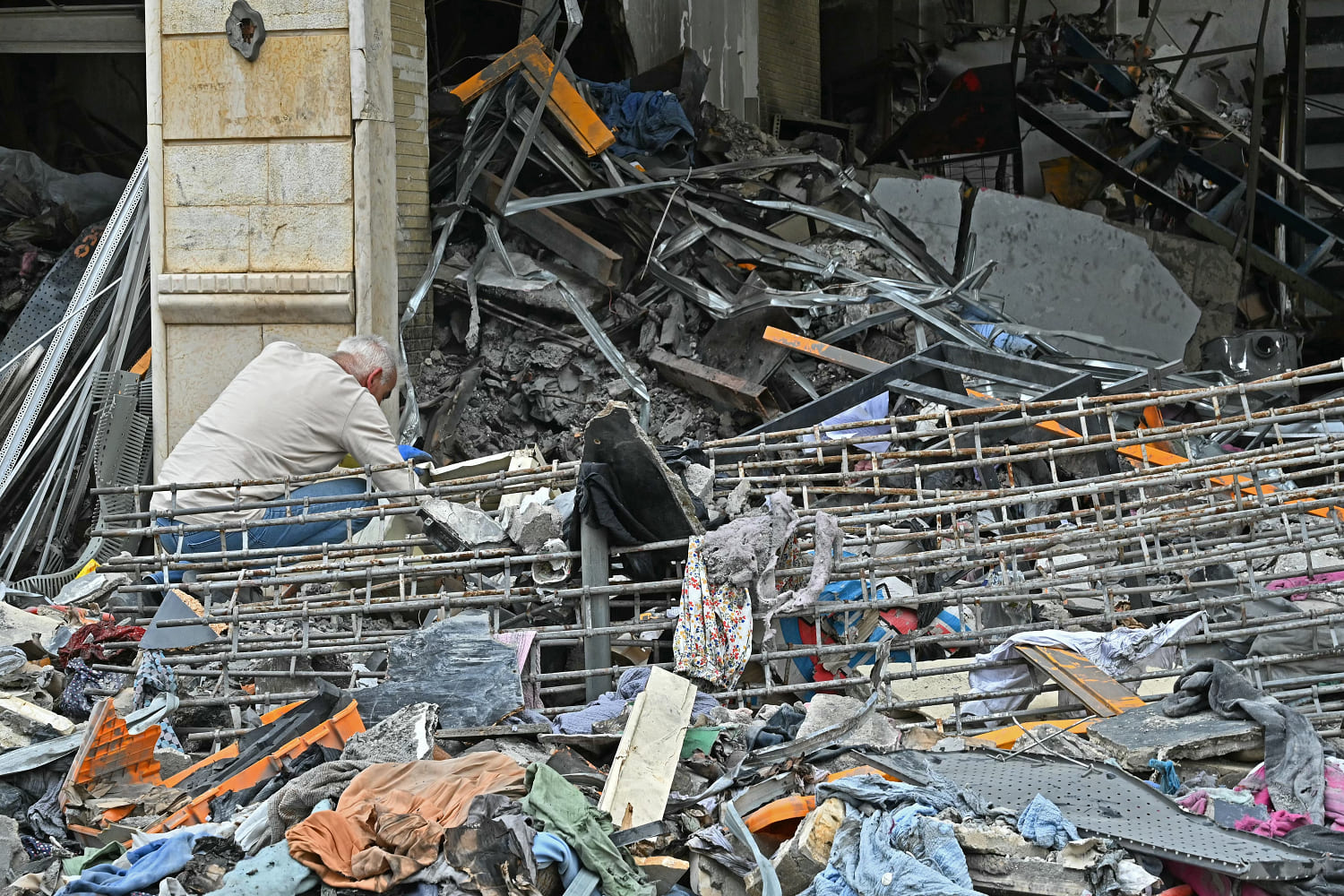
The scale of the wreckage defies the standard vocabulary of "collateral damage." Entire neighborhoods have been flattened into a uniform gray mulch of concrete and rebar. This is not the result of stray munitions. It is the visible outcome of a military doctrine designed to make specific border regions uninhabitable for years to come.
Returning residents find that the landmarks of their childhood—the local bakery, the pharmacy, the centuries-old olive grove—have been wiped from the map. In their place is a lunar landscape where the air smells of cordite and rotting waste. The challenge isn't just rebuilding a house; it is re-establishing the basic requirements for human survival. When the water mains are shattered and the electrical grid is a tangle of melted copper on the ground, a "return" is merely a change of location for one's misery.
The psychological toll of this homecoming is profound. There is a specific kind of vertigo that comes from standing on a plot of land you have owned for forty years and not being able to tell where your living room ended and your neighbor’s garden began.
The Vacuum of Governance
While the international community bickers over the implementation of UN Resolution 1701, the Lebanese government remains a ghost. It is a state that exists on paper but fails at the point of service. In most conflict zones, the end of hostilities triggers a massive mobilization of state resources. In Lebanon, the state is bankrupt, paralyzed by sectarian infighting, and utterly incapable of leading a reconstruction effort.
This leaves a dangerous power vacuum. History shows that when the central government fails to provide, non-state actors and local militias step in to fill the gap. They provide the bulldozers. They provide the bottled water. They provide the cash for temporary rent. This isn't charity; it is the consolidation of influence. By failing to lead the recovery, the Lebanese state is effectively outsourcing its sovereignty to the very groups that the international community seeks to sidelined.
The reconstruction of 2006 was funded largely by Gulf money and Iranian capital. In 2026, the geopolitical math has changed. The Gulf states are less inclined to pour billions into a country they view as a proxy battlefield. The West is distracted by other fronts. Lebanon is, for perhaps the first time in its modern history, truly alone in its ruins.
The Invisible Hazard Underfoot
Beneath the rubble lies a threat that will claim lives long after the last bomb has fallen. The saturation of unexploded ordnance (UXO) across South Lebanon is staggering. From submunitions hidden in tobacco fields to heavy duds buried under collapsed apartment blocks, the "return" is a walk through a minefield.
Demining is slow, expensive, and meticulous work. It requires a level of coordination and funding that is currently non-existent. Farmers, desperate to salvage what remains of the harvest season, are already venturing into contaminated fields. They have no choice. In a collapsed economy, the risk of a landmine is often weighed against the certainty of starvation.
The international demining agencies are stretched thin. Without a massive infusion of technical aid, the southern border will remain a patchwork of "no-go" zones, further strangling the local economy and preventing any real sense of normalcy from taking root.
The Economic Death Spiral
Lebanon was already in the midst of one of the worst economic depressions in modern history before this latest round of strikes. The lira is worthless. The banks have locked people out of their life savings. Now, the agricultural heart of the south—the olive oil production, the tobacco, the citrus groves—has been scorched.
Rebuilding a house costs money that the average Lebanese citizen simply does not have. With no access to credit and no state subsidies, the returnees are forced to rely on remittances from the diaspora or the patronage of political factions. This reinforces a cycle of dependency that has crippled Lebanon for decades.
The cost of rebuilding the south is estimated in the billions. In any other country, this would be a national priority. In Lebanon, it is a footnote in a larger story of systemic collapse. The port of Beirut still sits in ruins years after the 2020 explosion; there is little reason to believe the villages of the south will fare any better.
A Strategy of Forced Displacement
To understand why the destruction is so comprehensive, one must look at the strategic intent. The goal was not merely to hit military targets, but to create a buffer zone through sheer unhabitability. By leveling the civilian infrastructure, the opposing forces have ensured that even if people return, they cannot stay for long.
A village without a school, a clinic, or a grocery store is not a village; it is an outpost. If the families cannot sustain themselves, the young will migrate to the already overcrowded suburbs of Beirut or leave the country entirely. This demographic shift is not an accidental byproduct of war; it is a calculated outcome. The "return" we see on the news today may be a temporary surge before a permanent exodus.
The international observers patrolling the border in their armored vehicles see the movement of people, but they do not see the lack of hope. A ceasefire is a diplomatic achievement, but it is not peace. Peace requires a foundation of security and a path to a dignified life. Neither exists in the craters of South Lebanon.
The Failure of the International Community
The rhetoric from Washington, Paris, and Riyadh remains detached from the reality on the ground. There are endless calls for "restraint" and "de-escalation," but very little concrete action regarding the massive humanitarian disaster unfolding in the wake of the strikes.
Shipping containers of food and blankets are a band-aid on a gunshot wound. What is required is a massive, coordinated Marshall Plan for Lebanon—one that is bypasses the corrupt central ministries and delivers aid directly to the municipalities. But such a plan requires political will that is currently absent. The world seems content to let Lebanon simmer in its own wreckage, so long as the violence doesn't spill over the borders.
This neglect is a choice. Every day that the rubble remains un-cleared and the power remains off is a day that the seeds of the next conflict are sown. Bitter, displaced populations are the primary recruiting ground for radicalization. By ignoring the ruins of the south, the world is ensuring that the cycle of violence will inevitably restart.
The Resilience Trap
There is a frequent, almost lazy narrative in the media about the "resilience" of the Lebanese people. It is a trope used to romanticize their suffering. To call someone resilient is often an excuse to stop helping them.
The people returning to the south are not resilient by choice; they are resilient because they have no other options. They sleep in the shells of their homes because they cannot afford a hotel in Beirut. They dig through the trash because there is no social safety net. We must stop praising their ability to endure the unbearable and start questioning why they are forced to do so in the first place.
The image of a grandmother making coffee on a camping stove in the middle of a bombed-out living room is not a testament to the human spirit. It is a testament to the failure of modern diplomacy and the brutality of 21st-century warfare.
The Border of No Return
As the sun sets over the Galilee and the hills of Jabal Amel, the lights do not come on in the southern villages. The darkness is absolute. The few fires burning are from trash piles or the small heaters of those determined to stay.
The border has become more than a line on a map; it is a scar. On one side, a high-tech state with a functioning economy and a modern military. On the other, a broken land where the basic functions of civilization have been stripped away. This disparity is unsustainable.
The returnees are currently in a state of shock, fueled by the adrenaline of survival and the relief of the ceasefire. But as the weeks turn into months, and the winter rains turn the rubble into mud, that adrenaline will fade. It will be replaced by the cold realization that their government has abandoned them and the world has moved on to the next crisis.
The ruins are not just piles of stone. They are the physical manifestation of a broken social contract. Until that contract is rewritten, there can be no true homecoming. The people may be back on their land, but the life they once knew is gone, buried under the weight of a war that has no real winners.
The only way forward is a radical reimagining of Lebanese sovereignty. The state must be rebuilt from the bottom up, starting with the very villages that are currently being ignored. This means local empowerment, transparent funding, and a total rejection of the sectarian patronage that brought the country to this point. Anything less is just waiting for the next barrage.
The return is not the end of the story. It is the beginning of a much harder, more dangerous chapter. The world is watching the traffic jams on the highway, but it is missing the quiet collapse of a society. The rubble of the south is a warning to the rest of Lebanon: this is what happens when a state ceases to function for its people.
If you are standing in the ruins of Marjayoun today, you aren't looking at the past. You are looking at the future of any nation that allows its institutions to rot while its enemies gather at the gates. The homecoming is hollow because there is nothing left to come home to. The rebuilding must begin not with concrete, but with the restoration of the idea that a Lebanese citizen's life has value beyond being a pawn in a regional chess game.
Stop looking at the maps and start looking at the dirt. That is where the reality of the conflict lives. That is where the future will be decided.