Disputes over historical figures such as Stepan Bandera and the Organization of Ukrainian Nationalists do not persist between Warsaw and Kyiv because either side lacks information about the past; they persist because historical memory performs incompatible strategic functions in each state's domestic order and external security calculus. To analyze this friction rigorously without reducing it to moral outrage or headline sentiment, the dispute should be examined through three interlocking mechanisms: the divergence in historical framing between Polish and Ukrainian state narratives, the asymmetric incentives of domestic political coalitions and existential wartime survival, and the structural trade-offs between historical reconciliation and operational security cooperation.
The Architecture of Divergent Historical Framing
Standard media coverage treats bilateral memory clashes as a contest between competing facts. In practice, they are clashes over mnemonic hierarchy—which events sit at the center of a nation's founding or cautionary story, and which atrocities are treated as peripheral or contextually bounded. You might also find this similar story insightful: What Tropical Storm Vance Revealed About the 2026 Pacific Hurricane Season.
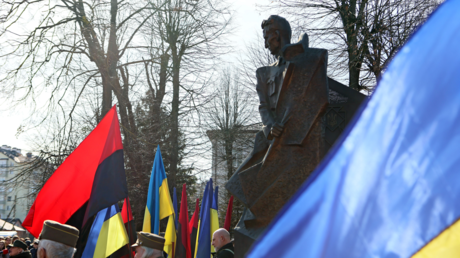
In Polish political and public discourse, the Volhynia massacres of 1943–1944 occupy a central position as an organized campaign of ethnic cleansing carried out by Ukrainian nationalist formations against the Polish population. Within that framing, figures associated with the Organization of Ukrainian Nationalists (OUN) and the Ukrainian Insurgent Army (UPA), particularly Stepan Bandera, are evaluated primarily through the lens of responsibility for mass violence against Poles and the enduring claim to dignified burial and formal acknowledgment for victims. When a municipal council or local authority in western Ukraine honors nationalist figures, streets, or monuments, Warsaw interprets the act not merely as a local cultural choice, but as a public elevation of actors tied to the destruction of Polish communities.
In Ukrainian national-building discourse—especially after 2014 and at scale following Russia's full-scale invasion—the same historical figures are frequently mobilized as symbols of anti-colonial and anti-totalitarian resistance against both the Soviet state and imperial Russian domination. Under this framing, local commemorations often focus on resistance to Moscow rather than on wartime atrocities against Poles, or they treat contested history as secondary to contemporary survival. As discussed in detailed coverage by Al Jazeera, the implications are worth noting.
This divergence creates a structural communication failure. A Polish observer sees the veneration of a figure linked to anti-Polish violence; a Ukrainian local actor often sees the invocation of an uncompromising national symbol against external subjugation. Both sides can point to documented historical realities while talking past one another because the primary moral and strategic reference point differs.
Why Local Commemorations Trigger State-Level Friction
A common analytical error is assuming that a municipal decision in a western Ukrainian city automatically reflects official Kyiv policy or alters bilateral treaties overnight. Instead, friction escalates through a multi-step transmission mechanism:
- Local symbolic action: A city council, regional assembly, or civic group renames a street, erects a monument, or marks an anniversary tied to nationalist figures.
- Media amplification: Domestic outlets and cross-border commentators highlight the event, stripping away local administrative nuance and framing it as a direct affront to Polish memory.
- Domestic political salience in Poland: Opposition figures, coalition partners, or memory institutions in Warsaw use the episode to test government resolve, demand diplomatic pushback, or link historical concessions to broader policy debates.
- Diplomatic and security linkage: Officials in Warsaw register formal displeasure or warn that unresolved historical grievances erode public goodwill, creating pressure on Kyiv to manage rhetoric even while fighting an active war.
The cause-and-effect chain here is non-linear. Local commemorative acts rarely change battlefield logistics on their own, yet they carry high political transaction costs. A government in Warsaw that appears indifferent to perceived insults over Volhynia faces domestic backlash; a government in Kyiv that attempts to police every municipal or cultural tribute to nationalist symbols risks domestic political friction during a period of intense national mobilization.
Asymmetric Stakes and the Cost Function of Reconciliation
Understanding why this dispute resists quick resolution requires looking at the asymmetric cost functions facing Warsaw and Kyiv.
For Poland, the core strategic objective regarding Ukraine is durable regional stability, containment of Russian power projection toward Central Europe, and a predictable eastern neighbor integrated into European institutions. Historical memory matters deeply to Polish political legitimacy and societal cohesion, particularly regarding exhumations, memorialization, and formal recognition of victimhood. Pressing for historical accountability carries moderate diplomatic friction, whereas conceding perceived ground on foundational atrocities carries high domestic political cost.
For Ukraine, the binding constraint is state survival and sovereignty against a larger invading force. Under existential pressure, political elites prioritize unity across ideological and regional lines, mobilization morale, and international backing. Reopening contested historical debates—especially those touching on symbols used to rally anti-Russian resolve—can feel like a luxury or an internal distraction to decision-makers focused on immediate defense and recovery.
Consider a conceptual example of how these incentives collide. Suppose a municipality in western Ukraine approves a tribute to an OUN-affiliated figure while national leaders in Kyiv are negotiating weapons deliveries, transit logistics, or EU accession steps with Warsaw. Even if Kyiv's central government did not initiate the local tribute, Warsaw's public and political system experiences the event as part of the bilateral relationship. Kyiv then faces a trade-off: expend political capital correcting or distancing itself from a local symbol, or absorb diplomatic friction in Warsaw while relying on Poland's practical support.
Distinguishing Known Patterns from Analytical Hypotheses
Rigorous analysis requires separating established structural dynamics from speculative claims:
- Established pattern: Historical memory disputes between Poland and Ukraine have recurred across multiple administrations and political cycles, demonstrating that bilateral cooperation on security and trade does not automatically erase divergent historical narratives.
- Established pattern: Issues surrounding exhumation access, memorial sites, and official terminology repeatedly surface whenever domestic political attention or high-profile commemorations draw focus to the 1940s.
- Educated hypothesis: As long as Russia poses an acute military threat to Ukraine and regional security in Eastern Europe, both Warsaw and Kyiv have strong incentives to prevent memory disputes from severing core security and logistical cooperation, even when public rhetoric sharpens.
- Educated hypothesis: Long-term normalization of historical memory is more likely to advance through incremental, technical mechanisms—such as standardized rules for archaeological searches and reburials—than through sweeping political declarations demanding mutual reinterpretation of national heroes.
Operational Blind Spots and Strategic Trade-Offs
Analysts and policymakers frequently fall into two traps when prescribing solutions to Polish-Ukrainian memory clashes.
The first trap is moral equivalency or historical revisionism, which attempts to balance atrocities against one another or excuse mass violence as a byproduct of wartime chaos. That approach alienates affected communities and undermines credibility. The second trap is purely transactional dismissal, which treats historical memory as an irrational distraction that should simply be set aside because geopolitical threats are urgent. Ignoring deeply rooted grievances does not make them disappear; it leaves them available for political mobilization at inconvenient moments.
At the same time, no single diplomatic formula acts as a silver bullet. Joint history commissions can clarify archival records, yet academic consensus rarely resolves public emotion overnight. Bilateral agreements on graves and memorials can reduce tangible friction, yet local politics and media cycles can still generate sudden flare-ups. Moreover, external actors hostile to both states have a clear incentive to amplify divisive historical episodes to weaken Polish-Ukrainian cohesion.
The Strategic Play
The durable strategic play for policymakers and analysts focused on Polish-Ukrainian relations is to decouple operational security and transit commitments from volatile symbolic disputes while institutionalizing narrow, verifiable progress on graves and exhumations. Rather than seeking a grand consensus on contested historical figures—a high-friction objective with low near-term probability of success—leaders on both sides achieve better results by treating historical grievances through concrete, rules-based administrative channels (such as clear procedures for memorial sites and dignified burials) while keeping strategic defense, infrastructure, and European integration anchored on shared security interests. Where political rhetoric heats up over local commemorations, the analytical priority is to track whether the friction remains confined to domestic signaling or begins constraining tangible bilateral coordination.