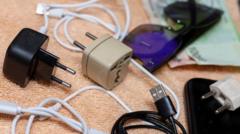
Every summer, millions of British holidaymakers pack their bags, grab their passports, and toss a bargain-bin travel adapter into their suitcase without a second thought. It costs two pounds at a bargain shop or sits in a dusty drawer from a trip a decade ago. It looks harmless enough. It fits into the wall socket in Spain, Greece, or Florida, and your phone charges overnight.
Except when it does not. Behind that shiny plastic casing often lies a terrifying disregard for electrical safety standards, transforming a simple holiday gadget into a serious fire hazard or an electrocution risk.
Electrical safety authorities and consumer watchdogs issue urgent warnings every single year about unsafe travel adapters flooding the market. Yet, the problem persists. Travellers continue to buy substandard gear, driven by convenience and low prices, completely unaware of the engineering failures hidden inside.
To understand why these devices fail so catastrophically, we need to look past the marketing and examine the physical reality of global electricity.
The Anatomy of a Cheap Fix
Electricity does not care about your holiday budget. When you plug a device into a foreign socket, you are asking a small piece of plastic and metal to bridge two entirely different electrical infrastructures. British engineering takes safety seriously. Our domestic plugs feature fused pins, thick shutters, and a chunky design built to handle high voltage safely. Most of the world uses lighter, ungrounded, or differently shaped systems.
When a manufacturer cuts corners to sell an adapter for pocket change, safety features are the first things to vanish.
Inside many budget travel adapters, you will find thin, flimsy brass strips instead of solid copper contacts. These strips are supposed to grip the prongs of your plug tightly. Under use, cheap metal bends, arcs, and generates heat.
Worse still, many cheap adapters lack proper earth connections. If a fault develops inside your device while it is plugged into an ungrounded adapter overseas, that stray current has nowhere to go except through your hand.
The Shutter Illusion
Safety shutters inside wall sockets are designed to protect children and prevent accidental contact with live parts. Many cheap multi-country adapters bypass these protections entirely. Some models allow you to push multiple prongs out at the same time, leaving live metal exposed on the other side of the casing while you hold it in your hand.
If you have ever felt a cheap adapter grow suspiciously warm while charging a laptop, you have experienced thermal runaway in real-time. Plastic housings that do not meet proper fire-retardant standards will melt, deform, and eventually catch fire.
The Global Supply Chain Blind Spot
How do these dangerous items end up on store shelves and major online marketplaces? The answer lies in the murky depths of modern retail logistics.
Third-party online marketplaces are flooded with unbranded or fraudulently branded electrical accessories. Sellers use search-engine optimization tricks to push products to the top of search results, using stolen certification logos like the CE mark—which, in the case of counterfeit goods, often stands for "China Export" rather than compliance with European safety directives.
Trading standards officers routinely seize thousands of non-compliant adapters at ports of entry, but the sheer volume makes intercepting every rogue shipment impossible. Independent testing laboratories frequently buy random travel adapters from popular online platforms and test them against British safety standards. The failure rates are consistently shocking. Many products fail basic insulation tests, meaning the user is separated from mains voltage by a layer of plastic less than a millimeter thick.
The Plug Shape Trap
Travellers often assume that if a plug fits into a socket, the job is done. This is a dangerous misconception.
Take the classic universal adapter—the chunky box with sliding buttons and multiple outlet configurations. To make them fit every country on Earth, manufacturers must pack a complex mechanical puzzle into a tiny plastic shell. This leaves very little room for physical separation between live, neutral, and earth components.
When you cram too many moving parts into a tight space, creepage and clearance distances shrink. Electricity loves to jump gaps if the voltage is high enough and the air space is too narrow. A microscopic speck of dust or moisture trapped inside a cramped universal adapter can create a short circuit in seconds.
What You Should Look For Instead
Protecting yourself abroad does not require an engineering degree, but it does require common sense and a willingness to spend more than a few coins.
First, ditch the universal multi-country brick unless it comes from a reputable, well-known electrical brand with verifiable safety certifications. Instead, buy dedicated country-specific adapters. If you are going to Italy, buy a dedicated Italian adapter built by a trusted manufacturer. These have fewer moving parts, fewer internal failure points, and a much sturdier build.
Second, check for a fuse. While many foreign sockets do not use fused systems, British-standard travel adapters often incorporate a small fuse in the plug section. This acts as a vital circuit breaker if something goes wrong downstream.
Third, look at the weight. If an adapter feels unusually light and hollow, put it back. Quality copper and robust housing material have substance.
The Real Cost of Convenience
We live in a culture that treats travel accessories as disposable commodities. We spend thousands of pounds on flights, hotels, and experiences, yet we try to save three pounds on the device that connects our expensive electronics to foreign power grids.
When that cheap piece of plastic melts into a hotel wall socket, tripping the building's circuit breaker or starting a smoky fire in the middle of the night, those saved pounds suddenly look remarkably expensive.
Check your travel bag tonight. If you find a generic, unbranded plastic block with sliding pins and no clear manufacturer markings, throw it away. Buy something engineered to keep you alive before your next trip.