The metal roof did not collapse all at once. It groaned first, a low, metallic sigh that was instantly swallowed by the roar of the blast. Then came the glass. In Crimea, when the air defense systems fail to catch every flying object, the glass does not just break; it atomizes into a fine, glittering dust that settles into the carpets, the curtains, and the skin.
On that afternoon, one person did not look up in time. One person became a statistic, a solitary digit added to a ledger that has grown too long for anyone to truly comprehend.
Thousands of miles away, the plastic of a secure telephone receiver grew warm against a palm.
We live in an era obsessed with the macro. We analyze the grand movements of empires as if they are pieces on a cardboard map, tracking lines of advance, percentages of inflation, and the shifting dynamics of global alliances. But geopolitics is not an abstract exercise. It is a series of long-distance phone calls punctuated by the smell of burning cordite.
While the smoke was still clearing from the Crimean soil, the wires between Palm Beach, Kyiv, and Moscow were buzzing with a strange, frantic energy. Donald Trump was holding court, speaking separately to Volodymyr Zelenskyy and Vladimir Putin. The world watched the call logs. The world speculated on the body language suggested by the readouts.
Meanwhile, a family in Crimea looked at a clean break in the kitchen tile where a life had just ended.
The Mechanics of the Split Screen
Consider the sheer dissonance of that Tuesday.
In Kyiv, the air is constantly heavy with the hum of generators and the collective exhaustion of a nation entering another year of existential endurance. President Zelenskyy sits at a desk cluttered with briefing documents, his voice carrying the gravel of a man who hasn't slept properly since 2022. He dials. He listens to the ringing tone. He knows that every word he speaks to the incoming American administration must balance desperate urgency with careful flattery.
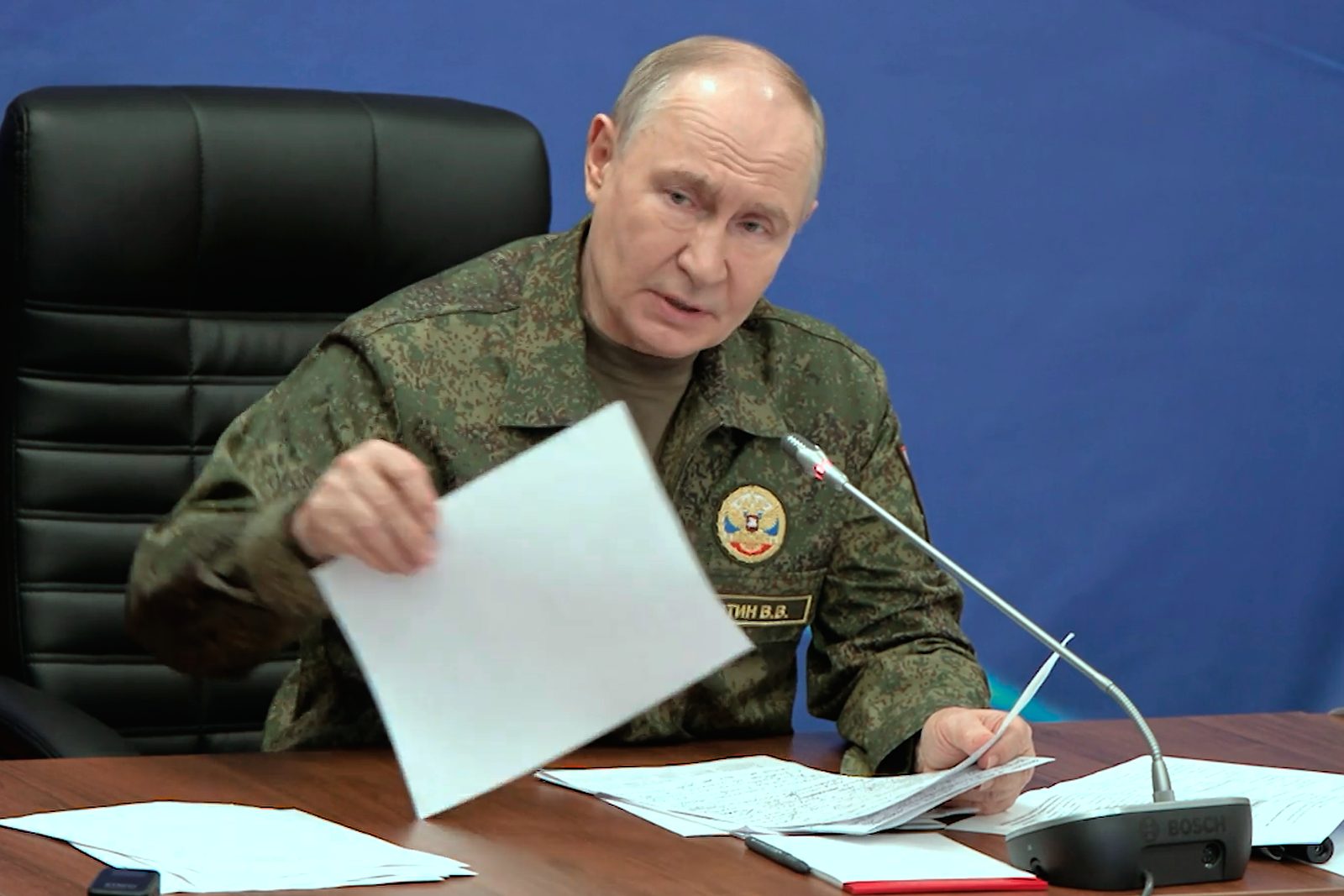
In Moscow, behind the thick walls of the Kremlin, Vladimir Putin operates on a different frequency. His call is a chess move. It is an exercise in testing boundaries, probing for the exact seams in Western resolve, measuring whether the new tenant of the White House will truly disrupt the established order.
Then there is the American coast. The palm trees sway. The security detail stands under the humid sun. The conversations are transactional, sharp, and intensely focused on the art of the deal.
But the deal has a human cost that rarely makes it onto the official transcripts.
To understand what is happening right now, we have to look past the political theater. The tragedy of modern conflict is that the people dying in the mud are increasingly disconnected from the decisions made in the air-conditioned rooms. A single strike on Crimea is treated by military analysts as a minor tactical blurb—a routine escalation, a Tuesday afternoon.
But there is no such thing as a routine explosion when you are the one standing underneath it.
The Fiction of Strategic Distance
We like to believe that leaders possess a grand vision, a steering wheel that can turn the tide of history with a single, decisive motion. It is a comforting thought. It suggests order.
The reality is far messier.
When a politician promises to end a war in twenty-four hours, they are selling a specific kind of illusion. They are pretending that a conflict is a machine with a power switch. Just flip it, and the gears stop turning.
They forget about the momentum of hatred. They forget about the shrapnel.
Imagine a woman—let us call her Elena, though her real name is buried under a military press release—who lived three blocks from the blast site. She does not care about the shifting balance of power in Washington. She does not care about the nuance of diplomatic immunity or the specific range of an ATACMS missile. She cares that her water pressure dropped after the explosion. She cares that her neighbor is no longer answering his phone.
For Elena, the war is not a series of calls between world leaders. It is the sound of her own breathing in the dark during a blackout.
The danger of focusing entirely on the high-level diplomacy is that we begin to view the casualties as mere background noise. We start to believe that the dying will stop the moment the right two people agree to sit down at a table. But history shows us that the bloodiest days of any conflict often happen right before the pens touch the paper. Everyone wants to secure their positions. Everyone wants to gain an extra mile of dirt to use as leverage.
The closer the leaders get to talking, the faster the artillery fires.
The Weight of the Silence
What happens when the phone is hung up?
The readouts from these calls are always intentionally vague. They speak of "productive dialogues," "shared concerns," and the "pursuit of a lasting peace." They are written in a dead language designed to say everything and nothing at the same time.
But beneath the diplomatic varnish, the stakes are painfully alive.
If the American position shifts, the lines on the map shift with it. If the aid slows down, the air defense nets thin out. And when the air defense nets thin out, more roofs in Crimea, in Kharkiv, in Odesa, begin to sigh and collapse.
It is a terrifying form of vulnerability. To know that your survival depends entirely on the mood, the whim, or the political calculus of men who will never see your street, never smell your kitchen, and never know your name.
We watch the news because we want to see the resolution. We want the climax of the story. We want the grand handshake on the aircraft carrier or the signing ceremony on the lawn. We are addicted to the narrative arc of conflict and resolution.
But the true story of war is told in the pauses. It is found in the terrifying quiet that stretches between the moment the siren stops and the moment the blast wave hits. It is found in the realization that while the powerful are negotiating the future, the present is being violently torn away from the powerless.
The phone lines will keep humming. The statements will continue to be issued. The commentators will analyze every syllable for hints of a breakthrough.
But on the ground, the dust simply settles on the broken tile, indifferent to who holds the receiver.