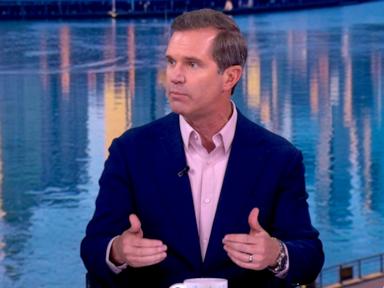
The television screen in a thousand Kentucky diners flickers with a familiar, high-definition tension. In New York City, under the hot studio lights of daytime television, a young governor speaks into a microphone. Andy Beshear is careful. He is always careful. Kentucky’s chief executive does not stumble into microphones by accident. When he tells the hosts of The View that he still holds deep concerns regarding Senator Mitch McConnell’s fitness to serve, he is not merely lobbing a partisan grenade across a divided aisle. He is voicing what millions of citizens have whispered in grocery store aisles and hospital waiting rooms.
Time comes for everyone.
Even the titans. Especially the titans.
Consider the strange physics of modern American politics. We have constructed a gerontocracy, a cathedral of seniority where tenure is currency and age is worn like armor. For decades, Mitch McConnell has operated as the master architect of that cathedral. He knows every marble pillar, every hidden exit, every structural weakness in the Senate rules. He built a political machine in Kentucky that outlasted governors, presidents, and shifting cultural tides. Yet, power cannot alter biology.
The turning point did not happen behind closed doors. It happened in full view of the Republic.
A press conference in Washington. A sudden, chilling pause. The sentence trails off into thin air. A man who weaponized syntax for half a century is suddenly marooned in mid-thought, staring blankly ahead while concerned aides rush to his side. Weeks later, it happens again. The nation watches in a collective, uncomfortable silence. Partisans rush to spin the narrative, some screaming for immediate retirement, others defending the institutional iron will of a legislative warlord. But beneath the shouting lies a quiet, haunting human vulnerability.
This is where Andy Beshear enters the frame.
Beshear represents a different cadence of leadership. Younger, measured, shaped by an executive role that requires managing floodwaters, tornadoes, and the immediate, messy realities of everyday Kentuckians. When Beshear looks at McConnell, he is not just looking at a political rival. He is looking at a system that refuses to yield to the calendar.
"I still have concerns," Beshear says.
Four words. Delivered without venom. That absence of malice makes the critique heavier.
We expect our politicians to be relentless machines. We demand that they stand at podiums until their knees buckle, mistaking stubbornness for strength. We cheer for the iron grip, forgetting that iron rusts in the damp air of unchecked power. When leaders refuse to step aside, they risk turning their final chapter into an endurance test for everyone else.
Think of the staffers who stand just out of camera range, watching every public appearance with a knot in their stomachs. Think of the constituents who wonder if the voice representing them in Washington is truly present or merely preserved. Power creates a vacuum around itself. Sycophants whisper that the ship will sink without the captain. Pride convinces the captain that nobody else knows how to tie the knots.
So the ship sails on. Into the fog.
McConnell’s supporters point to his legislative cunning, his ability to lock down judicial appointments, his sheer institutional stamina. They are right. His footprint on American jurisprudence is indelible. No historian will write the story of the twenty-first-century United States without dedicating entire chapters to his tactical brilliance. But brilliance does not repeal mortality.
There is an art to leaving. It is perhaps the hardest art in public life. To walk away while the applause is still rolling, before the fragility becomes the headline, requires a humility that Washington rarely cultivates. In the capital, stepping down is treated as surrender, as if death is the only acceptable retirement plan.
When Beshear voiced his concerns on national television, he touched a nerve because he named the unnamable. We are terrified of decline. We see it in our aging parents, in our own joints, in the way the morning news reports slip further and further out of our immediate comprehension. To watch someone with immense public power struggle with the physical toll of aging is to see a mirror held up to our own collective anxiety about time.
The Senate floor is marble. Marble does not bleed. But the people standing upon it do.
Kentucky is a state of contrasts. It values loyalty fiercely. It remembers who paved the roads, who brought the federal dollars home, who stood tall during crises. McConnell holds a deep, ancestral loyalty among many voters who watched him shape the national conversation for decades. Yet Kentucky is also changing. The state that elected a moderate Democratic governor in a deeply red landscape understands the friction between past loyalty and future necessity.
Beshear walks that tightrope daily. He cannot afford to sound callous. A governor insulting a legendary statesman invites a backlash from a proud electorate. So he chooses sorrow over scorn. He frames the issue not as a failure of character, but as a question of capacity. Can a leader bear the crushing weight of the United States Senate when the body itself begins to betray them?
The studio audience murmurs. The hosts nod. The clip is sliced into twenty-second digital fragments, beamed across smartphones, analyzed by pundits who treat human frailty as a polling metric.
Stop for a moment and strip away the polls.
Imagine sitting in a quiet room, stripped of titles, security details, and television cameras. Imagine looking back across a life spent in the arena, having won every major legislative war, having accumulated power that rivals modern monarchs. Then imagine the body slowing down. The words slipping away just when you need them most. The pride that whispers just one more term.
That is not a political crisis. That is a human tragedy.
We have built a political culture that leaves no graceful exit ramps for its elders. We force them to stay until the public spectacle overtakes the legacy. We demand perfection from bodies that are manifestly, beautifully imperfect.
When the interview ends, the cameras cut to a commercial. The hosts smile. The news cycle spins forward, hungry for the next outrage. But the question Beshear left hanging in the air remains stubborn and unresolved.
Who has the courage to tell the king that evening has fallen?
The Ohio River keeps rolling past the banks of Louisville, indifferent to Senate rules, unaffected by television ratings. Down in Frankfort, documents are signed. In Washington, votes are cast. The machinery grinds on, fueled by ambition and kept running by habit.
Yet, somewhere in that machinery, a quiet truth echoes. No statute can repeal the calendar. No amount of institutional power can stop the tide. And sooner or later, every leader must face the hardest realization of all.
The world turns without them.