Silence. That is the first thing you notice when a political race ends by a hair.
Not the roar of the ballroom, not the clatter of television cables being coiled across hardwood floors, not the rehearsed cheers of staffers who have lived on cold coffee and adrenaline for months. It is the sudden, heavy quiet inside a fractured room where half the people wanted someone else, and the person standing at the podium has to convince every single one of them that their heartbreak was not for nothing. Recently making headlines in this space: Constitutional Mechanics of the Quorum Clause and the Failure of Legislative Proxy Voting.
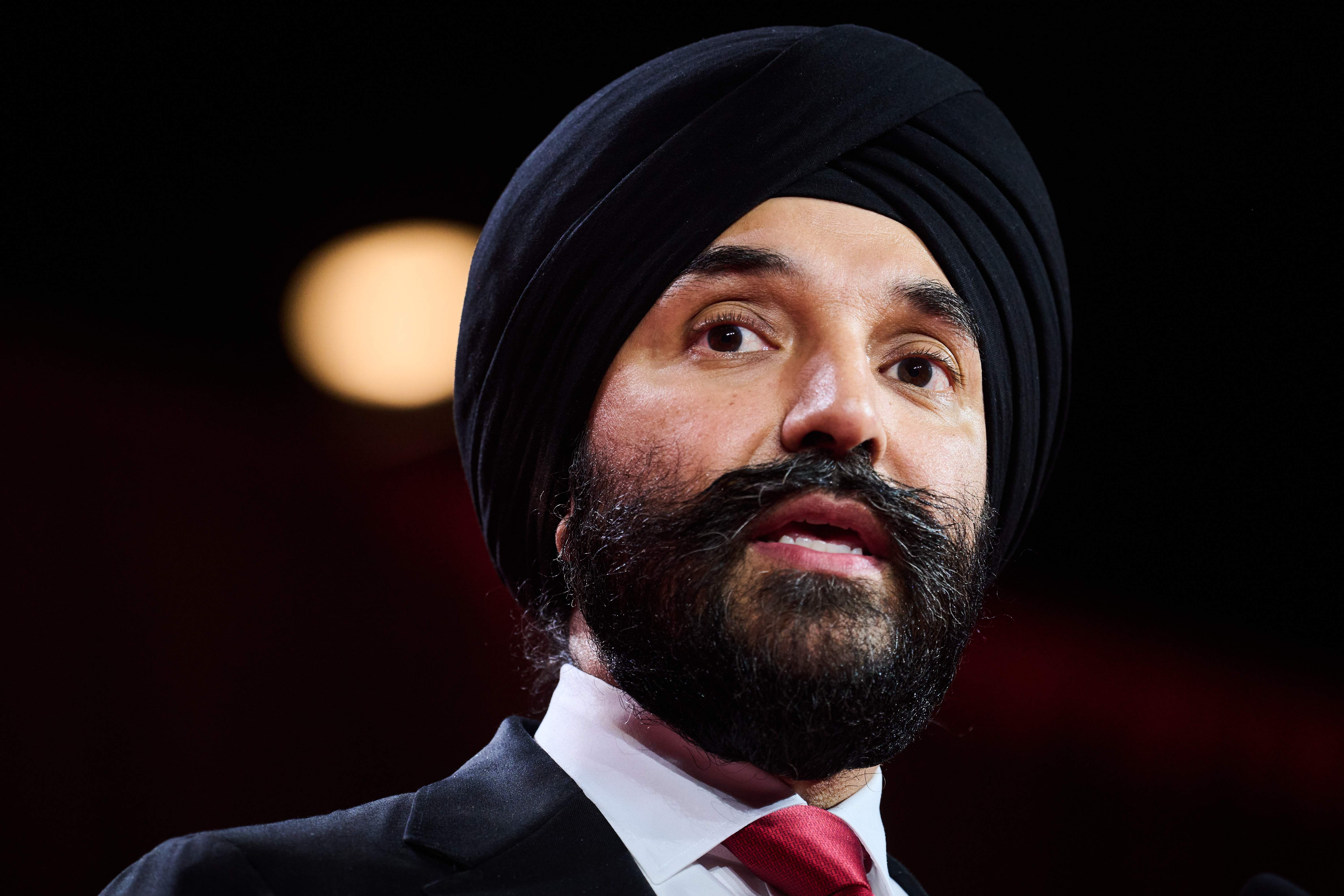
At Queen's Park, a narrow Liberal leadership win changes the arithmetic of power in a heartbeat. Winning by a thin margin means the crown is real, the gavel is yours, and the critics inside your own camp already know where every weak seam sits. When Navdeep Bains steps forward after a tight contest to vow a united front, he is not merely reading a victory speech. He is trying to weld steel while the metal is still white-hot and bending in two directions at once.
I have stood in the back of party rooms after razor-thin conventions where the air smelled of floor wax, stale wool coats, and unspoken resentments. You watch longtime organizers avoid each other's eyes. You see volunteers who spent their weekends knocking on doors in freezing rain wondering whether their candidate's platform will survive the morning press conferences. Politics on paper looks like a tally sheet. Up close, it looks like bruised pride trying to share a narrow hallway. Additional insights into this topic are covered by BBC News.
Consider what happens next: a winner can issue a decree for unity, yet unity does not arrive on command. It has to be earned, brick by brick, while the opposition is already sharpening its lines for the next election cycle.
The Anatomy of a Narrow Margin
A landslide hides cracks. A squeaker puts every single fracture under a magnifying glass.
When a leadership race finishes close, every faction claims a piece of the result. One camp points to strong support in suburban ridings and argues that broad appeal is the only path back to government. Another camp points to loyalists who turned out early, held the base together through tough debates, and insisted on sharper policy choices. Both stories can be true at the same time. That is the trap.
Think of a relay race passed on a rain-slicked track. If the baton drops by a fraction of a second, the crowd still hears the whistle, and the runners still sprint toward the finish line, yet the rhythm inside the lane feels off. Everyone runs harder to compensate, sometimes stepping on the line, sometimes looking back to see who stumbled. A narrow leadership win puts a party in that exact lane. The momentum is real, but every step requires trust between runners who were competing for the same spot minutes earlier.
Let me offer a hypothetical scenario to make the stakes concrete. Suppose Priya is a community organizer in a growing commuter suburb outside Toronto. For four months, she spent her evenings calling voters who felt squeezed by housing costs and everyday bills, telling them that her preferred candidate understood their kitchen-table stress. When the final ballot count comes in painfully close and Navdeep Bains emerges with the win, Priya does not suddenly flip a switch and feel ecstatic overnight. She feels tired. She feels a quiet sting. Yet on Tuesday morning, she still has to decide whether she is picking up the phone again or walking away.
Multiply Priya by thousands of volunteers, riding-association executives, fundraisers, and policy thinkers across Ontario. That is the invisible ledger behind every headline about a narrow Liberal leadership win. Votes are counted once. Loyalty has to be renewed every single day.
I will admit something candidly: watching a party rebuild after a bitter or near-run contest can feel exhausting even from the outside. Sometimes the internal grievances sound so loud and insular that you wonder whether ordinary voters care at all about who won a convention tally when their own grocery receipts keep climbing. Honesty demands saying that out loud. Voters do not wake up thinking about party bylaws. They wake up thinking about rent, healthcare wait times, transit delays, and whether their kids will have a fair shot ten years from now.
Why Queen's Park Magnifies Every Flaw
Queen's Park is not a quiet library. It is a pressure chamber with cameras pointed at the doors.
Inside the legislative building, every gesture gets read like tea leaves. Who stands on the stage during the vow of unity? Who stays home with a polite statement about needing rest? Which senior advisor gets a corner office, and which rival camp feels sidelined? In politics, body language travels faster than press releases. A two-second hesitation before a handshake can turn into three days of column inches.
To see why a united front is so hard to maintain once the cameras roll, it helps to look at how political coalitions behave over time. Historically, big-tent parties rise when disparate groups agree on a shared horizon—economic opportunity, strong public services, pragmatic governance—and they wobble when internal debates overshadow external purpose. When a race is close, internal debates are fresh. Memories of sharp exchanges on the campaign trail linger in people's minds longer than the pleasantries spoken on election night.
Navdeep Bains enters this arena with a familiar political resume and a clear immediate test. Having served in federal cabinet and navigated high-stakes policy files, he knows how government machinery grinds, how budgets collide with political promises, and how quickly a disciplined message can unravel if five different voices contradict each other on morning radio. Knowing how the machine works is one thing. Getting a bruised coalition to pull in sync is another.
What if a rival supporter, let's call him David, spent months arguing for a bolder stance on affordability and felt his ideas were brushed aside during the stretch run? In this hypothetical example, David isn't a cartoon villain plotting sabotage. He is a guy who cares deeply about his neighborhood and genuinely believes his approach was stronger. If the new leader treats David's camp as conquered territory, David retreats into cynicism. If the new leader makes room for David's practical ideas without abandoning the core message, David becomes a bridge to skeptical voters.
That choice—between dominance and integration—defines the first hundred days after any narrow win.
The Cost of Fake Harmony
Nothing fails faster in politics than pretend unity.
Voters have sharp noses for stage-managed smiles. If a party stages a photo-op claiming everyone is marching lockstep while whispers of rebellion leak to reporters by noon, the public sees right through it. Worse, it makes the organization look distracted at the exact moment it needs to look focused on governing and holding the current government to account.
Real unity does not mean everyone thinks the same thought. It means people with different instincts agree on the rules of engagement and keep their arguments inside the house until the work is done. It means acknowledging that a close race tested everyone's nerves, thanking the people who lost for pushing the winner to be sharper, and turning outward toward the province instead of inward toward old scorecards.
Think of a family after a tense argument around the dinner table. Nobody pretends the sharp words never happened if they want trust to last. Someone clears the plates, someone pours another round of tea, and everyone agrees that tomorrow morning still comes whether they stay mad or move forward. Politics is messier than family, and the stakes involve millions of lives, yet the emotional physics are surprisingly similar. People need a dignified way to step off the battleground.
If Navdeep Bains wants his vow of a united front at Queen's Park to mean something beyond a neat headline, the proof will show up in small, unglamorous habits:
- Listening to critics from the losing camp without treating every question as disloyalty.
- Giving real responsibility—not token titles—to people who bring fresh energy and different regional perspectives.
- Keeping the spotlight anchored on everyday pressures facing families across Ontario rather than insider power games.
- Speaking plainly when plans face obstacles instead of spinning setbacks into triumphs.
None of those habits are flashy. Every single one of them is hard.
Beyond the Room Where Votes Are Counted
A leadership contest happens in ballrooms, conference calls, and committee rooms. Its consequences land on kitchen tables.
When a party is divided, policy gets foggy. When policy gets foggy, voters tune out. A fractured opposition or an uncertain contender rarely convinces someone on the fence to take a chance on them. Conversely, when a leader turns a narrow win into genuine momentum—bringing skeptical allies into the fold while speaking clearly to people who haven't decided yet—the whole dynamic shifts. A thin margin stops looking like a fragile scrape and starts looking like a starting line.
I have seen leaders squander narrow victories by mistaking applause from loyalists for permission to ignore everyone else. I have also seen leaders turn skeptical rooms around simply by showing up, listening longer than expected, and proving that their word holds weight when nobody is forcing them to keep it.
There is real uncertainty ahead. A vow of unity is a promise, not a guarantee. Rival camps can still drift apart, messaging can still misfire, and the pressure inside Queen's Park never lets up for long. Admitting that uncertainty does not weaken the case for trying; it makes the effort honest.
Outside the doors of Queen's Park, the street noise goes on—buses braking at crosswalks, shopkeepers unlocking glass doors, parents rushing toward school gates with half-eaten toast. None of those people are waiting for a speech about party harmony for its own sake. They are waiting to see whether the people who want to shape Ontario's future can first learn how to work together without tearing each other down.
A narrow victory hands you the microphone. What you do after the applause fades decides whether anyone keeps listening.