International defense agreements rarely happen overnight. They take years of quiet diplomacy, shifting geopolitical realities, and massive financial commitments. When a small nation like Greece commits billions to upgrade its military capabilities through foreign partnerships, the ripple effects stretch across the entire Mediterranean. This is not just about buying hardware. It is about shifting regional power dynamics in real time.
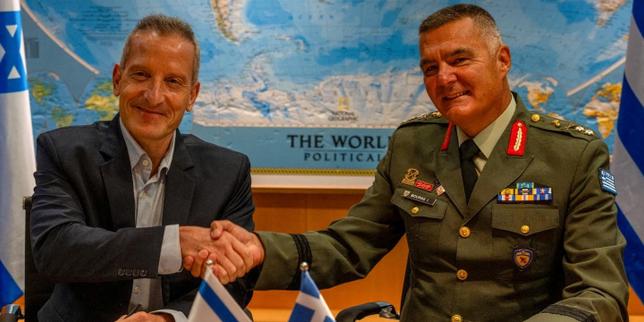
Athens and Jerusalem have quietly built one of the tightest strategic alignments in Southern Europe. If you look past the standard diplomatic handshakes, this multi-billion euro defense package tells a much larger story about modernization, deterrence, and industrial cooperation. Let's break down what actually happened, why it matters right now, and what most mainstream reports miss about the deal.
The Financial Scale And Strategic Weight
Money talks in defense procurement. A three-billion-euro price tag is massive for any European economy, let alone one that spent the previous decade digging out of a severe debt crisis. Yet, Greece is spending heavily on its armed forces. Why? Because the security calculus in the Aegean and the Eastern Mediterranean has changed dramatically.
Athens needs modern air defense, advanced naval capabilities, and upgraded training infrastructure. Israel’s defense sector happens to build some of the most combat-proven technology on the planet. Companies like Elbit Systems and Rafael do not sell basic equipment. They export integrated systems designed for active conflict zones.
When you buy from Israeli defense contractors, you are buying operational readiness tested in actual combat. That is what Greek military planners wanted. They didn't want showroom condition gear. They wanted battle-tested architecture that can integrate seamlessly with existing NATO standards while offering an extra layer of sovereign deterrence.
Beyond The Hardware
Most people assume defense contracts are simple transactional events. Country A hands over money. Country B delivers tanks or missiles. End of story.
Reality is much messier and far more interesting. Modern agreements of this magnitude always include technology transfer, joint maintenance hubs, and pilot training programs. The deal between Greece and Israel establishes a long-term operational framework. For instance, the creation of the international flight training center in Kalamata by Elbit Systems is a cornerstone of this partnership.
Instead of just flying jets home, Greek pilots are training on advanced platforms with foreign instructors using state-of-the-art simulation tech. This shifts the relationship from a simple buyer-seller dynamic to an industrial partnership. Athens wants to build domestic capacity, not stay dependent on foreign maintenance forever. Israel, on the other hand, secures a reliable European foothold for its defense ecosystem right on the doorstep of the European Union.
Regional Reactions And Geopolitical Friction
You cannot discuss Mediterranean defense deals without looking at Ankara. Turkey watches every Greek military acquisition with intense scrutiny. Relations between Athens and Ankara remain perpetually tense, hovering somewhere between cold peace and active rivalry over maritime boundaries, energy exploration rights, and airspace violations.
When Greece partners closely with Israel, Ankara perceives a direct counterweight to its own regional ambitions. Israel and Turkey have experienced their own diplomatic rollercoasters over the years, alternating between strategic estrangement and cautious normalization. By cementing a deep defense axis with Greece and Cyprus, Israel signals that its security network in the Eastern Mediterranean relies heavily on European Union member states.
Diplomats in Brussels and Washington watch these developments closely. The United States largely supports this alignment. Washington prefers when its regional allies coordinate their security architectures, especially in a volatile neighborhood bordering the Middle East and North Africa. It simplifies NATO logistics and creates standardized interoperability across different operational theaters.
What Happens Next On The Ground
Signing the contract is the easy part. Delivering the systems, training the personnel, and maintaining operational readiness for the next twenty years is where projects usually face trouble.
Supply chain bottlenecks, software integration issues, and bureaucratic delays plague modern defense procurement globally. Keeping these multi-billion-euro programs on schedule requires constant communication between Greek military officials and Israeli contractors. If successful, this blueprint will likely lead to further joint ventures in cyber defense, drone technology, and naval modernization.
Keep an eye on joint military exercises in the region. That is where you will see the real return on investment. When Greek F-16s and Israeli F-35s fly alongside each other using synchronized communication nodes, the true value of this multi-billion-euro partnership becomes crystal clear. It is about deterrence through integration.