The narrative currently circulating across social media—that Italy’s iconic Parmigiano Reggiano is literally liquefying in warehouses due to a blistering heat wave—is categorically false. There is no melting cheese. There is no impending collapse of the "cheese banks" that serve as the backbone of the region’s agricultural financing. The reality is far more nuanced, centered not on the destruction of existing stock, but on the mounting fiscal pressure of maintaining a legacy product in a warming climate.
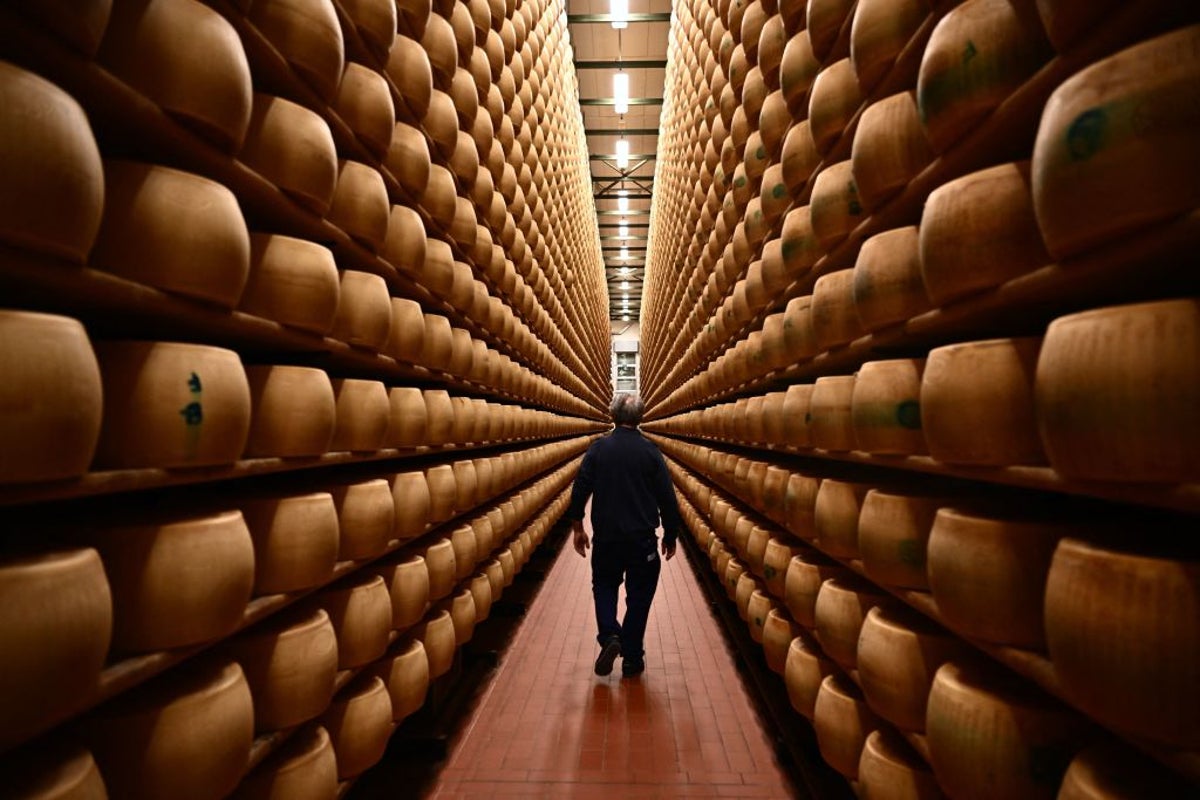
To understand why this panic flared up, one must first understand the financial architecture of the Emilia-Romagna region. Parmigiano Reggiano is a high-capital investment. A single wheel, weighing roughly 40 kilograms, requires a minimum aging process of 12 months, with many varieties maturing for 24, 30, or even 40 months. During this period, the cheese sits in temperature-controlled warehouses, essentially tying up millions of euros in capital for years.
To bridge this liquidity gap, banks like Credito Emiliano S.p.A. accept these wheels as collateral for loans. This is the "cheese bank" system. It is a system built on stability, precision, and strictly controlled environments. When temperatures climb toward 40 degrees Celsius (104 degrees Fahrenheit), the threat is never the physical structural integrity of the cheese itself, which remains safely climate-controlled. The threat is the bottom line.
Maintaining these optimal aging conditions during extreme heat requires significant energy. Operators have reported a 30 percent spike in cooling energy consumption. This is not a story of catastrophe, but of operational overhead. Facilities that have failed to invest in high-efficiency cooling, advanced insulation, or onsite energy generation—such as the solar arrays now powering major storage sites—are facing a steep increase in their cost of goods sold. For the smaller producer, these costs are not merely a nuisance; they are a direct hit to margins that have already been tightened by global supply chain volatility.
The secondary, and perhaps more significant, challenge lies in the primary production phase. Dairy cows are notoriously sensitive to thermal stress. When heat indexes rise, bovine milk yields routinely drop by approximately 10 percent. The consortium overseeing the product acknowledges this as a long-standing reality of the trade. Farmers mitigate this risk through a combination of industrial-grade fans, automated water misting systems, and a transition to high-quality stored forage that preserves nutritional integrity even when local pastures are scorched.
The panic that surged online conflates these operational adjustments with a terminal crisis. It is a classic case of misunderstanding the difference between a sector facing higher operating costs and a sector facing an existential threat. The warehouses, which house hundreds of thousands of wheels, are essentially fortresses of climate-controlled stability. They have been designed to withstand far more than a typical heat wave, precisely because the product inside is too valuable to leave to the whims of the weather.
Consider a hypothetical scenario where a mid-sized dairy farm faces a two-week heat spike. The farm manager does not look at their inventory and fear liquefaction. They look at their electricity bill and their milk yield reports. The cost of labor to keep the cows cool, the cost of electricity to keep the warehouse cool, and the cost of the feed to make up for the dip in productivity—these are the real pressures. These are the numbers that appear on quarterly balance sheets. They do not make for viral social media posts, but they define the future of the industry.
The industry is not crumbling; it is recalibrating. Investment in infrastructure—upgraded refrigeration units, better insulation, and increased use of renewable energy—is the current standard for any serious player in the Parmigiano Reggiano market. Those who adapt to the rising costs will survive; those who rely on outdated, energy-inefficient systems will find themselves priced out of a competitive global market.
The heat wave serves as a stress test for the entire supply chain. It highlights the disparity between modern, efficient operations and legacy systems struggling to keep pace with an evolving climate. The "Great Parmesan Crisis" is a fabrication, but the economic squeeze is an authentic development that will force a consolidation of producers over the next decade. Success in this environment requires more than just high-quality milk and traditional aging techniques. It requires the ability to insulate the business from the financial shocks of environmental volatility. The cheese itself remains as firm as it has been for centuries, provided the balance sheets are equally solid.