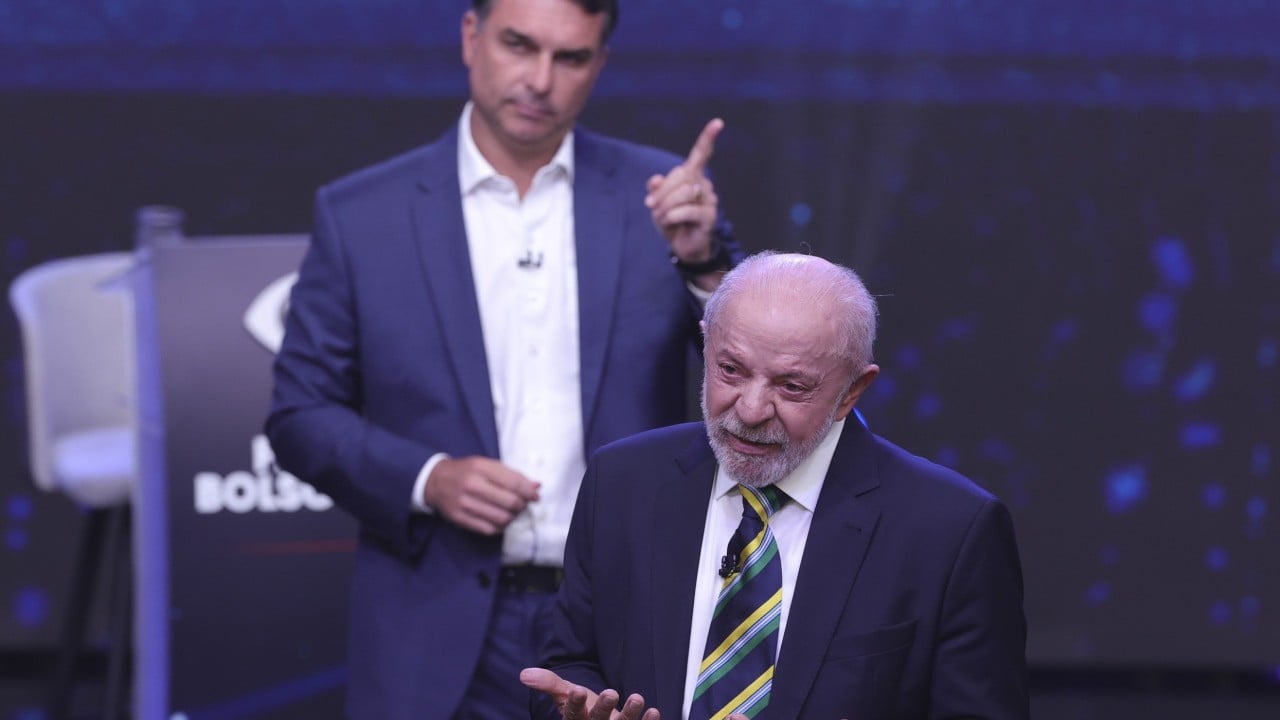
Political commentators love a good bloodbath. When Luiz Inácio Lula da Silva and Jair Bolsonaro traded insults on stage during the Brazilian presidential run-off debates, media outlets rushed to frame it as a historic battle for the soul of Latin America’s largest economy. They dissected the body language, counted the interruptions, and declared winners based on who landed the sharpest jab about corruption or economic mismanagement.
They missed the entire point. If you found value in this piece, you might want to check out: this related article.
The political media complex treats presidential debates like championship boxing matches, assuming performance alters voter behavior and shifts macroeconomic trajectories. It is a comfortable narrative for pundits because it validates their jobs. But if you look at the mechanics of voter behavior, institutional constraints, and Latin American capital flows, the consensus surrounding these debates falls apart instantly.
The Lula-Bolsonaro clashes were not a decisive turning point. They were expensive political theater designed to entertain a population that had already made up its mind months earlier. For another perspective on this story, check out the latest update from NBC News.
The Polarization Fallacy: Nobody Was Undecided
The primary narrative surrounding the debates was that both candidates needed to win over a crucial swath of undecided voters. Pundits argued that Lula had to reassure moderate fiscal conservatives while Bolsonaro had to soften his image to attract middle-class women.
This sounds logical on paper. In reality, it reflects a complete misunderstanding of late-stage political polarization.
By the time two candidates enter a run-off in a hyper-polarized environment, true undecided voters are a statistical myth. What pollsters capture as "undecided" in these environments are almost exclusively two groups: voters who feel socially pressured not to admit their choice, and disengaged citizens who will not turn out to vote anyway.
Brazil in 2022 was not an electorate seeking policy nuance. It was an electorate divided into two entrenched camps:
- Anti-Bolsonarismo: Voters whose primary motivation was removing an incumbent they viewed as a threat to democratic norms.
- Anti-PTism: Voters driven by deep hatred for Lula’s Workers' Party and its historical corruption scandals.
When an election is governed by negative partisanship—voting against a candidate rather than for a platform—a debate performance changes virtually zero minds. An attack on Lula’s past convictions did not inform Anti-PT voters; it merely validated what they already believed. A callout of Bolsonaro’s pandemic response did not convert his loyal base; it was dismissed as mainstream media bias.
I have watched corporate boards and political campaigns waste tens of millions of dollars trying to persuade people who had already anchored their decisions months prior. The insistence on treating these debates as swing-voter recruitment events is a fundamental misreading of human psychology under high-stress polarization.
The Economic Illusion: Presidencies Do Not Control Commodity Cycles
The second major argument peddled during the debate coverage was that the clash represented two fundamentally irreconcilable economic models: Bolsonaro’s free-market privatization push versus Lula’s state-led developmentalism. Pundits warned of market chaos if the wrong man won the podium fight.
This is the classic macro fallacy: overestimating executive rhetoric while ignoring structural realities.
Brazil’s economic trajectory has rarely been dictated by the ideological theater of its president. It is overwhelmingly dictated by global commodity cycles, federal interest rate decisions made by an independent Central Bank, and an entrenched congressional block known as the Centrão.
Consider the underlying math that debate coverage routinely ignores:
+-------------------------------------------------------------------+
|               BRAZILIAN MACRO DRIVERS: REALITY VS MEDIA           |
+-------------------------------------------------------------------+
| REALITY (STRUCTURAL DRIVERS)    | MEDIA FOCUS (DEBATE THEATER)    |
+---------------------------------+---------------------------------+
| Global Soy, Iron, & Oil Prices  | Candidate Body Language         |
| Central Bank Interest Rates     | Personal Corruption Accusations |
| Congressional Bargaining Power  | Podium Zingers & Interruptions  |
| Global Capital Cost (Fed Rates) | 90-Second Policy Soundbites     |
+---------------------------------+---------------------------------+
During the debate, both men traded blame over inflation and poverty. Yet neither candidate possessed a magic dial to alter global supply chains or energy costs.
When global demand for soybeans, iron ore, and crude oil spikes, Brazil prospers regardless of who sits in the Planalto Palace. When global central banks tighten monetary policy and capital flees emerging markets, Brazil struggles regardless of how eloquently a candidate speaks about social safety nets.
Furthermore, the Brazilian Congress—specifically the pragmatic, transaction-oriented Centrão—acts as an institutional governor. A president cannot unilaterally overhaul the tax code or execute mass privatizations simply because they won an argument on television. Every major policy initiative must be purchased through coalition politics and fiscal concessions.
The market volatility surrounding debate performances was not a reaction to shifting structural fundamentals. It was short-term noise generated by algorithmic traders reacting to sentiment headlines. Serious capital allocators look past the theatrical hostility because they know the structural boundaries of the Brazilian state remain rigid regardless of the occupant.
Dismantling the "Debate Victory" Myth
People often ask: Didn’t Lula’s stumble on economic details cost him ground? Didn’t Bolsonaro’s aggression alienate female voters during the final hour?
These questions start from a flawed premise. They assume that viewers consume debates as objective evaluators evaluating arguments.
Decades of cognitive research show that voters evaluate debates through heavy confirmation bias. When your preferred candidate stumbles, you perceive it as an unfair interruption by the moderator. When the opposing candidate makes a valid point, you perceive it as a scripted lie.
The debate format itself actively discourages substantive discourse:
- Time Constraints: Forcing complex fiscal reform debates into 90-second blocks guarantees slogan-driven soundbites over actionable strategy.
- Asymmetric Rewards: Candidates are penalized far more for a single verbal misstep than they are rewarded for a detailed policy proposal.
- Out-of-Context Snippets: The live debate is merely raw material for social media teams. The actual event watched by millions is not the two-hour broadcast, but the curated 15-second TikTok and WhatsApp clips circulated by campaign operations after the fact.
The winner of a debate is not the candidate who argued better on stage. The winner is the digital operation that successfully edits and distributes clipped clips to their existing network within two hours of the final broadcast.
The Real Cost of Political Spectacle
If these debates do not shift voters and do not alter economic fundamentals, why do we place so much stock in them?
Because political coverage operates on engagement metrics, not analytical utility. High-stakes confrontation generates views, clicks, and ad revenue. Framing an election as a precarious balance that hinges on a single evening of debate creates a artificial narrative urgency.
The downside to this spectacle is severe. By focusing entirely on personal recriminations and rhetorical sparring, the media apparatus allows both candidates to avoid answering structural questions that actually matter:
- How will Brazil fund long-term infrastructure without violating its constitutional spending cap?
- What is the concrete plan to navigate rising protectionism in key export markets?
- How will the state address productivity stagnation across the domestic service sector?
Neither candidate had to deliver rigorous answers to these questions because the debate format encouraged them to trade personal jabs instead.
Stop treating presidential debates as masterclasses in governance or predictive economic indicators. They are high-production reality television designed to validate pre-existing biases and drive media metrics.
Lula did not win the presidency because he out-maneuvered Bolsonaro on a debate stage. Bolsonaro did not narrow the margins because of a last-minute punchy rebuttal. The outcome was baked into the economic realities, historical grievances, and deep structural divisions of Brazil long before the cameras started rolling.
The real game is never played under the studio lights. It is played in the corridors of Congress and on the global commodity exchanges—places where rhetorical performance means absolutely nothing.