Five Canadian soldiers are dead, dozens more were hurt, and a routine training day in eastern Alberta turned into one of the worst peacetime losses on Canadian soil. If you've been following the CFB Wainwright grass fire, one question keeps coming up: how does a grass fire on a military training range go from looking manageable to covering a kilometer in less than a minute?
Grass fires don't crawl like forest fires. When dry prairie grass meets a sudden wind shift and gusts near 96 km/h, the fire stops behaving like a slow brush burn and starts acting like a wall of heat moving faster than most people can sprint.
What Happened at CFB Wainwright and Who Was Lost
The tragedy unfolded on October 17, 2026, at Canadian Forces Base Wainwright in Alberta during live-fire training involving roughly 84 troops from the 3rd Battalion, Princess Patricia's Canadian Light Infantry. According to reporting from the Associated Press and CBS News, the battalion had been training ahead of rapid deployment duties and a planned spring mission to reinforce Canadian forces in Latvia.
Early reports and coverage from outlets including the BBC pointed toward a grenade launcher fired on the base's grenade range as a likely ignition source, though officials noted investigators were still working to confirm exact ignition details while military police and a separate board of inquiry examined what happened. Brigadier-General Vanessa Hanrahan, the Canadian Forces Provost Marshal, also stated there was no sign of explosions or oil and gas infrastructure involvement.
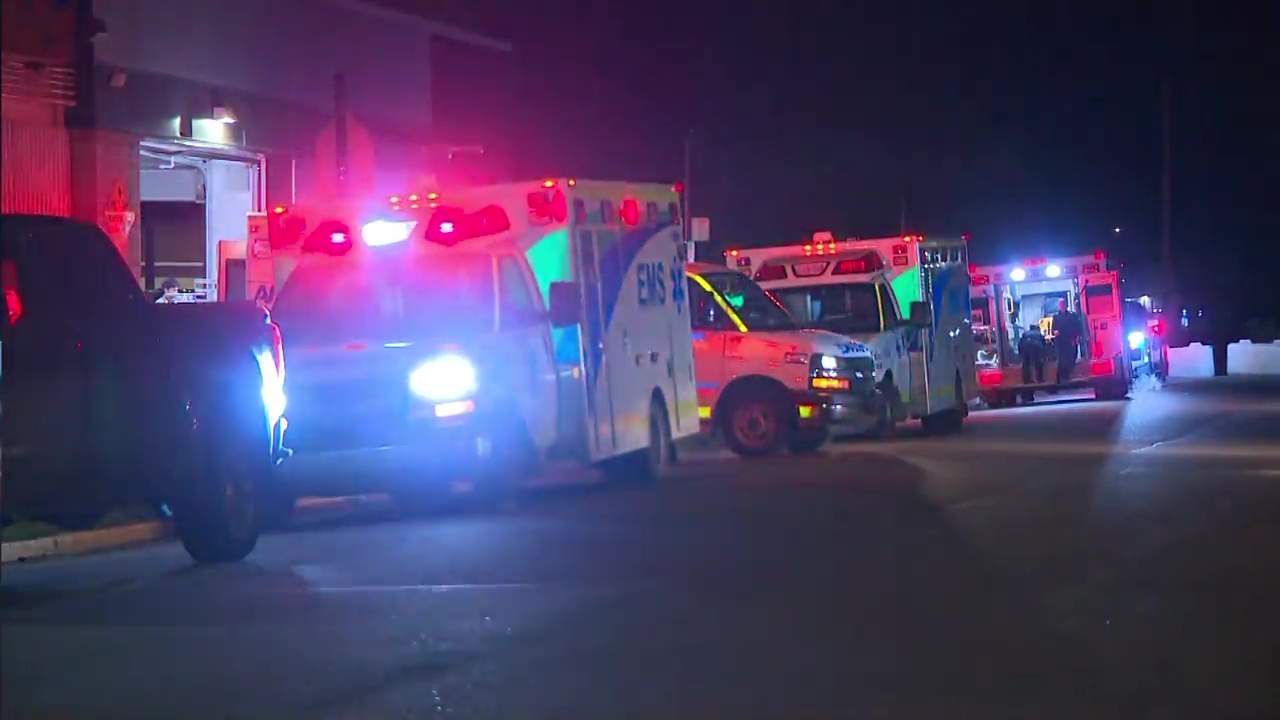
At first, four soldiers were killed and dozens of people required hospital care, with Alberta Premier Danielle Smith reporting 39 patients receiving medical treatment and 19 in critical condition right after the incident. On November 13, 2026, Private William Douglas Dal Bianco died from his injuries, bringing the death toll to five, with 24 soldiers still hospitalized the following day.
The five service members killed were:
- Sgt. Morgan Wong, 26, of Edmonton, serving with the Loyal Edmonton Regiment and 3PPCLI
- Pvt. Shaun Farrell, 23, of Prince Albert, Saskatchewan
- Pvt. Aidan Goulding, 23, of North Vancouver, British Columbia
- Pvt. Hayden Lykkemark, 19, of Langley, British Columbia
- Pvt. William Douglas Dal Bianco, 3PPCLI
Prime Minister Mark Carney called it one of the worst peacetime tragedies for Canada's military at home and ordered flags lowered to half-staff across federal buildings. Conservative leader Pierre Poilievre, whose riding covers the area, visited Wainwright and spoke of troops who ran toward danger to help others.
Why Grass Fires Move Faster Than People Expect
A lot of people picture wildland fires as towering trees and thick smoke. Grass doesn't work like that. Grass is fine, dry fuel with lots of oxygen around every blade, which means it ignites easily and burns through fast.
When wind speeds jump from under 50 km/h up to nearly 96 km/h, the physics change overnight. Strong gusts bend flames forward over unburned grass, preheating the blades ahead of the fire front and launching burning embers downwind. Maj. Gen. Wade Rutland, commander of the 1st Canadian Division, told reporters officials had been aware of a fire and thought it was contained enough to continue training, only for the wind to shift when the flames were about a kilometer away and drive them into a second training area in roughly 30 to 60 seconds.
A kilometer in 30 to 60 seconds works out to roughly 60 to 120 km/h—faster than a person running over uneven ground in gear.
That speed explains why a fire that looks "contained" from a distance can become lethal before an evacuation order or retreat even gets rolling. A wind shift doesn't just push smoke; it flips a flank that crews assumed was safe.
Common Misconceptions About Live-Fire Range Fires
When a military base fire hits the news, rumors start flying almost immediately. Some assumptions sound logical on paper, yet they miss what actually happens on the ground.
First, people often assume a major base blaze means a massive ammunition explosion or ruptured pipeline. In this case, Provost Marshal Brig.-Gen. Hanrahan explicitly pushed back on both ideas, noting there was no indication of explosions or oil and gas infrastructure involvement. Dry grass and wind did plenty of damage on their own.
Second, there's a tendency to think military training ranges are sterile, dirt-and-gravel pits where grass can't really catch. Ranges are huge tracts of land. Grass grows back every season, especially in open training corridors, and autumn curing leaves tall, dry stems just waiting for a spark from pyrotechnics, tracer rounds, or ordnance.
Third, some folks assume that because troops are trained for high-stress environments, they have an easy out when a grass fire charges across open terrain. Honestly, that's a dangerous myth. Heavy packs, weapons, tactical gear, uneven prairie turf, and thick smoke slow movement fast, and radiant heat in a high-wind grass fire can overwhelm someone before they even reach a vehicle or cleared break.
The Hard Questions Around Training Safety and Weather Shifts
This is where things get messy, and it's fair to be honest about what we still don't know. Military police and a board of inquiry are looking into the exact sequence of decisions, weather monitoring, and range protocols, so anyone claiming a single silver-bullet mistake right now is guessing ahead of the evidence.
Still, the incident highlights a tension every live-fire range manager deals with: balancing readiness and training timelines against shifting weather. Troops had mission commitments ahead, and leaders initially judged the fire contained. Yet wind in open country is notoriously fickle. A front passes, gusts spike, or wind direction swings 90 degrees, and yesterday's containment assumption stops meaning much.
There's also the question of communications and public information right after a crisis. Base personnel families reported a communications lockdown while notifications and emergency care were underway—a standard military security and welfare measure, even if it leaves loved ones agonizingly in the dark for hours. Balancing operational security, next-of-kin notifications, and transparent public updates is never clean in the first 24 to 48 hours.
Practical Steps for Communities, Landowners, and Range Planners
You don't have to wear a uniform to take real lessons away from a fast-moving grass fire. If you live near grasslands, farm acreage, manage rural property, or plan outdoor operations in dry conditions, a few habits actually matter:
- Watch wind shifts and gust forecasts, not just average wind speeds. A steady breeze can look manageable until a cold front or thermal shift kicks gusts up past 50 to 80 km/h in minutes.
- Treat "contained" grass fires as active threats until mop-up is complete. Smoldering edges in dry grass can re-engage and jump lines the moment wind picks up.
- Keep fuel breaks and access lanes clear before dry season hits. Mowed strips, disked lines, and unobstructed vehicle paths buy precious minutes when flames move fast.
- Plan escape routes downwind and upslope with a wide margin. Never count on outrunning a wind-driven grass front across tall dry grass if you can move laterally out of the path early.
- Follow official updates and verify before sharing rumors. During fast-moving emergencies, unverified social media claims about casualties, explosions, or road closures spread faster than the facts.