The frost in New Hampshire does not merely coat the windshields; it gets into your bones. It smells like woodsmoke and cheap coffee from diners where the linoleum has been worn down to its gray ghost by decades of boots. People here know a specific kind of cold. They also know a specific kind of power. Every four years, the entire architecture of American ambition descends upon this tiny patch of stubborn geography, renting every billboard, jamming every phone line, and knocking on doors while the snow piles six inches high on the porch rails.
To watch a primary unfold from the inside of a cramped community hall in Manchester is to witness a strange ritual of friction. You see neighbors who have known each other since childhood standing shoulder-to-shoulder, glaring across ideological chasms that seem to widen by the hour. The air smells of damp wool and anxious sweat. On the stage, the candidates project an impossible serenity, their teeth flashing under the fluorescents, but backstage, you can hear the staff pacing. The stakes are heavy enough to crack the foundation.
This is not just an election. It is a stress test for a system that feels increasingly hollowed out by its own noise.
On the right, the shadow of Donald Trump looms over the Granite State like an ancient monument. He does not need to reinvent himself here; the voters already know every inflection of his voice, every grievance, every promise. Walk into a diner in Rochester, and you will find people who have staked their entire economic survival on the idea that the world broke somewhere around 2016 and needs a wrecking ball to fix it. They are not interested in polite consensus. They are tired. They are angry. When they talk about the primaries, they talk about retribution and restoration in the same breath.
Yet, beneath that surface roar, a quiet counter-current pulls at the edges.
Conservatives who once whispered their doubts in hotel hallways are now finding a different register. They look at the legal bills, the endless litigation, and the sheer exhaustion of perpetual crisis, and they wonder if the price of admission has grown too high. Nikki Haley understood this hesitation. Her campaign pitched a tent for those who wanted the policies without the theater. It was a narrow corridor to walk, flanked by howling winds on either side. To watch her rallies was to watch a high-wire act performed without a safety net, the crowd split between fierce loyalists and skeptics waiting for the inevitable misstep.
Meanwhile, across town, the left faces a different kind of haunting.
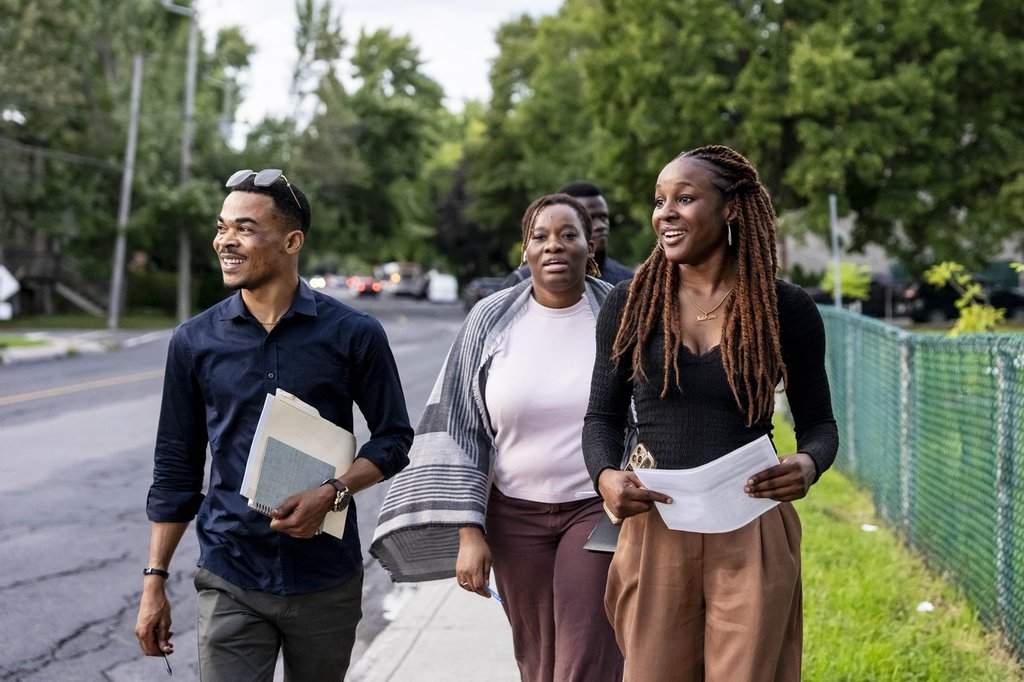
The Democratic primary in New Hampshire carries a surreal, ghost-like quality. Because of scheduling battles and national party overhauls, the official contest became an unsanctioned write-in campaign for Joe Biden, turning a sacred democratic milestone into a bizarre administrative exercise. Volunteers stood outside polling stations in freezing sleet, handing out blue pens and spelling out a sitting president's name for voters who felt deeply alienated by the top-down choreography of Washington.
Imagine standing in a church basement in Concord, watching a retired teacher carefully write out a name that the national committee tried to erase from the ballot. There is a quiet defiance in that act. It is not glamorous. It does not make for a triumphant cable news montage. But it reveals the raw sinew of political participation. People want to be heard, even when the rules are rigged against the geography of their daily lives.
The progressive wing, too, is wrestling with its own mirror. They look at the working-class towns where the mills closed a generation ago and never came back, and they see an electorate slipping through their fingers. The traditional left-of-center gospel—focused on incremental policy adjustments and institutional defense—often sounds like a foreign language to someone struggling to pay for heating oil that costs twice what it did three years ago.
This is the real fracture line of the American experiment. It is not just left versus right. It is inside versus outside. It is the distance between the boardroom in Manhattan or the bureau in Washington and the kitchen table in Coos County where the bill sits unpaid.
History tells us that New Hampshire is unforgiving. It is a state that prides itself on breaking frontrunners and anointing underdogs in the dark hours of a winter morning. In 2024, that cruelty was on full display. The primaries functioned less like a democratic celebration and more like an interrogation.
Voters here are famously prickly. They do not care about your super PAC. They do not care about your national polling average. They want to look you in the eye while you eat a greasy slider at the Puritan Backroom and judge whether your handshake feels genuine or transactional. That intimacy is terrifying for modern politicians who are conditioned to speak in 15-second soundbites optimized for algorithms.
When you strip away the multi-million-dollar ad buys and the charter planes idling on the tarmac, democracy here reduces to a single human being holding a pen in a damp booth, wondering if things will ever get better.
The results of these tests do not stay in New Hampshire. They radiate outward, poisoning or purifying the national bloodstream. When a voter in a small northern town decides they’ve had enough of the status quo, the shockwave hits statehouses three thousand miles away. When a fractured party paper over its cracks, those fault lines widen into canyons by November.
We are living through the consequences of this friction. Every debate stage shouting match, every late-night legal filing, every quiet conversation over a backyard fence traces its lineage back to these frozen weeks in January and February when the nation turns its anxious eyes toward a state of a little over one million people.
The snow eventually melts, of course. The banners come down from the telephone poles. The diners return to serving coffee without a television crew hovering over the counter. But the tension remains. It settles into the grain of the wood, waiting for the next cycle, waiting for the next cold snap, waiting to see if the system can hold its own weight before the ice finally breaks.